








By Phoenyx Powell
Listen to this Article
When Travel Oregon invited me out for their Accessible Oregon FAM trip, I knew it’d be special — but I didn’t realize I’d be watching a piece of travel history in motion. Oregon just became the first state to be officially Accessibility Verified by Wheel the World, and I spent a week seeing what that actually looks like off paper — across five regions, seven cities, and a lot of coffee.
I started in Portland, running on jet lag and poor life choices, immediately hunting down Powell’s Books (because my last name is Powell and it felt legally required). Between the food pods, rose gardens, and endless conversation about accessibility done right, it was clear from the start that this wasn’t another “feel good” initiative. It was an actual follow-through.
Over the week, I got to experience Oregon’s new accessibility standards firsthand — from the coast, where I used David’s Chair to easily explore Newport Beach, to Silver Falls State Park, where adaptive tree climbing made “accessible adventure” more than just a buzzword. Each region had its own approach, but the goal was the same: inclusion that’s functional, not performative.
In this post, I’m breaking down what Accessibility Verified means, why Oregon’s the first to pull it off, and what it looks like when a state genuinely commits to inclusive travel. Plus, I’ll share what surprised me most along the way — the good, the not-quite-there-yet, and the moments that reminded me why accessible travel matters more than ever.
Why This Milestone Matters
If you’ve ever traveled with a disability, you already know “accessible” can mean just about anything — from a ramp that ends in a doorway with a lip that technically fits a wheelchair if you’re willing to lose your deposit because you scuffed up the walls.
Accessibility information is usually vague, outdated, or straight-up false. And every trip comes with that familiar pre-departure anxiety spiral: Will this place actually work for me, or am I about to pay in exhaustion and fatigue?
That’s what makes Oregon’s new Accessibility Verified status such a big deal. It’s the first time an entire state decided to stop guessing and start asking the hard questions. Instead of relying on self-reported “we’re accessible” claims, Wheel the World physically verified locations across Oregon — measuring door widths, checking bathrooms, testing surfaces, and confirming what’s actually usable.
It’s not flashy. It’s not perfect. But it’s the start of something that travelers with disabilities have been asking for forever: transparency. Oregon didn’t fix every problem — they just chose to be honest about them. And in the travel industry, that’s revolutionary.
Oregon Just Set a New Standard for Accessible Travel
Oregon officially became the first state in the U.S. to be Accessibility Verified through a partnership between Travel Oregon and Wheel the World — a platform built by and for travelers with disabilities. That title isn’t just for headlines. It represents months of on-the-ground work verifying 750+ businesses across 43 communities in all seven of Oregon’s tourism regions.
Each place — from hotels and restaurants to parks and welcome centers — was evaluated with over 200 data points. We’re talking door widths, ramp slopes, roll-in showers, lighting levels, bed and toilet heights, surface textures, and accessible transport. Basically, everything that actually matters when you’re trying to travel without ending up in an “accessible-ish” room that only has grab bars as decoration.
And that’s what sets Oregon apart. They didn’t just assume “accessible” meant “fine.” They measured it, documented it, and made it searchable on Wheel the World’s site — so travelers can finally plan with confidence instead of crossing their fingers.
It’s not about perfection. It’s about transparency, which is something accessibility has been missing for way too long. Oregon decided to raise the bar, and honestly, it’s about time someone did.
Meet Wheel the World: The Team Behind “Accessibility Verified”
If you’ve never heard of Wheel the World, they’re basically the travel industry’s long-overdue audit team — except they actually know what they’re talking about. Instead of relying on self-reported “accessible” claims, they send trained mappers (many of whom have disabilities themselves) to physically measure, test, and document every feature that matters.
Each verified location is checked across 200+ accessibility data points, including:
- Entrances and paths:door widths, ramp slopes, step height, surface type, and whether doors actually open automatically like they claim.
- Bathrooms:roll-in showers, grab bar placement, toilet and sink heights, turning space, and shower chair availability.
- Bedrooms:bed height, space to transfer or move around, and reachable outlets or switches.
- Common areas:hallway widths, elevator sizes, table heights, and clear paths to amenities like restaurants or pools.
- Parking and transportation:distance to entrances, curb cuts, and size of accessible parking spaces.
- Outdoor & adventure access:surface materials, trail slopes, and whether adaptive equipment (like track chairs or beach wheelchairs) is available.
- Sensory considerations:lighting, background noise, and staff awareness for neurodivergent travelers.
Basically — if it impacts your ability to move, see, hear, or exist in a space comfortably, they measure it. No guesswork. No “well, it should be fine.”
Founded by Álvaro Silberstein, who was paralyzed after a car accident and went on to complete an expedition in Chile’s Torres del Paine, Wheel the World was built out of lived experience, not corporate checklists.
Their goal is simple but ambitious: give travelers with disabilities accurate, detailed information so they can plan confidently instead of gambling on accessibility.
When Oregon partnered with them, it wasn’t just a press release moment — it was a commitment. Together, they verified over 750 locations across 43 communities in all seven of Oregon’s tourism regions, making Oregon the first Accessibility Verified state in the U.S.
My Experience Exploring Accessibility Verified Oregon
When I say Oregon did accessibility differently, I mean it. I spent a week traveling through five of the seven verified regions — from Portland’s historic hotels to adaptive adventures on the coast — and for once, the accessibility info actually matched reality.
Day one started with a crash course in Portland: a mix of jet lag, coffee, and stubborn determination. After almost 20 hours of travel, I dragged myself (and my suitcase full of medical gear) to the Benson Hotel, a historic property that somehow managed to balance old-world charm with real accessibility — wide doors, working elevators, and staff who didn’t blink when I asked about grab bars. Small wins, big sighs of relief.
From there, I hit some of Portland’s landmarks like Pittock Mansion, where the views are worth every winding road, and the International Rose Test Garden, which is as beautiful as it is well maintained for mobility devices. It was one of those rare days where I didn’t have to constantly assess whether a place was built for me — no battling steep inclines or gravel here.
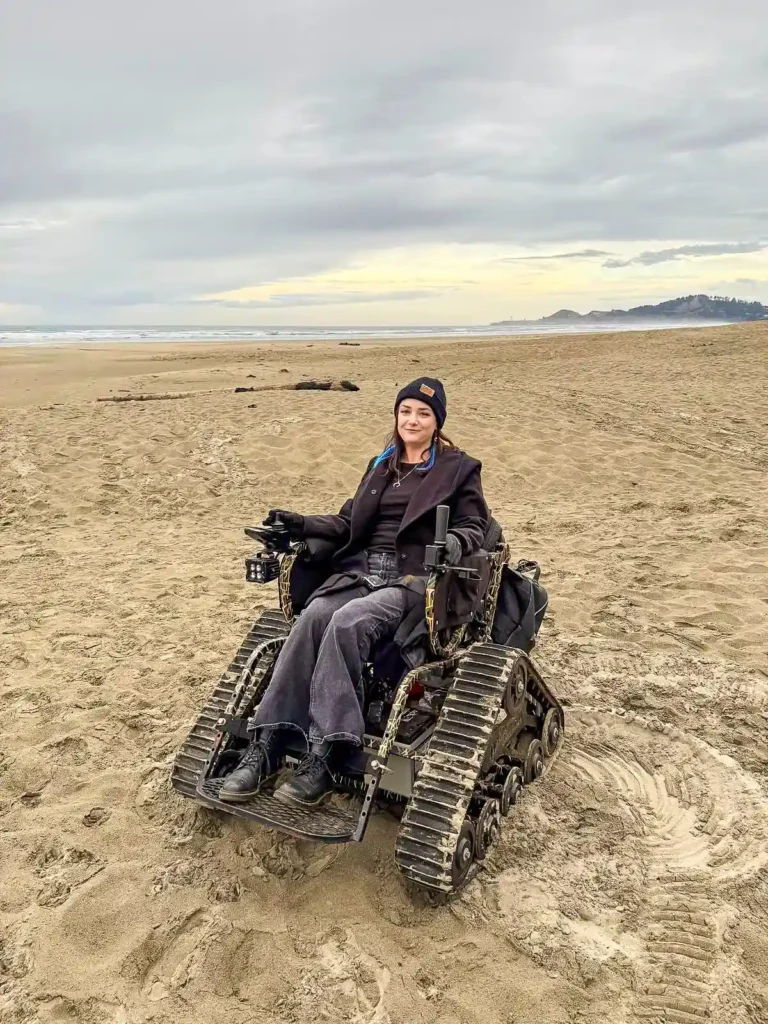
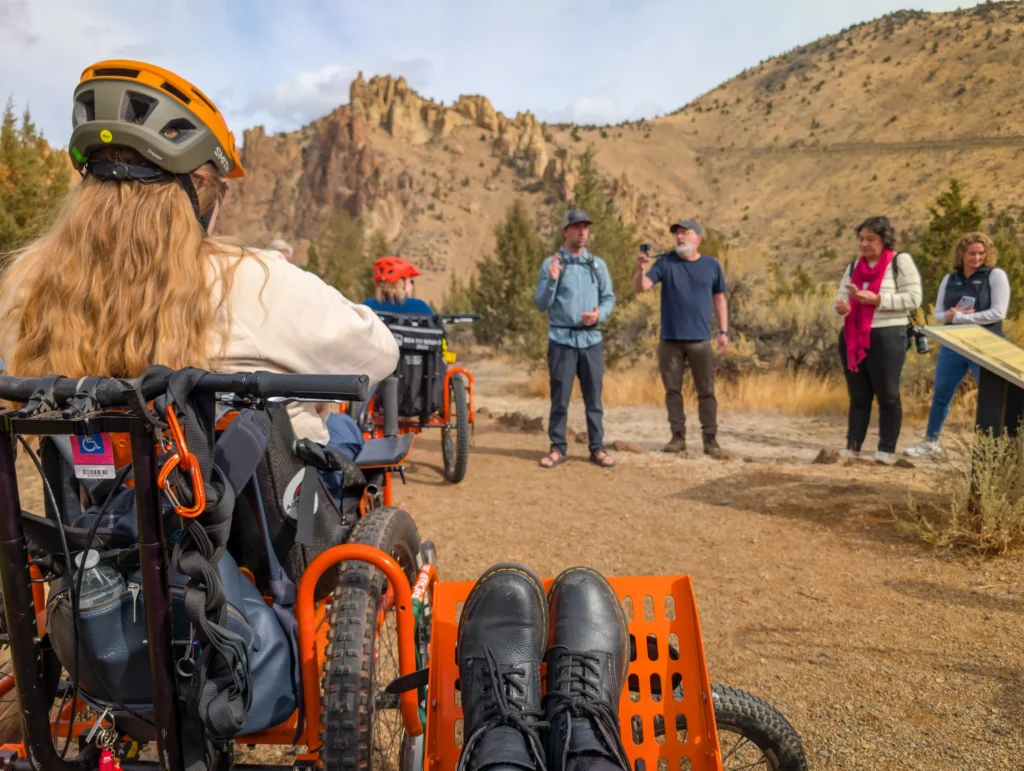
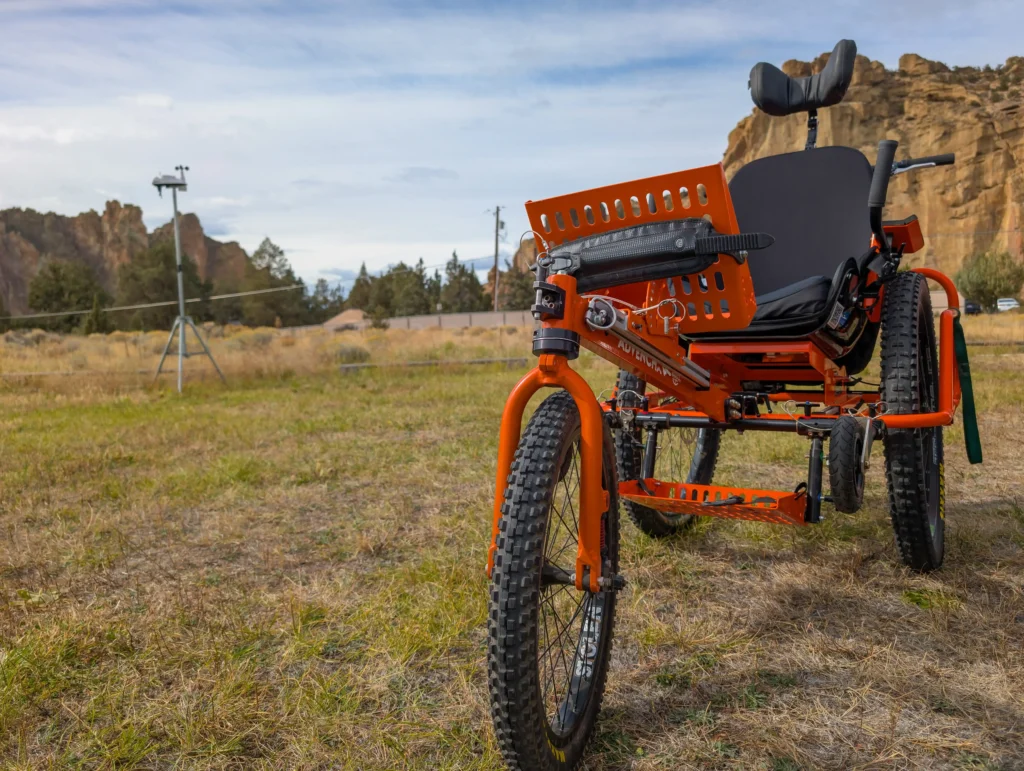
Then came the Oregon Coast, where things got wild — in the best way. I used David’s Chair, a powered track chair that lets wheelchair users and amputees like me actually roll down to the beach without sinking into the sand. Newport’s coastline went from off-limits to one of my favorite places within minutes.
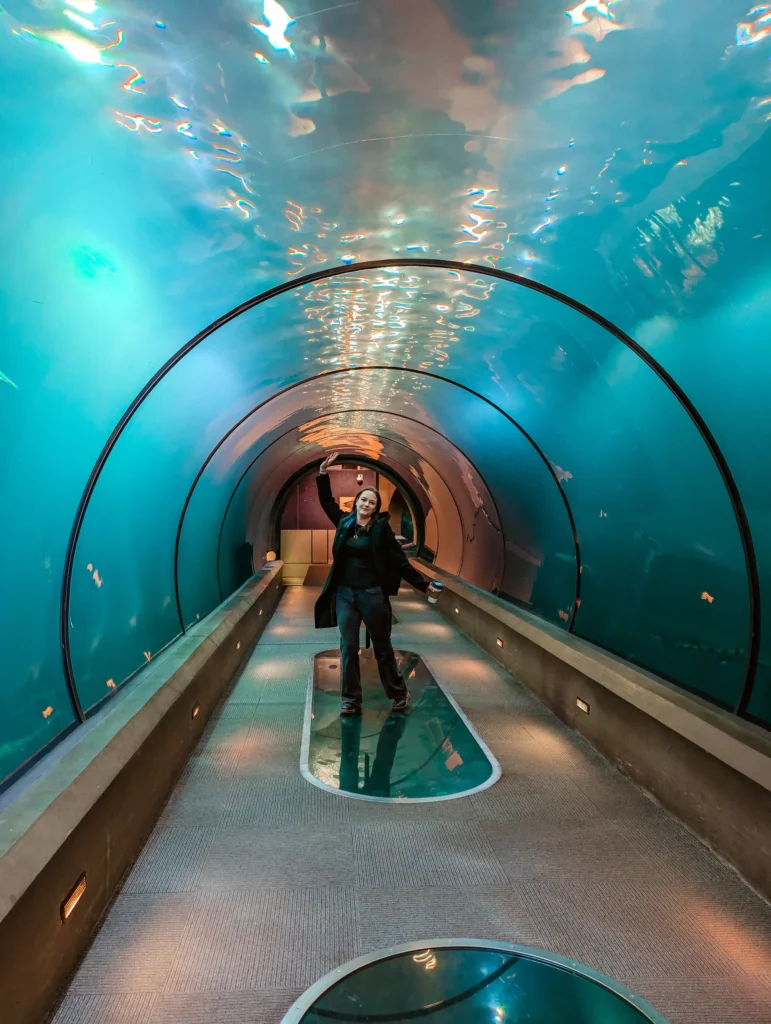
From there, we visited the Oregon Coast Aquarium, where ramps, elevators, and sensory-friendly spaces made exploring the exhibits surprisingly easy (and full of otters, which helped). One thing that really stood out to me were the viewing areas that were actually made with wheelchair users in mind – no more craning your neck to get a glimpse of an otter.
Further inland, I tested my limits — literally — with adaptive tree climbing at Silver Falls State Park. Using a motorized ascender, I got to scale a massive tree without wrecking my body and its energy limits in the process. It was surreal, safe, and just the right amount of “I can’t believe I’m doing this.”
Across every stop — wineries, museums, scenic spots, and small towns — I noticed a pattern: accessibility was present at the very start, not an afterthought thrown together at the last minute. And when something didn’t work, people didn’t shrug; they fixed it, or at least cared enough to try. That’s what stuck with me.
How Accessibility Verified Helps Travelers (and Why It’s Just the Start)
If you’ve ever tried planning an accessible trip, you know the drill: fifty tabs open, six unanswered emails, and a lot of “technically accessible” listings that somehow involve stairs. The Accessibility Verified designation finally breaks that cycle.
With Oregon leading the way, travelers with disabilities can actually see real data before they book — whether that’s a roll-in shower, ramp grade, or just confirmation that the elevator isn’t decorative. It replaces uncertainty with information, which, let’s be honest, might be the most liberating thing a traveler can get.

Connect with Phoenyx Powell
