




Listen to this Article
Rosie is a travel writer and content creator based in Nashville, Tennessee. She has been a full-time manual wheelchair user for more than 25 years following a spinal cord injury. From her wheelchair, she has travelled to 20 countries and 39 U.S. states. Through her blog and social media platform, RosieRoaming, she shares practical insights into travel and daily life as a wheelchair user.
Beyond travel, Rosie is deeply interested in universal and inclusive design, with a particular focus on interior design. As she moves through different destinations, she advocates not only for accessibility but for spaces that are thoughtfully designed, visually appealing and functional for everyone.
What first inspired you to start “Rosie Roaming
I saw how helpful it was to see other wheelchair users give their perspective on destinations. I trust other wheelchair users’ experiences more than almost any other source because they understand accessibility and what I would need, more than a website that just says “wheelchair accessible.” I also wanted to build relationships in the online disability community, and I thought this would be a great way to do so.
What are the biggest lessons you’ve learned about accessibility and independence on the road?
I love travel, but it’s important for anyone to recognize that travel inherently puts you in an unfamiliar situation with your daily routine, which can create new problems to solve. This means there will likely be obstacles of some sort to overcome. However, my love of travel is still strong despite these obstacles, and it has helped me realize I can learn to navigate them. It has allowed me to build confidence, resilience, and patience.
How do accessibility standards differ between North America and Europe
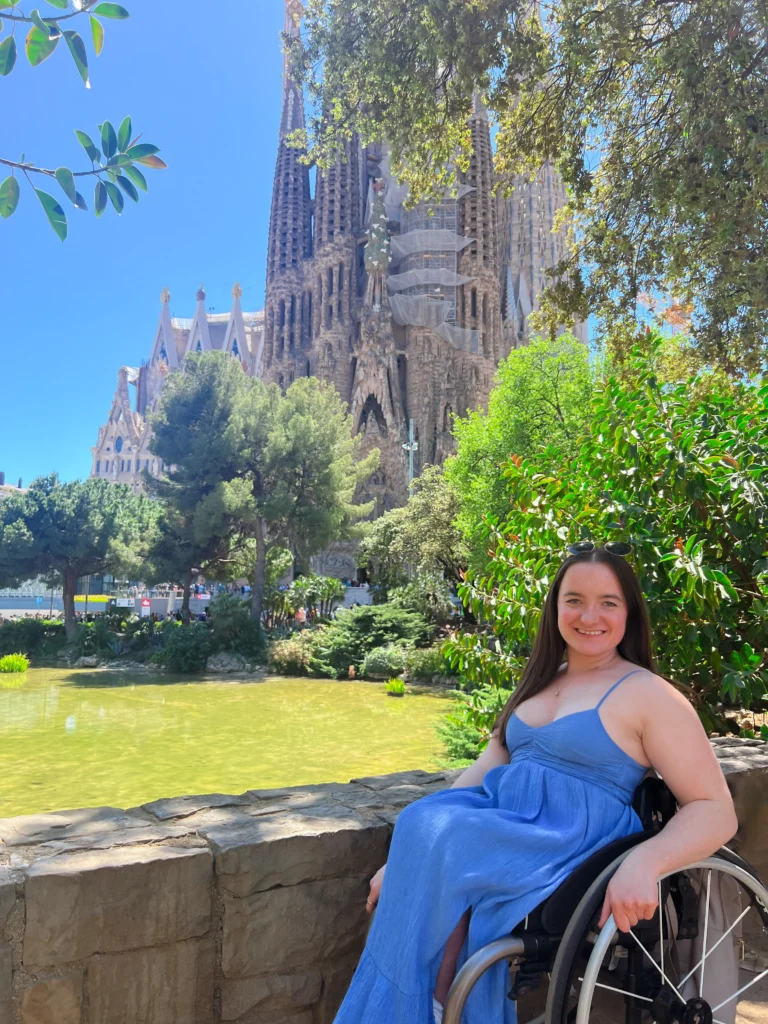
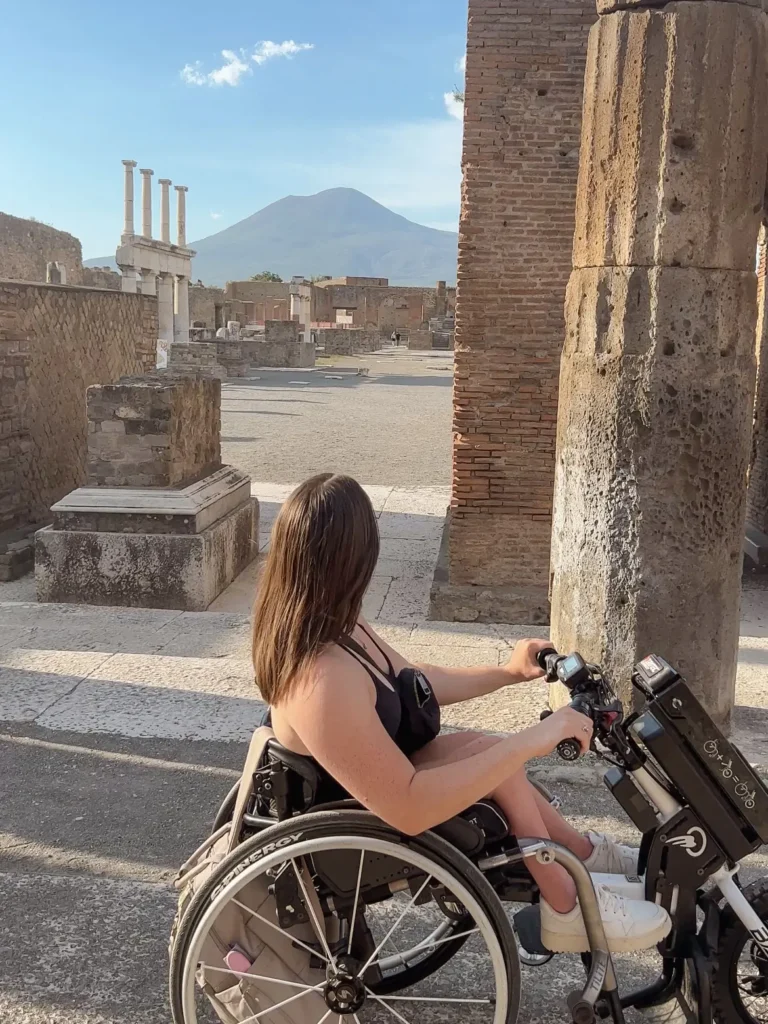
Each place is unique! In the US, hotels seem more standardized. In Europe, buildings are generally older, which can present challenges with access, though some places like Buckingham Palace, Pompeii, and The Colosseum have made thoughtful modifications. Public transit and train access are more common in Europe than in the US, but accessibility standards vary from place to place.
How do you approach trip planning? What tools, apps, or strategies help you balance preparation with the unpredictability that often comes with accessibility?
I generally approach trip planning by doing a lot of research. Some of my most used tools include Google Maps, Google Maps Street View, YouTube walkthroughs of specific areas, content from other wheelchair travel writers, official tourism websites, attractions’ websites with accessibility pages, and hotel websites. Hotels often lack proper accessibility information, so I rely on services like Wheel The World for detailed information to make informed decisions.
What’s an example of a travel experience that looked “accessible on paper” but turned out not to be, and how did you adapt?
When I lived abroad, my friends and I went on a Christmas trip to Prague. I found a hostel that looked accessible, confirmed details via email, and arrived to discover the “accessible” room was on the 5th floor with a broken elevator and steep stairs. My friends offered to carry me, but I didn’t feel comfortable. Thankfully, my mom and uncle were visiting, so I was able to stay at their hotel nearby.
Your blog and Instagram have built a strong community of disabled travellers. How do you balance sharing practical advice with advocacy and awareness?
I don’t consciously plan a balance—I share what’s on my mind based on recent experiences. I aim to show the reality of traveling as a wheelchair user: much is accessible, but improvements are needed. I want to encourage people to see the world while understanding why some may feel hesitant.
Why is it important for wheelchair users and other disabled travellers to see themselves represented in travel media, and what changes would you like to see in the industry?
Seeing other wheelchair users travel helps me understand what’s possible. Each destination presents its own challenges, and representation gives hope that traveling is achievable.
Hotels could improve by designing inclusively while maintaining aesthetics and consulting wheelchair users. Detailed pictures of accessible rooms would help travelers make informed choices. Airlines need to ensure people with disabilities are treated with respect and dignity. I recommend following Sophie Morgan, Maayan Ziv, and Rights On Flights for advocacy work in this area.
Of all the places you’ve visited, which destination surprised you most in terms of accessibility or inclusivity, and why
Vienna, Austria! I didn’t do much research before visiting. For a European city, there were not many cobblestones, and public transit was great. Combined, this made it a fantastic place to explore. I recommend visiting around Christmas for the City Hall Christmas market.
What would you tell someone who’s just starting to travel as a wheelchair user and feels overwhelmed by the logistics or risks?
I understand the feeling. Travel can be overwhelming but is almost always worth it. I recommend starting in places where you speak the language to avoid added complications. Travel with people you trust who can help with occasional accessibility challenges. Avoid cramming too much into one trip to prevent burnout. Everyone’s ideal pace and planning style will differ.
What’s next for Rosie Roaming?
I don’t have trips confirmed yet, but I hope to visit at least one new US state. My Instagram and TikTok growth is encouraging, and I hope to expand my community of women in wheelchairs interested in travel and fashion.
In 2027, I’ll complete my Occupational Therapy Doctoral Capstone in inclusive design. I also aim to continue speaking about inclusive hotel design, write for other publications, and collaborate with hotels and resorts to make travel more accessible while inspiring wheelchair users to explore the world.
Top five tips for women with disabilities who want to travel more confidently
- Keep a note in your phone with wheelchair information (weight, dimensions, battery info).
- Pack organized—it helps you feel calm and collected.
- Don’t cram too much into one trip.
- Wear comfortable clothes while traveling.
- Travel with people you are comfortable with.
Rosie’s social links