
Listen to this Article
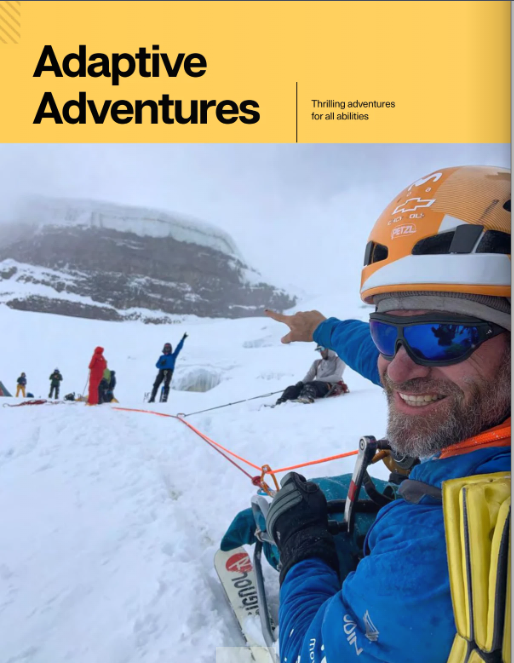
Sebastian Carrasco Zuffi, also known as Zuko, built his life in the mountains long before his path changed. As a UIAGM-certified mountain guide and international climber, he travelled and climbed across Canada, Australia, New Zealand and South America. His profession demanded technical precision, endurance and independence. That reality shifted dramatically after a fall resulted in a C6 spinal cord injury, altering not only how he moved through the world but how he would continue to engage with it.
The first phase after his accident was marked by uncertainty and dependence. Zuko describes the first 18 months as extremely difficult, requiring constant physical and emotional support. During that time, he did not know whether he would ever return to the mountains. Like many people navigating a major life change, he experienced a process of mourning that included denial before reaching acceptance. He credits his friends and community as essential to that transition.
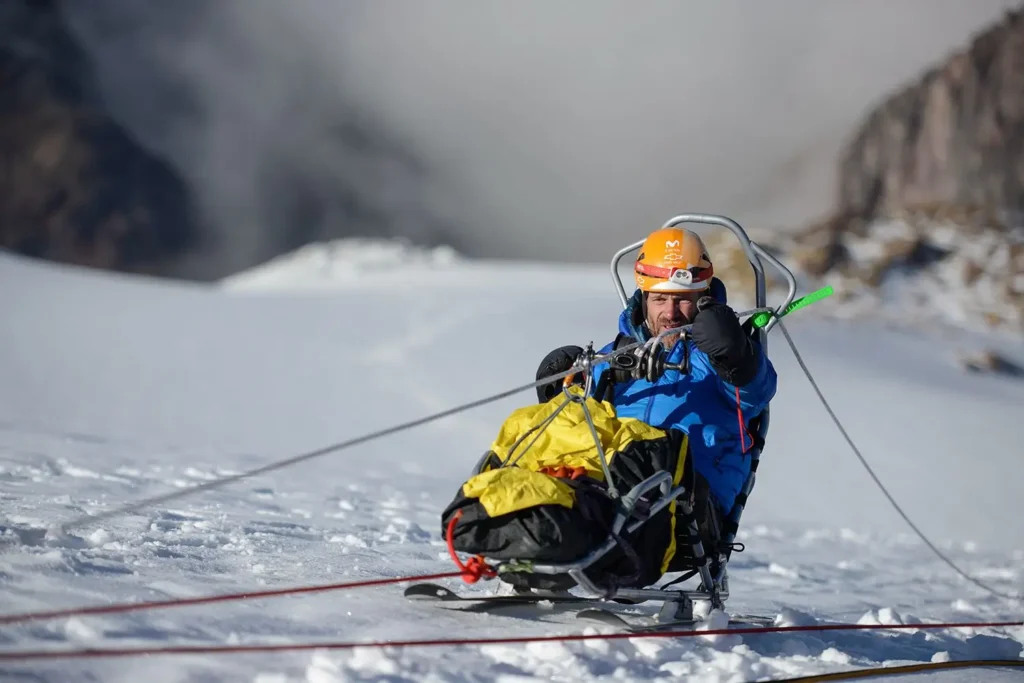
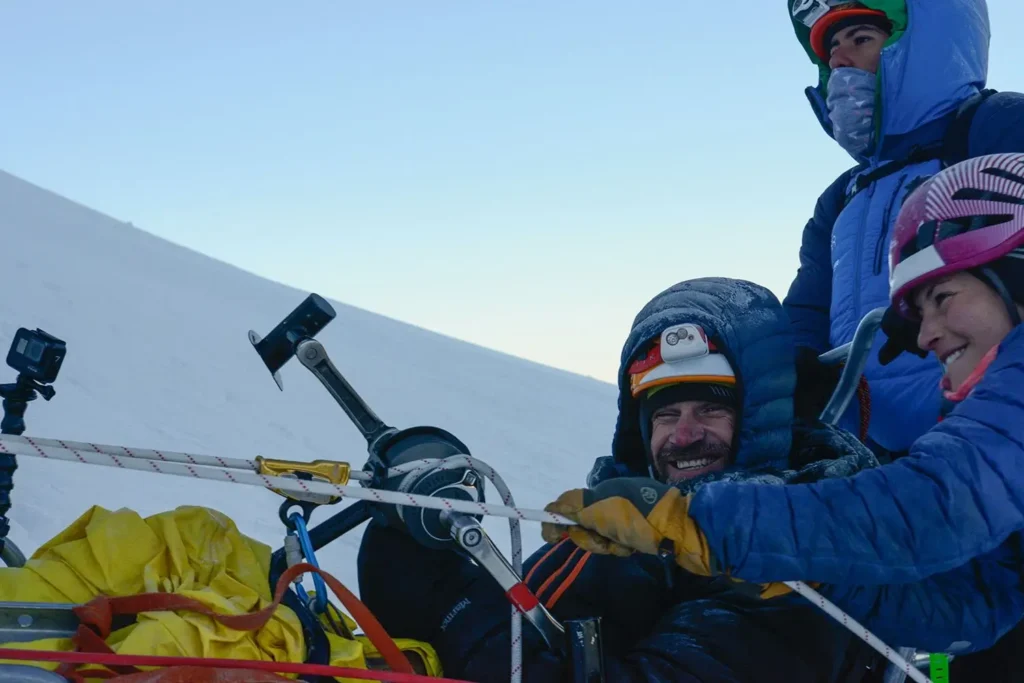
A turning point came when he was invited to attempt Mount Kilimanjaro. Learning that another climber with a similar injury had successfully reached the summit gave him a tangible reference point. He reached out, gathered support from sponsors and friends, and began building a structured plan. Central to that plan was the design and construction of a custom hand bike tailored to the demands of the expedition.
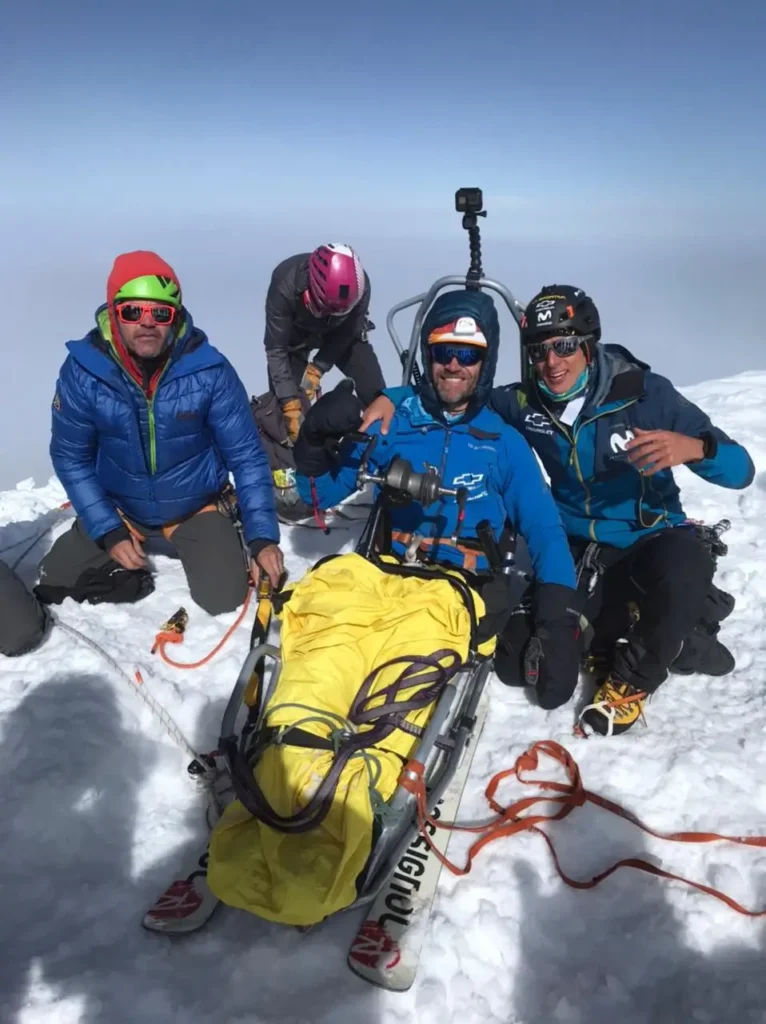
Zuko committed to intensive physical and mental training. In 2017, he and his team reached the summit of Kilimanjaro. The experience marked a shift in perspective. While descending, he was already thinking about future climbs. It was during this expedition that he articulated a defining realization: his friends had become his “new legs.” From that point forward, his approach to climbing would be grounded not in independence, but in collaboration.
Before his injury, Zuko’s identity was closely tied to his work as a mountain guide. Afterward, while his passion for the outdoors remained unchanged, his lifestyle required complete reinvention. He describes acceptance as the most difficult step, one that was supported by sport and the continued presence of his community. Today, he still identifies as a climber and adventurer, though he acknowledges that his physical and emotional reality has changed. The essence of his identity has remained, even as the methods have evolved.
Since 2015, Zuko has completed a series of significant adaptive climbs. These include Cayambe (5,790 metres) and Cotopaxi (5,897 metres) in Ecuador, Kilimanjaro in Africa (5,875 metres) and, most recently, El Capitan in the United States. Each climb required extensive planning, specialized equipment and coordinated teamwork.
Among these experiences, Zuko identifies El Capitan as the most meaningful. He trained for 18 months for the project, assembling a team of experienced climbers who committed to supporting the ascent. The team installed a pulley system along the Mescalito route, which is known for heavy traffic. They transported nearly 400 kilograms of water, food and equipment. While the route typically takes four to six days, their ascent lasted seven.
The climb presented additional challenges. On the first day, a park staff strike required an earlier-than-planned start. The team also encountered two days of rain while on the wall. Despite these factors, Zuko describes the experience in detail: “I will never forget the sunsets, the fog, the clear skies, every sunrise, in short, every moment suspended on the wall. We were a team of ten people climbing one of the most famous walls in the world. For seven days, we lived on the wall. I advanced every 10 centimeters by 10 centimeters, and after a week, we reached the top. It was intense, challenging, and deeply meaningful. He remained connected to his family through video calls during the ascent.
Zuko’s experience in adaptive sports highlights several ongoing challenges. Accessibility remains a primary barrier, particularly in reaching remote or technically complex environments. Independence is another consideration, requiring the development or adaptation of equipment such as hand bikes suited to different terrains. He emphasizes that he no longer climbs alone and that teamwork is now essential to every project.
Financial sustainability also presents challenges. Zuko invested his life in becoming a mountain guide, a profession he can no longer practice. Since his injury, he has supported himself through conferences, sponsorships, documentary work, including Libre – Freedom (2021), and the publication of his 2025 book No camino, pero puedo volar (“I cannot walk, but I can fly”). He continues to work toward long-term stability.
In discussing inclusion, Zuko offers a perspective centred on the environment rather than the individual. He states that limitations are often created by surroundings rather than by people themselves. He advocates for increased government investment in accessibility and for more opportunities within sports that are specifically designed for people with disabilities. His position is that when environments are accessible, they benefit everyone.
Maintaining a positive outlook, according to Zuko, is closely tied to community. He points to the role of friends, collaborators and social media in sustaining motivation. Sharing his experiences publicly allows him to connect with others, and the feedback he receives reinforces his sense of purpose. He describes a shift in mindset from seeing himself as a victim to someone who creates meaning from adversity. Planning future projects remains a constant.
For adaptive travellers, Zuko highlights Barcelona as a significant destination. It was the first place where he was able to move independently without assistance, marking an important milestone in his post-injury life. For climbers, he points to Yosemite National Park as offering strong accessibility infrastructure, well-equipped routes and reliable rescue systems.
Zuko also shares practical guidance for adaptive adventure travel. He emphasizes thorough research, including transportation, terrain and accessibility considerations. Risk assessment is key, with a focus on determining whether ambitious goals are realistically achievable through planning. He encourages travellers to engage fully with their emotions throughout the process and to seek support from trusted individuals.
Equipment plays a central role, with his hand bike representing both mobility and independence. He stresses the importance of communication within teams, encouraging people to ask what support is needed rather than making assumptions. Cultural awareness is also important, as approaches to disability vary across destinations. Ultimately, Zuko defines successful adventure not by the challenge alone, but by the combination of personal motivation and collective support.
His next goal is a trip to Patagonia with his two daughters, continuing a trajectory that has been reshaped but not diminished.
Follow Zuko on Instagram: @zuko_carrasco