


By Jan Bonville
Listen to this Article
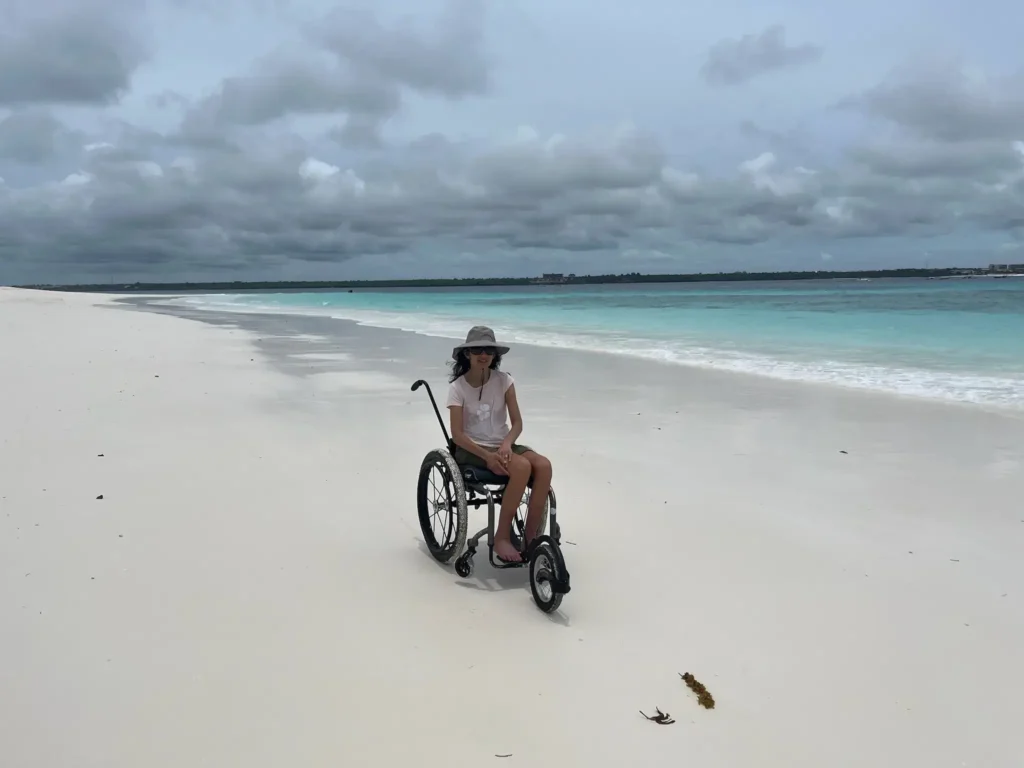
I used to love going to the beach. The feel of sand in my toes, the warm water of the Indian Ocean lapping, searching for shells on the beach. Like many things the young do I took it- and the ability to walk stroll, touch for granted. When I was first diagnosed with MS, again, like many young people I was sure disability would not happen to me. I had some weakness, some trouble walking but… I didn’t expect the worst.
Fast forward more than 20 years later, where after significant struggle, I now use a wheelchair to move around outside, a walker in the house, and deal with fatigue and spasticity. I have progressive MS to the core and despite the best access to medications, they did not help me. The beach, and the ocean, were long gone – or so I thought.
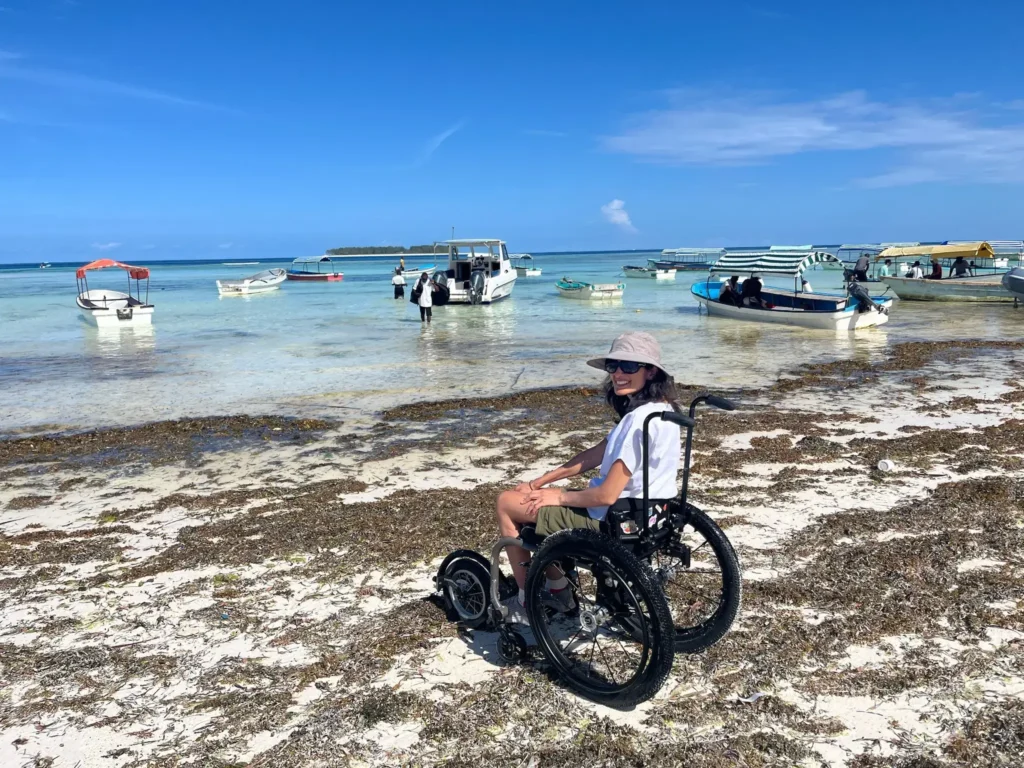
Island destinations remain high on my list of favorites. A seasoned and sophisticated world traveller, I have always loved tropical destinations – the colors, the smells the pure relaxation involve in such areas. And yet.. the beach and the ocean were forever elusive, out of reach. As any wheelchair user knows, the small caster wheels in front get stuck on any uneven terrain and not only that, sand damages the axles and wheels. Even attempting to walk when I could – with foot drag and/or a walker or canes that sank into the sand – was not fun and highly unmotivating.
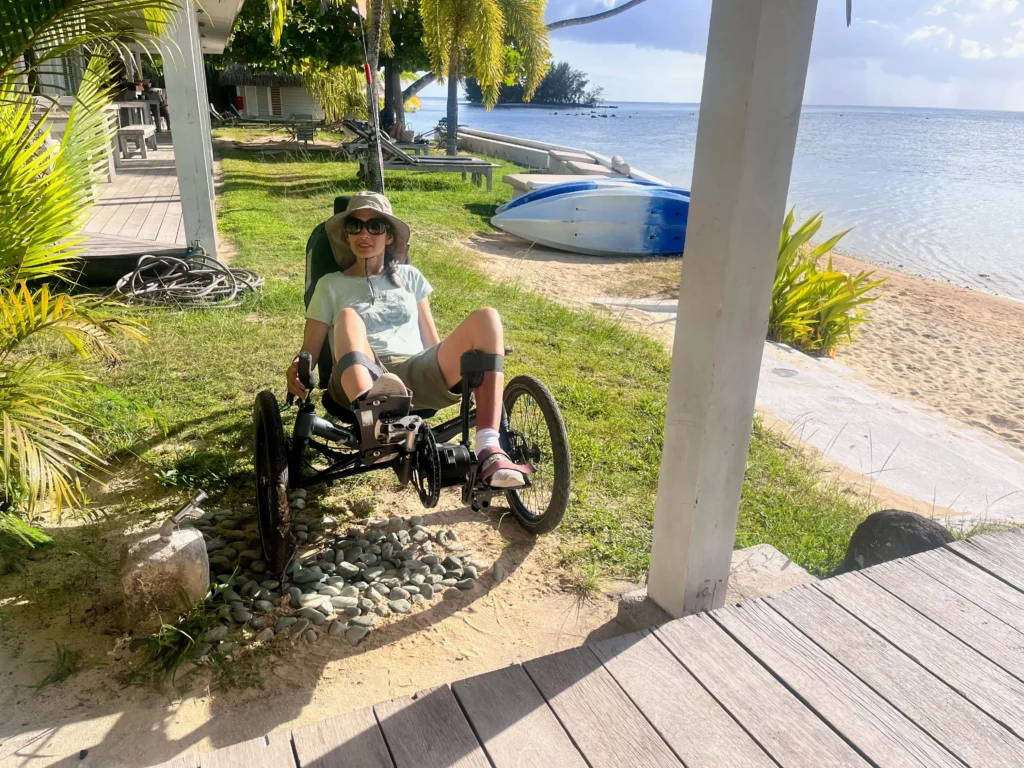
As those of you who read my column know though, I, like most of you disabled travellers out there, do not give up. My adaptive trike has helped give me freedom, to explore the outdoors of SF and the parks the forests. I have taken it to two of my favorite destinations in the world- Hawaii and Tahiti. While this involved not an insignificant amount of headache and negotiation with airline personnel on packing, shipping, etc. the reward was immeasurable – getting to explore the forests of Kauai, the island road around Moorea… the closest I could get to walking. My bike was an anomaly – numerous locals stopped me to compliment my bike, encourage me and even offered us water and mangoes! It was so much better than driving. seeing the banana trees, mango and papayas on the side of the road, the lush blues and greens of the water as I rounded corners, the deep valleys and acacia trees, the stunning colors.
Going to the beach however was a different matter. Neither the wheelchair nor bike could make it onto thick sand without spinning. I was so close to the water yet might as well have been on a different planet. I could only watch enviously as people effortlessly waded into the sparkling water.
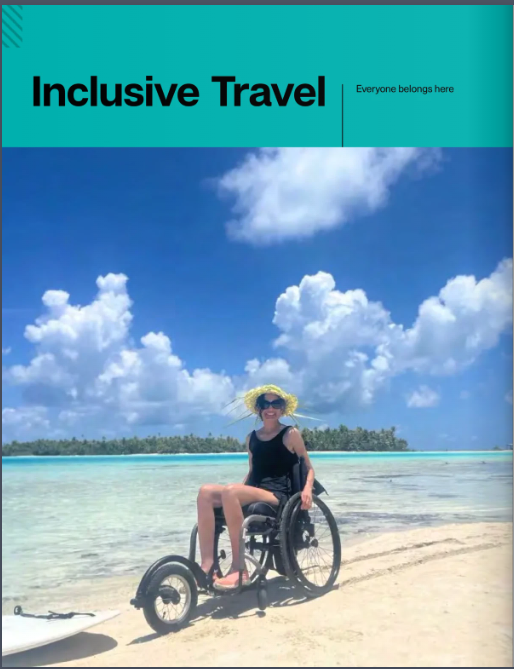
Enter Sumo wheels and the free wheel These are ingenious contraptions I found on Living Spinal, designed by and for wheelchair users to gain maximum freedom. After much trial and error, I was able to swap out my wheels for Sumo wheels and attach the free wheel to my front plate.
What a difference they made. I could go on sand!!
Not perfectly, not effortlessly—but I could move forward. The front wheel no longer dug in and stopped me short; instead, it lifted and rolled. The Sumo wheels widened my base, spreading the weight so I didn’t sink. For the first time in decades, the beach was not a boundary—it was terrain.
We started slowly, testing each push. The sand was still uneven, still unpredictable, but it was no longer impossible. There was a rhythm to it: push, glide, adjust. Push, glide, adjust. And with each movement, something shifted—not just physically, but emotionally. The distance between me and the ocean, which had felt vast and fixed for so long, began to shrink.
I was no longer watching from afar
As I got closer, the sensory memories came rushing back—the smell of salt in the air, the brightness of the water, the sound of waves breaking and retreating. It was all exactly as I remembered, and yet entirely new. Because this time, I knew what it had taken to get here.
When the water finally reached me, it was almost overwhelming. Cold, alive, insistent. It lapped against my feet and the wheels of my chair, as if reintroducing itself. I stayed there longer than I expected, letting the waves come and go, feeling something I hadn’t felt in years: not just joy, but return.
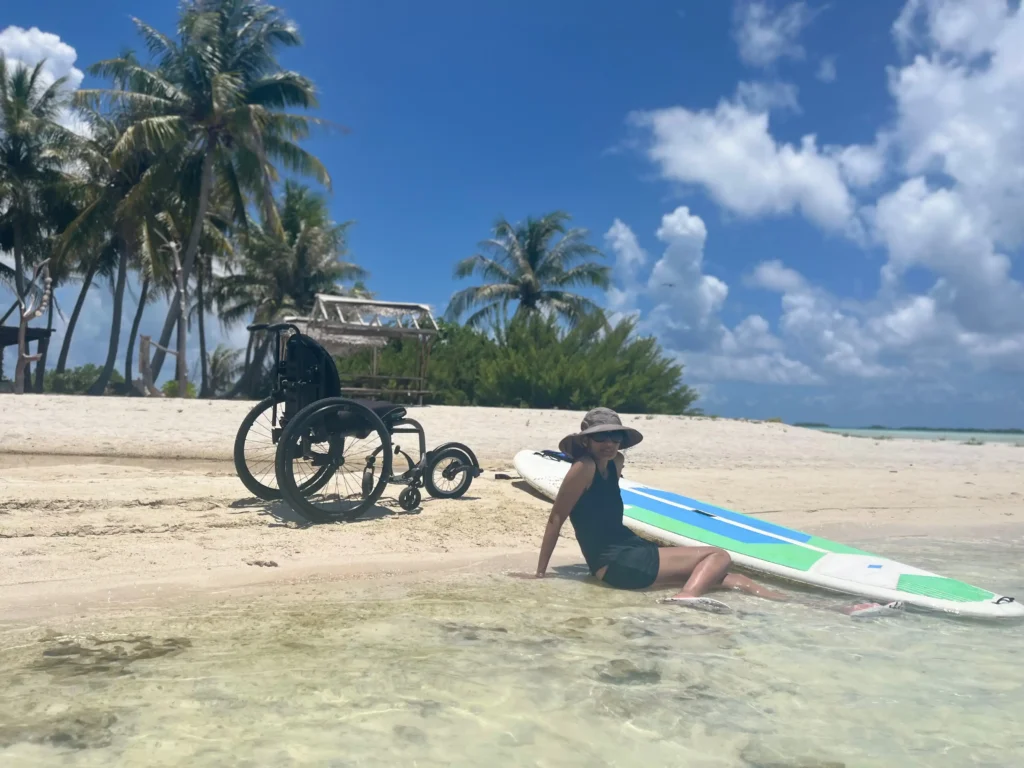
Return to a place. Return to a part of myself
There is a particular kind of grief that comes with losing access to the natural world. It’s not always dramatic or loud. Sometimes it’s quiet, cumulative—the absence of small, ordinary experiences. A walk on the beach. The feel of sand underfoot. The ability to follow curiosity without calculating every obstacle.
And there is a particular kind of power in reclaiming even a piece of that.
These tools—the Sumo wheels, the FreeWheel—are not just equipment. They are enablers of possibility. They don’t erase disability, nor do they remove all barriers. The beach is still hard work. It still requires planning, assistance, and energy I don’t always have. But it’s now, finally, a possibility.
