
By Jennifer Allen
Listen to this Article
Traveling to Japan with a wheelchair can feel overwhelming. Figuring out where you can and cannot go is hard enough when you can research in your own language and time zone, not to mention making follow-up calls to confirm accessibility needs. We packed a lot into two busy weeks in Japan and overall it was a genuinely positive experience. Public transportation was largely accessible, accessible restrooms were easy to find, and it was clear that many cities are making real efforts to welcome all travelers. Here are some of our favorite barrier-free stops where we were free to participate fully.
Mount Fuji
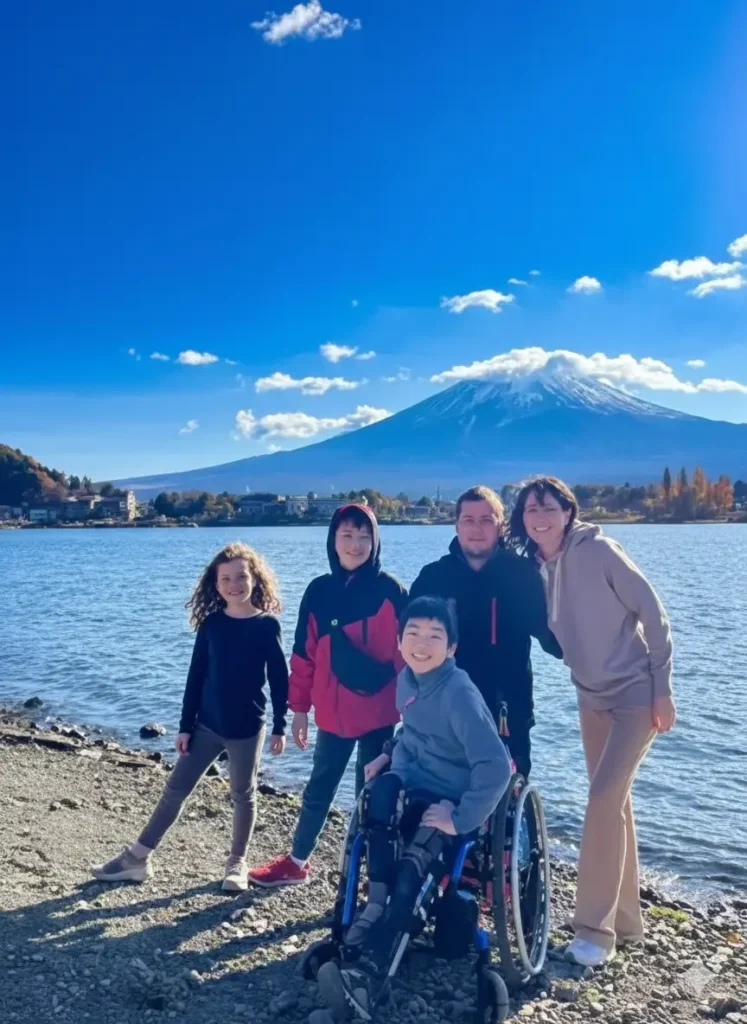
We took the red line bus, accessible by a foldable ramp, and wandered the north side of Lake Kawaguchi. The path around the lake is paved and offers endless stunning views. Not only is there an abundance of accessible restrooms, there’s also an accessible toilet map! We enjoyed lunch in town at Fuji Tempura IDATEN.
Nara Deer Park
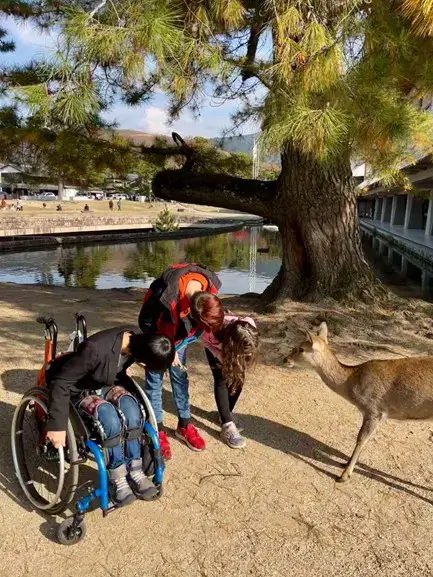
The famous deer of Nara Park really do bow to you in hopes of a treat. More importantly, in terms of accessibility, they’re happy to meet you on the sidewalk. There’s no need to wander into grass or gravel to get to the deer. They will come to you. Many of the shops and restaurants in town are zero-entry. There is an accessible public restroom outside of Todai-ji Namdaimon as well as in the train station.
Kyoto Ninja Experience
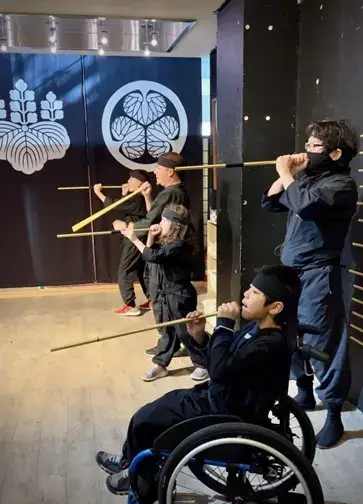
If you’ve never seen a wheelchair-using ninja, it’s time to change that. The Kyoto Ninja Experience begins in a zero-entry room where you’ll change into your ninja attire. Feel free to only change the top half, if that’s easier. Once you’re ready, there’s an elevator to the upstairs training room where after discovering the ancient ways of the ninja you’ll learn to throw ninja stars, shoot blow darts, and battle with foam swords. They do not have a bathroom, accessible or otherwise.
Hiroshima
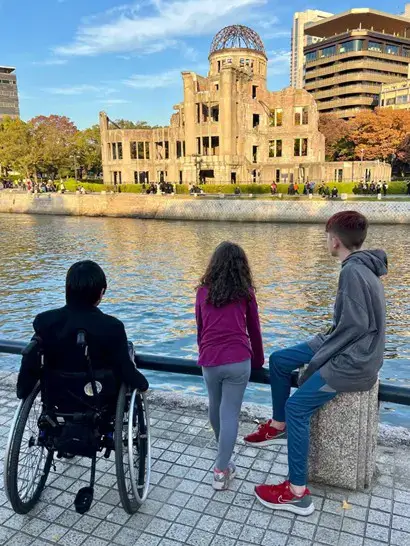
Hiroshima was the smallest city we explored. Most of the main attractions are contained in a small area. The accessible sidewalks and paved paths were easy to navigate, and we could explore the city without having to navigate trains, subways, or buses. Peace Memorial Park offers an accessible route via an elevator and has spacious accessible restrooms with all of the amenities.