

Listen to this Article
When We Travel Together
Travel has a way of revealing what really matters. It shows us what we rely on, what we take for granted, and what we need in order to feel confident, dignified, and free.
For me, travel is at its best when the world is accessible, because when it is, the experience is pure joy. Independence feels natural, not negotiated. And the journey becomes something to enjoy, not endure.
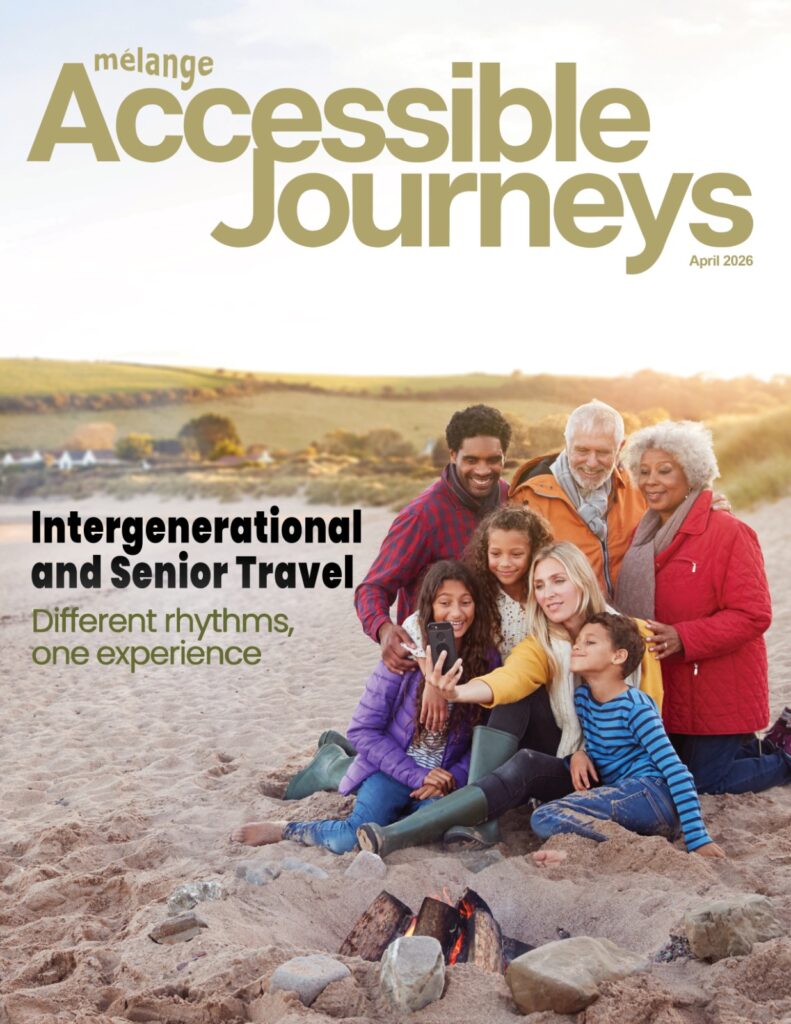
This issue’s focus on intergenerational travel matters deeply. When children, parents, grandparents, and carers travel together, the challenges can quickly add up. Routines disappear, environments change, and everyone’s needs are different. But inclusive design has the power to level the playing field.
As we age, things can become harder to read, harder to open, and harder to use, which is why accessibility is not about “special cases.” It is about designing for real life, across every stage of it.
This issue’s focus on intergenerational travel matters deeply. When children, parents, grandparents, and carers travel together, the challenges can quickly add up. Routines disappear, environments change, and everyone’s needs are different. But inclusive design has the power to level the playing field. As we age, things can become harder to read, harder to open, and harder to use, which is why accessibility is not about “special cases.” It is about designing for real life, across every stage of it.
Often, the barriers appear before the trip even begins. If booking websites or apps are not accessible, independence is lost at the very first step. And once you arrive, it is the small details that can shape the entire experience, navigating transport, understanding signage, or simply knowing what is in the bathroom bottles when you are far from home.
I have travelled with my own parents, husband and children as well as my colleagues where they became my eyes, trying to read unfamiliar labels in another language. It was funny, stressful, and deeply revealing. When accessibility is not built in, the burden shifts onto the people you love, and that changes how travel feels for everyone.
As you read this issue, I invite you to notice the moments where travel feels effortless and the places where it does not. Celebrate thoughtful design, speak up when something is not accessible, and remember that inclusion connects us across generations.
Because travel should be about freedom, connection, and shared discovery, together.
Sam Latif
Guest Editor, Accessible Journeys