
Listen to this Article
For many travellers, an African safari is a dream shaped by images of wildlife, wide-open landscapes and luxury lodges. For disabled travellers, that dream often comes with additional questions: Will the room work? Can the vehicle accommodate my needs? Will I feel safe, respected and properly supported in a remote environment? According to Timothy Jackson of Jackson’s African Safaris, those answers depend less on marketing language and more on knowledge, planning and honest communication.
Jackson describes safari design in simple terms. Every tour operator, he says, is essentially building a trip from separate parts: airport transfers, flights, lodges, activities and guides. The difference lies in how carefully those parts are selected and matched to the individual traveller. His role, as he sees it, is to help clients choose the right elements for their own “shopping basket” and understand why each decision matters.
That approach is especially important when working with disabled travellers. Jackson says safari planning begins with education and assessment. Rather than sending out generic itineraries, he starts with a face-to-face video conversation. He wants to see the guest, understand their mobility or other access needs, discuss comfort levels and learn what may cause stress or discomfort. From there, he introduces options in manageable steps, explains price ranges and helps travellers understand what different camps, vehicles and service levels he can realistically provide that would meet their needs.
His emphasis on accessibility grew from an early encounter that changed the way he thought about safari travel. In 2007, Jackson attended a travel show in Durban, South Africa, where he had meetings with guides providing their services to wheelchair users and travellers with other special needs. Their work exposed him to a more intentional model of accessible safari planning and inspired him to learn more. He later travelled with various companies on educational trips and saw firsthand how trained guides who understand disability-related needs deliver better care for all guests, not only disabled ones.
That lesson continues to shape his work. Jackson says accessible safari design is not always about inventing something entirely new. More often, it is about choosing the right product or service or making targeted adjustments when needed. In one recent case, he arranged for vertical rails to be installed in a camp bathroom so a wheelchair user could transfer more easily into a shower chair. On another trip, he checked access points, bathroom layouts, pathways and room design in advance to help ensure that a guest using a wheelchair could navigate the property comfortably and safely.
He is clear that not every solution looks the same. Some travellers may need a wheelchair-friendly vehicle. Others may be able to ride comfortably in the front seat of a safari vehicle with some assistance. Private vehicles can reduce stress and create flexibility, though Jackson notes that cost can be a barrier. Lodge size matters too. He believes smaller camps are often better suited to travellers with more significant support needs because they are more likely to provide attentive, personalized care than larger properties handling dozens or even hundreds of guests.
A central idea in Jackson’s perspective is that accessible travel depends on good matching. Product knowledge, camp layout, timing, wildlife patterns, weather and the specific needs of the traveller must align. In his view, many safari trips sold on the market are poorly timed or not properly tailored because the person selling them does not know the product well enough.
That knowledge, he argues, also supports dignity. Safety on safari goes beyond wildlife and road conditions. It includes whether a person feels comfortable, cared for and secure in unfamiliar surroundings. Jackson says that preserving dignity means avoiding bad matches, preparing travellers honestly for possible discomforts and making sure they know how to raise concerns while they are still on the trip. Communication, he says, is essential. Problems can often be solved quickly if guests speak up early.
His experience has shown that every element of a trip requires careful consideration. While travellers are thoroughly assessed, on board support persons such as care aides should also be evaluated to ensure they are well suited to the demands of the journey. This perspective Jackson has learned from experience, he informs us. He asks detailed questions about anyone a traveller plans to bring for assistance, including confirming past travel experience together and assessing the reliability of that relationship in a demanding environment. For Jackson, this kind of learning is part of the job. He says every safari presents challenges, whether a traveller is mobility challenged or not. His responsibility is to reduce avoidable problems through careful consultation, thoughtful design and clear expectations before departure.
What he wants potential guests to understand is straightforward; Jackson’s African Safaris listens, educates and prioritizes the guest’s interests. Travellers who book a safari with him can expect a wealth of information, along with a planning process designed to empower them. In his words, informed decisions are powerful. For disabled travellers considering Africa, having the right information and preparation can make all the difference in whether a trip is possible and enjoyable. That preparation allows travellers to focus less on potential barriers and more on the trip of a lifetime and experience ahead.
Testimonials:
Wheelchair-user itinerary
Timothy Jackson of Jackson’s African Safaris was fantastic to deal with. He and his team listened to my needs and went about planning the trip of a lifetime. It went off without a hitch! Advice: Know your needs, know your limitations and ask for what you want but except that it may be close to what you want, but not exactly. Above all – enjoy your holiday!
Krista Bailey
Slower-paced itinerary
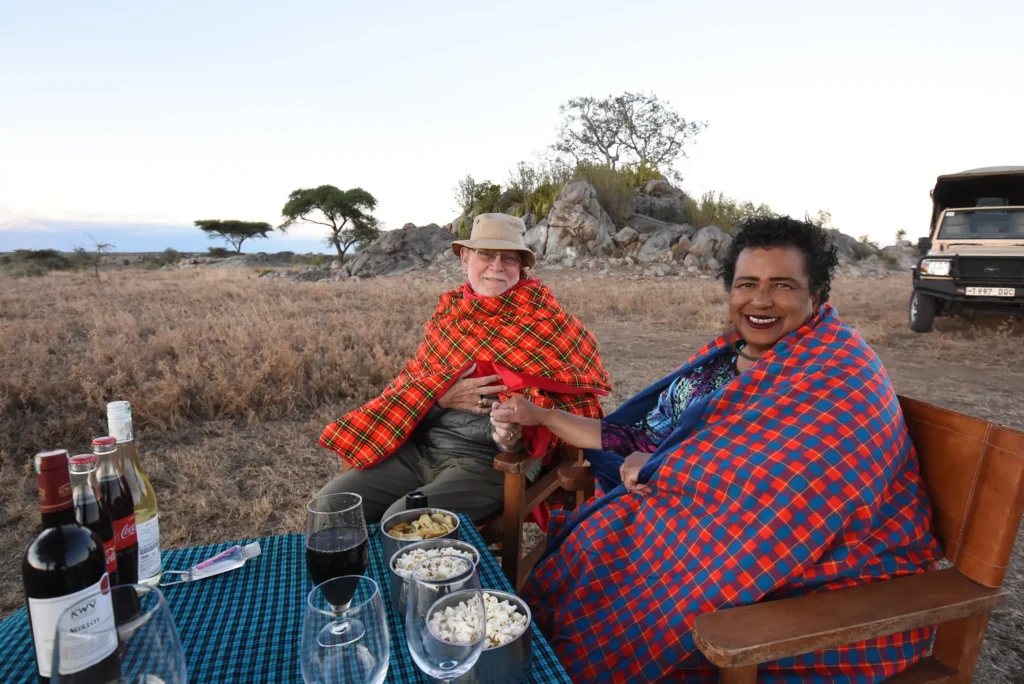
This was my second trip with Timothy; my first was to Namibia. I trusted him to take care of every detail – arranging everything from landing on the ground to flying home. He is very personable and helpful. This Kenya and Tanzania trip was so exciting! My wife and I saw so many animals in addition to “the big 5,” up close and personal. I got so many wonderful photographs of them, thanks to the knowledgeable local guides. The visits to the local Masai villages were fascinating and educational. We flew in a comfortable small plane from camp to camp, which I highly recommend – it’s worth the cost. We were comforted knowing that local men guarded the camp from wild animals, day and night. The staff at all the camps were very focused on the travelers’ safety, needs, and comforts. The “sundowners” were so pleasant – going to a beautiful setting, relaxing with drinks, and watching the sun go down.
Gene and Debbie Rimmer
Able-bodied itinerary
This testimonial is intended to convey Timothy’s unparalleled attention to detail that we three travelers enjoyed on a three-week adventure to Kenya and Tanzania. This once-in-a-lifetime trip allowed us, at Timothy’s recommendations, to experience savannah, desert, mountain climates and authentic, glorious accommodations sprinkled throughout both countries. At Timothy’s recommendation of and close coordination with African Ascents, we had five unforgettable and flawlessly executed days summiting Mount Kenya. In three weeks, there was truly not one miss in Timothy’s careful arrangements. And he’s just so darn easy and pleasant to work with. Highly, highly recommended.”
Susan Denham