
By Christine E Staple Ebanks
Listen to this Article

Christine Staple Ebanks is an award-winning author, speaker, and disability parent advocate. She is the founder of Raising Special Needs Inc. and the Special Needs Mama Bear movement.
Learn more at christinestapleebanks.com and thespecialneedsmamabear.com.
As many of us know, as special needs parents, when we plan family vacations we’re not just thinking about where we’re going—we’re thinking about what the experience will create for our children.
Lately, everyone keeps asking me, “What are you doing for the summer?”
Honestly, I’m working on a plan.
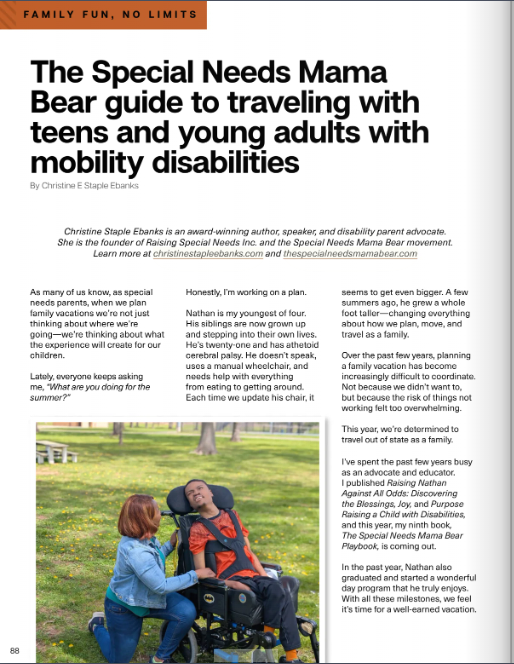
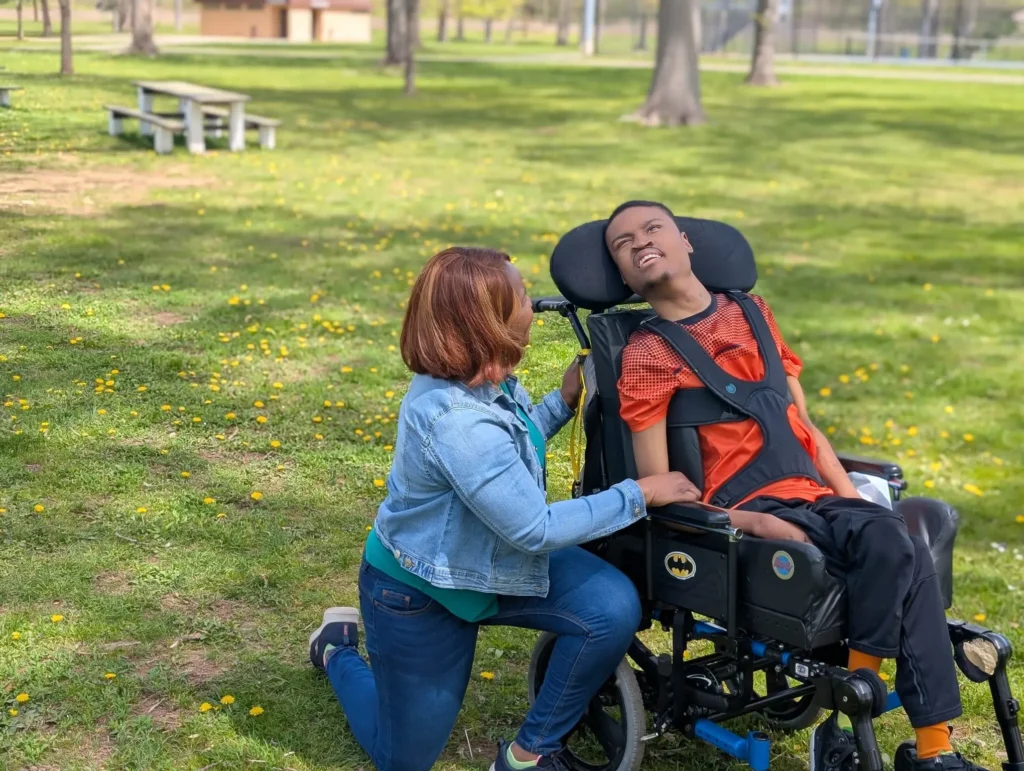
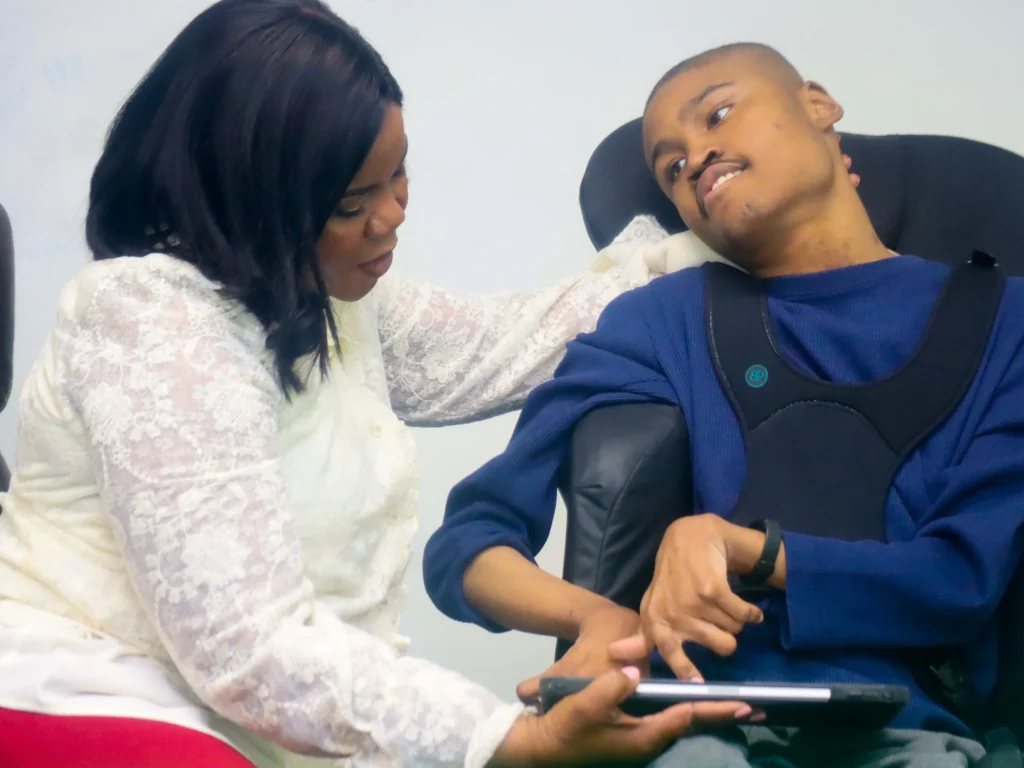
Nathan is my youngest of four. His siblings are now grown up and stepping into their own lives. He’s twenty-one and has athetoid cerebral palsy. He doesn’t speak, uses a manual wheelchair, and needs help with everything from eating to getting around. Each time we update his chair, it seems to get even bigger. A few summers ago, he grew a whole foot taller—changing everything about how we plan, move, and travel as a family.
Over the past few years, planning a family vacation has become increasingly difficult to coordinate. Not because we didn’t want to, but because the risk of things not working felt too overwhelming.
This year, we’re determined to travel out of state as a family.
I’ve spent the past few years busy as an advocate and educator. I published Raising Nathan Against All Odds: Discovering the Blessings, Joy, and Purpose Raising a Child with Disabilities, and this year, my ninth book, The Special Needs Mama Bear Playbook, is coming out.
In the past year, Nathan also graduated and started a wonderful day program that he truly enjoys. With all these milestones, we feel it’s time for a well-earned vacation.
I find myself holding both excitement and a quiet nervousness as we prepare to step into this new and uncharted experience.
Here’s what I’ve noticed: when our kids are little, traveling as a family with special needs can actually feel pretty manageable (in retrospect)—even if you have more than one child, like me. Young kids stick close, and we move together as a team. It’s easy to hold their hands in the airport, lift them when needed, or carry them in our arms when they get tired or are having a meltdown. We can join them in the pool, play on the beach, go down slides, and help them participate in age-appropriate activities.
Even though there are challenges, things like strollers or small wheelchairs are easier to manage, transitions are smoother (they take naps), and most places feel accessible enough to make the trip enjoyable for everyone.
As our kids become teens and young adults with mobility disabilities, everything changes.
Their bodies grow. Their equipment grows. Their needs become more complex. And their desire for independence grows, just like any teenager’s—but the world around them doesn’t always keep up.
So the question shifts.
It’s no longer just where are we going?
It becomes:
How is this going to work for them—from start to finish?
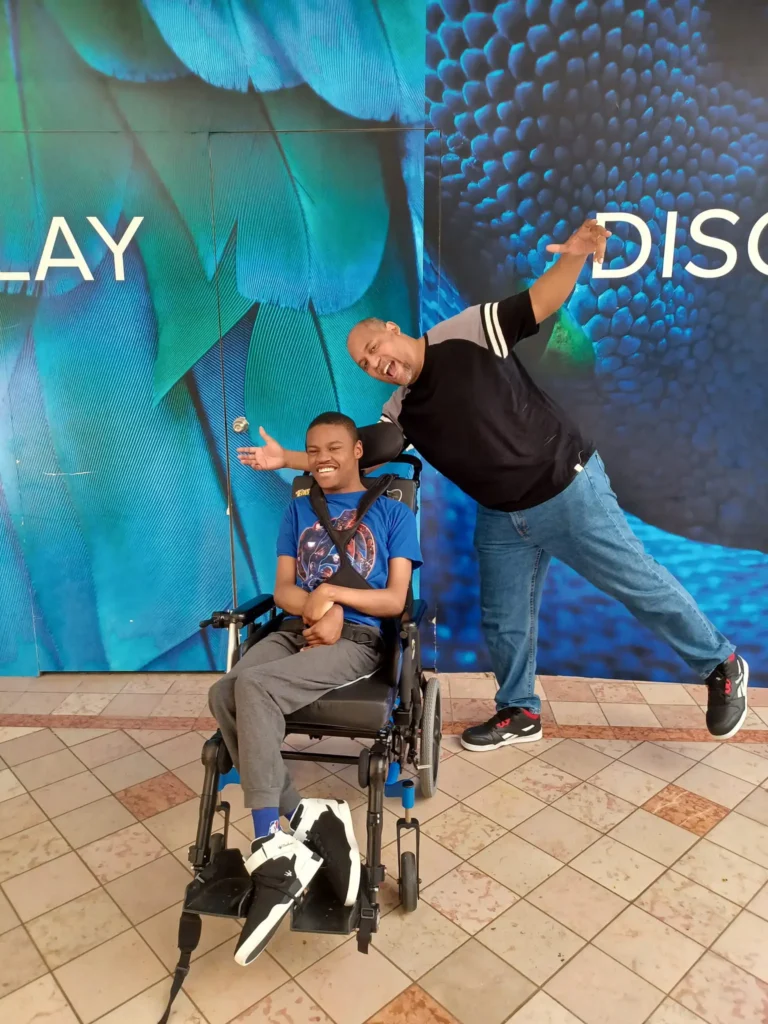
Because for our children, the experience of travel isn’t just about the destination. It’s about every single step in between.
That shift in thinking changed everything about how I plan.
So, from one Special Needs Mama Bear to another, here’s a guide to planning travel with a teen or young adult with mobility disabilities—whether your journey is near or far, domestic or international.
1. Start with the journey, not just the destination
Travelers with disabilities often face challenges when environments aren’t designed with their needs in mind. As the CDC notes, people with disabilities often experience barriers to inclusion—including physical environments that are not accessible [1]—and that reality shapes how families like ours plan.
I don’t start with the destination anymore. I start with the journey.
From the moment we leave home, accessibility becomes part of Nathan’s experience—getting to the airport, moving through it, boarding the plane, arriving, transferring, settling in. Every step matters.
We use our accessible minivan to get to the airport or for road trips, and we’ve worked with our van company to arrange wheelchair-accessible rentals in other cities. I check hotel layouts, bathroom configurations, dining spaces—everything.
I always ask questions ahead of time because I’ve learned this the hard way:
Accessibility isn’t just about where you stay. It’s about how your child moves through every part of the trip.
2. Rethink what independence really looks like
As Nathan has grown, I’ve seen his desire for independence grow too—just like any young adult.
He doesn’t speak and has limited communication skills (it’s still a work in progress), but I know he wants to make choices. He loves traveling, meeting new people, and exploring new environments.
So now, independence looks different.
It looks like preparing his communication device—a tablet with custom text-to-speech icons—so he can say, “Hi, my name is Nathan. What’s your name?”
It looks like involving him in decisions, even when it takes more time.
It looks like asking not just, “Can he get in?” but
“How will he experience this?”
Because independence isn’t just about doing things alone—or assuming he will spend every moment with us. It’s about being included in the experience in a meaningful way, with the same opportunities to explore, connect, and engage as any other young adult.
3. Focus on participation, not just access
Access gets you in the door.
Participation is what makes the experience meaningful.
When we plan, I go beyond asking whether a place is accessible. I ask whether Nathan can participate in a way that aligns with his age, interests, and dignity as a young adult—without assuming he will spend the entire trip with his siblings.
Sometimes that means adapting what’s available. And sometimes it means deciding that a place simply isn’t the right fit.
Because what matters most is not just presence—but experience.
4. What to Ask Before You Book (Especially for Larger Wheelchairs)
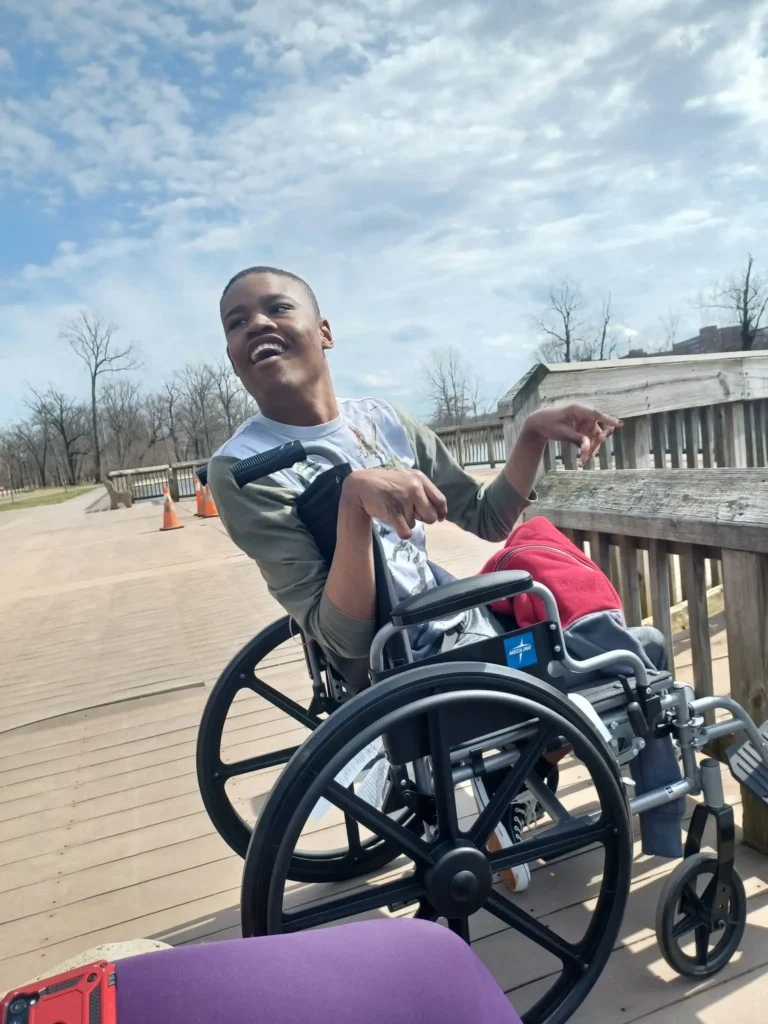
Because “accessible” can mean very different things depending on who is asking, general accessibility questions won’t protect a family traveling with a teen or young adult using a large, complex wheelchair.
A space that works for a small child or lightweight chair may not work for a teen using a full-size manual chair or a power wheelchair with tilt, recline, or specialized supports.
So I don’t ask general questions anymore. I get specific.
When I call ahead, I explain exactly what Nathan uses and how he moves, and then I ask:
- What are the doorway widths (in inches) for both the room and bathroom?
- What are the clear floor dimensions—can a full-size wheelchair turn comfortably?
- Is the shower truly roll-in, or is there even a small lip or step?
- Is there enough space for assisted transfers, and are grab bars positioned appropriately?
- What is the bed height, and will it work for safe transfers?
- If transportation is provided, what type of vehicle is used, and how is the wheelchair secured?
- Can they accommodate a wheelchair that may recline or require additional positioning space?
The clearer you are about your child’s needs, the better answers you’ll get—and the fewer surprises you’ll face when you arrive.
5. Plan for the unexpected—because it will happen
Even with careful planning, things don’t always go as expected.
Transportation falls through.
Spaces aren’t quite what was described.
Plans need to change—quickly.
So we think ahead:
- What is our backup if transportation isn’t available?
- Are there alternative providers we can call?
- What activities can we pivot to if something isn’t accessible?
- What do we need on hand if delays happen?
Having a backup plan doesn’t remove every challenge—but it gives you confidence to move through them.
6. You don’t have to do this alone
One of the greatest resources we have as parents is each other.
Other families who have walked this path often have the most practical, honest insights—what worked, what didn’t, and what to watch out for.
Over time, I’ve learned to lean into that community.
Because when we share information, we don’t just make travel easier—we make it possible.
7. More than a trip—it’s a life experience
This is the work I’ve been doing not just as a parent, but as an advocate, educator, and author.
In my upcoming book, The Special Needs Mama Bear Playbook, I go deeper into what it really means to move from surviving to thriving—not just in travel, but across every stage of raising a child with special needs.
Because travel is just one part of a much bigger journey.
Final Thoughts
In the end, we’re not just planning vacations. We’re creating experiences where our children can be seen, included, and engaged in the world around them. We’re making space for joy, for connection, for growth—for them and for us.
And when it all comes together—even imperfectly—those moments mean everything.
Because for families like ours, it’s never just about getting there.
It’s about making sure they truly get to be part of the experience when we do.
If this resonated with you, you can find more real-life Mama Bear strategies, stories, and support at christinestapleebanks.com and across social media @thespecialneedsmamabear—and keep an eye out for The Special Needs Mama Bear Playbook. This is just the beginning of the journey.
