
By Jan Bonville
Listen to this Article
Our writer and collaborator, Jan Bonville, has written extensively on her experience in Tahiti as a disabled traveler with family. For this story, she shares her personal experience — and a conversation with Tahiti Tourisme — on the power of the ocean in the context of disability and inclusive tourism.
Established in 2018, Tainui Atea is the name given to the Managed Marine Area covering nearly the entirety of French Polynesia’s Exclusive Economic Zone — almost 5 million km² of ocean placed under protection. In 2025, on the occasion of the third United Nations Ocean Conference (UNOC 2025), the area reached a major milestone: Tainui Atea was officially designated a Marine Protected Area, the largest ever created on a global scale. The designation strengthens French Polynesia’s conservation strategy to protect marine biodiversity, ocean ecosystems, and the resources local communities depend on.
(Courtesy Tahiti Tourisme)
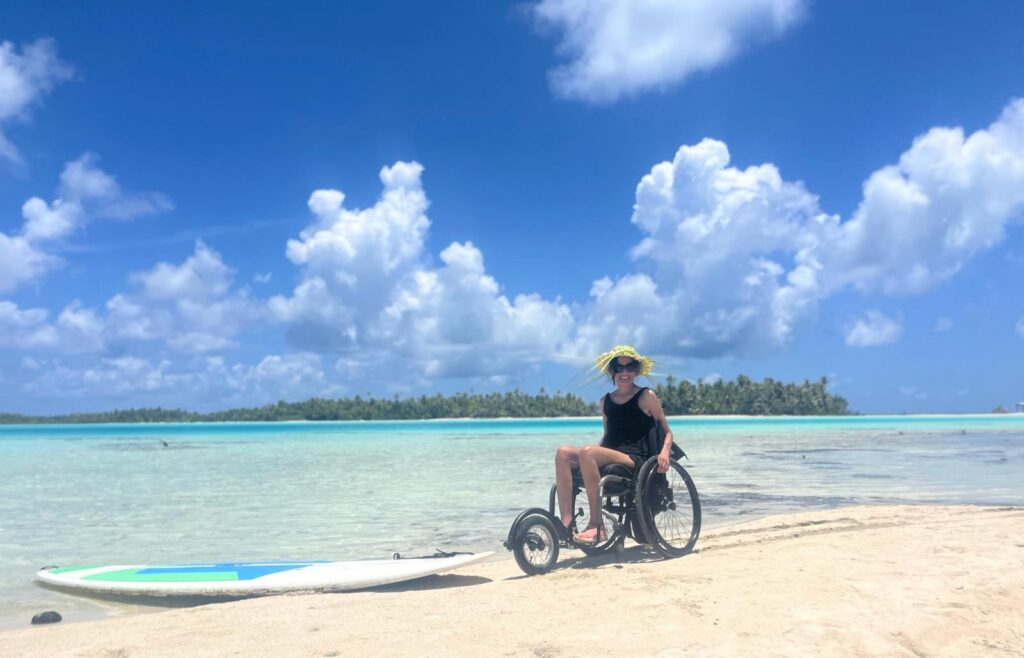
It’s also the backdrop against which I want to tell you a much smaller, much more personal story: what it feels like to experience the Tahitian ocean for someone whose body doesn’t always cooperate with the idea of getting there- and who had, for a long time, given up on being able to have that experience.
The Ocean Doesn’t Ask What’s Wrong With You
As long as I can remember, I’ve loved the sea. The vastness of it, the openness, the smell of salt, the sound of the waves. So when I began to lose mobility to MS, losing my ease of getting into the water — both of moving across the sand to reach it and being able to be inside it — became one of my most poignant sorrows.
But it didn’t have to be that way. I can still get into the water. It’s hard, and takes a lot of creativity, resourcefulness and help- but as I’ve shared in these pages, hard does not mean impossible, especially not to someone for whom every movement and effort is hard. And once I’m in — once I forget the chronic pain, forget the logistics of getting a wheelchair across sand — the water takes my weight. Gravity, my near-constant negotiating partner on land, let’s go.
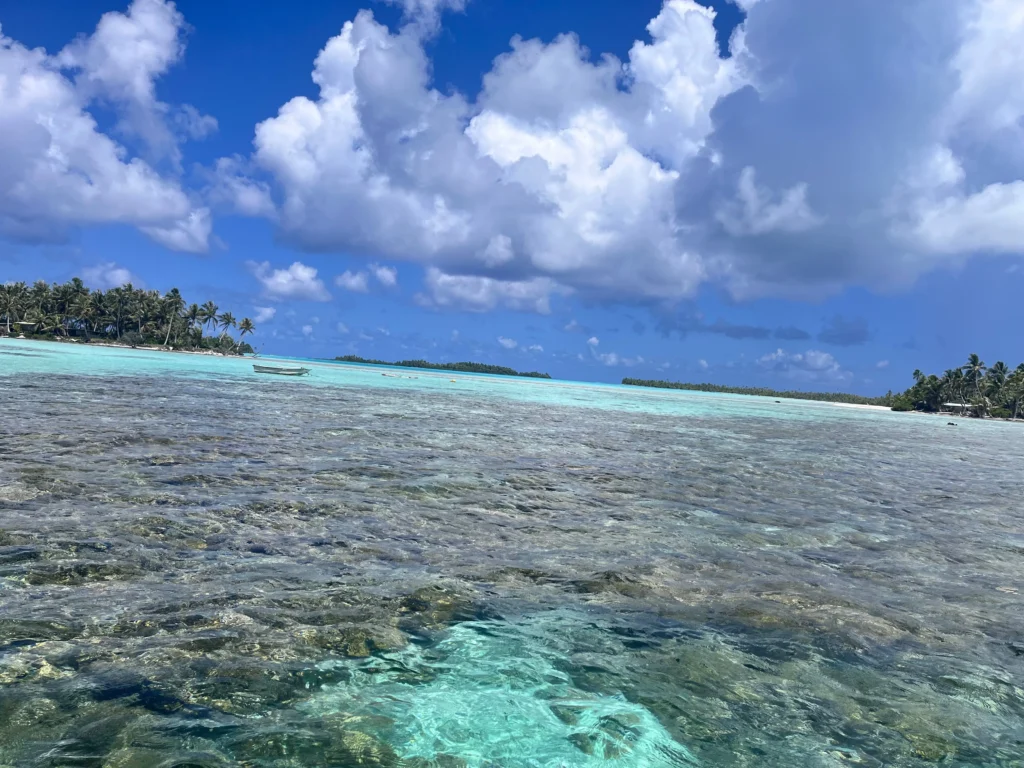
Anyone living with a mobility limitation or chronic condition knows the particular fatigue of always working against your own body — the friction of transfers, the strain of compensating, the vigilance that never fully switches off. Water changes the equation. That said, it is frightening, as not having balance nor strength means you can get easily upset by a current or waves. Here is where Tahiti takes on a special power- the lagoons in Tahiti are gentle and allow someone like me to enter the water with low stress.
There’s real science behind the feeling. Research on “blue space” and mental health consistently finds that proximity to and immersion in water lowers cortisol, slows heart rate, and improves mood — effects that show up even after short exposures. For someone whose baseline stress is already elevated by pain or illness, that dip is all the more important.
Sound as Medicine
The rhythm helps too. The steady, repeating sound of the waves has a documented effect on shifting the brain out of the hyperalert state that chronic pain and chronic illness tend to keep it locked in. In Tahiti, with the lagoon audible through open shutters, the sound of the waves did something no medication had managed that week, creating an immense feeling of calmness and peace.
The Magic of the Ocean
The lagoons of French Polynesia — Moorea, Rangiroa, and Taha’a — are my favorite experiences of all: warm, soft water, shallow and safe, and a dizzyingly colorful array of marine life. It is tough to get into the water, make no mistake. It takes resourcefulness and the kindness of others, and no small number of struggles, mental and physical.
But it is so worth it.
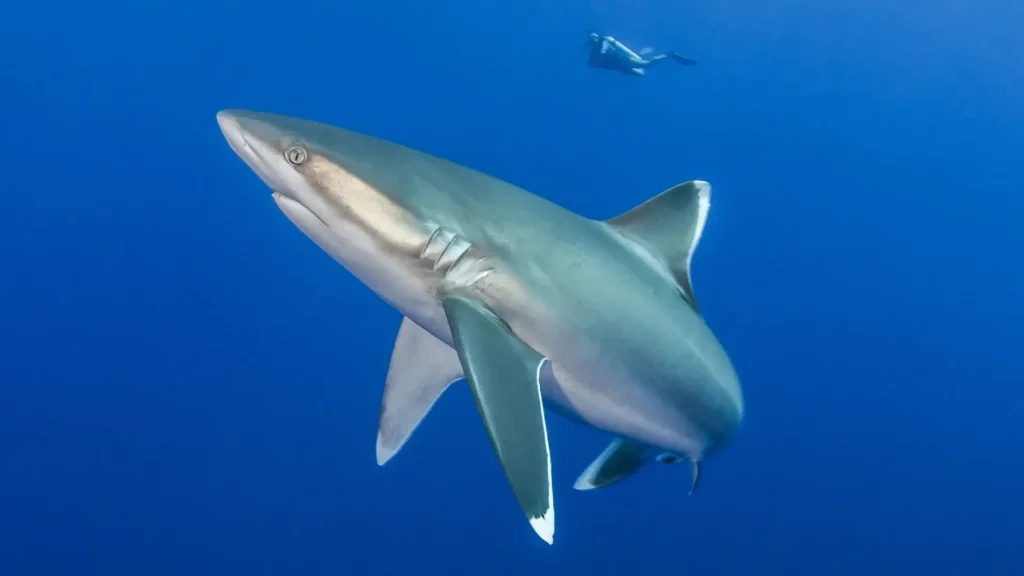
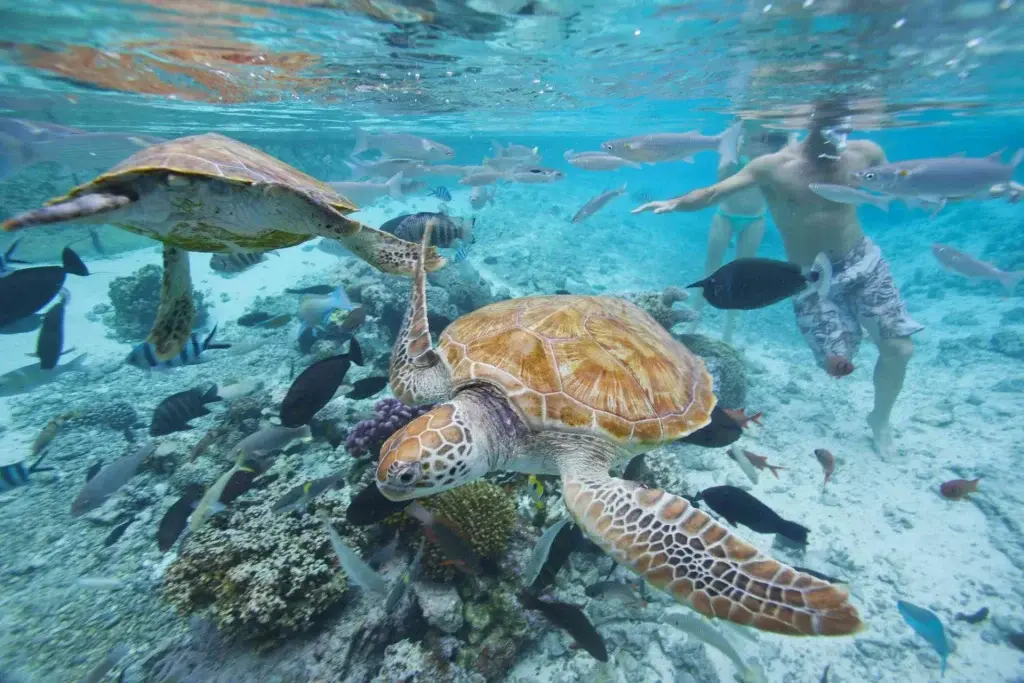
There is nothing, nowhere, like this lagoon — floating close to reef fish in every color, feeling soft stingrays brush past my legs, sharing the water with friendly lemon sharks and majestic sea turtles. It is otherworldly. You feel small and insignificant, which we are. I couldn’t sit on a boat deck and watch that scene from above and feel anything close to what I feel suspended inside it.
I’ll never forget seeing the turtles with their gorgeous patterned shells peacefully gliding past the coral. I floated above them with my specially fitted mask, watching them, along with schools of fish drifting past. I could have stayed there for hours, doing nothing but watching the fish. There is a whole new world under the surface of that turquoise lagoon. There’s something too, to be said about observing it from afar – the way I must, as I cannot get as close as a diver to these magnificent creatures.
A Conversation with Tahiti Tourisme
The following is a conversation with Alice Izal, Chief Marketing Officer of Tahiti Tourisme, on inclusive access to the ocean — interspersed with my own reflections as a disabled traveler.
For someone who is challenged, or who has never been able to experience the open ocean before, what does Tahiti offer that they genuinely couldn’t get elsewhere?
Alice Izal: “For The Islands of Tahiti, accessibility is about more than infrastructure — it is about connection. What makes the islands so unique is the opportunity to experience one of the world’s largest protected ocean spaces within lagoons that are remarkably calm, warm, and accessible. Many travelers may find the open ocean intimidating, but here, the lagoon often serves as a gentle gateway to that experience.
There is also a profound cultural dimension. In Polynesian culture, the ocean is not simply a recreational space; it is part of our identity, our history, and our understanding of the world. Through Tainui Atea, we are preserving not only marine ecosystems but also a relationship between people and ocean that has existed for generations. For a traveler who has never been able to experience the ocean fully before, that combination of physical access, emotional connection, and cultural meaning is truly unique and difficult to find anywhere else.”
Jan’s personal note: I can attest to this personally. My disability is due to multiple sclerosis and overall weakness, which means I can no longer truly swim. The lagoons of Tahiti are shallow, warm, and — depending on the day and the currents — feel relatively safe to me, whether I went out with a guide or with my own family. I not only feel safe, but am able to experience more underwater life than I ever had in open ocean, even during my best able-bodied days in the past. The presence and help of Tahitian guides was deeply meaningful; without them, I would never have had these experiences.
Many ocean experiences in Tahiti — swimming with manta rays, snorkeling with turtles — are bucket-list moments for everyone. Are there examples of how Tahiti Tourisme is making these more inclusive for people with disabilities?
Alice Izal: “We believe the most meaningful ocean experiences are those that respect and protect the marine environment while remaining accessible to as many people as possible. Across the destination, we are seeing encouraging efforts by tourism providers to make lagoon and marine experiences more accessible through adaptive equipment, tailored excursions, and trained guides who can accommodate a range of mobility needs.
Our approach is rooted in responsible wildlife tourism. We encourage visitors to observe manta rays, sea turtles, and other marine wildlife from a respectful distance, allowing them to experience these encounters while minimizing disturbance and protecting the animals’ natural behavior.
As accessibility evolves, we see an opportunity to integrate inclusive design into the broader vision of Tainui Atea. The goal is not simply to create separate experiences for travelers with disabilities, but to ensure they can enjoy the same extraordinary marine environments while promoting conservation and respectful wildlife observation.”
Jan’s personal note: As a disabled traveler with a mobility impairment, I’ve learned to be very patient — whether I want or not! For me, staying still and waiting is a normal course of action. I’ve found that whether it’s by the side of the ocean or in a rainforest, sitting still, waiting, and watching is sometimes the best way to observe the natural world. In the same way it’s best to respect wild animals on the savannah from the jeep rather than stepping outside to bother them, it’s often best to observe marine wildlife from the respectful distance of a boat or farther in shallow water, rather than disturbing them.
I won’t pretend it’s easy to have the same experiences while disabled — it took a lot of creativity and resourcefulness to get me onto the boat and into the water. But with a willingness to help and be helped, and to communicate my needs clearly, it was possible. I hope that on future visits I’ll be able to enjoy these experiences and others, with more providers and also on more remote islands.
The ocean and lagoons are under pressure from climate change and tourism volume. Do disabled travelers — who often travel with more intention and spend more per trip — factor into how you’re thinking about sustainable, lower-impact tourism models?
Alice Izal: “Absolutely. Our tourism strategy has increasingly focused on quality over quantity. Tainui Atea is built on the idea that the ocean is a shared heritage that must be protected for future generations. We’re placing increasing importance on visitor experiences that foster a deeper connection to place, rather than simply increasing visitor numbers. We want tourism that contributes to local communities, respects environmental limits, and encourages visitors to develop a lasting relationship with the ocean.
Travelers with disabilities are an important part of the conversation. Many travel with a strong sense of purpose, invest significant time in planning their journeys, and seek meaningful, immersive experiences. These qualities align closely with our vision for a sustainable tourism model — one that prioritizes quality, cultural exchange, environmental stewardship, and longer-lasting connections with our destination.”
Jan’s personal note: As I always share in my talks on inclusive tourism, travelers with disabilities are a very important market segment for sustainable and intentional tourism. Most of us do spend more — not only because we must, given the infrastructure required to support us, but because we want to. I travel only to places I love and want to go to, and I’m a repeat visitor to places where I feel comfortable, welcome, and cared for. Case in point: this February, my husband and I will be going to Tahiti for the seventh time. And it won’t be the last. I’ve convinced at least five of my able-bodied friends’ families to Tahiti, and we’ve also managed to make our children, on four of those who are now young adults, fall in love with Tahiti. Disabled travelers travel not only intentionally but tend to be incredibly loyal — and we share our positive experiences far and wide.
Are local Polynesian communities — who have their own relationships to the ocean across generations, and of course have disabled family members — involved in shaping what accessible marine experiences look like?
Alice Izal: “Yes. One of the guiding principles behind Tainui Atea is that ocean stewardship must be community-led. Through Tainui Atea, local communities, fishers, cultural practitioners, environmental organizations, and public institutions all have a voice in shaping the future of marine conservation and the way the ocean is experienced and protected. Polynesian communities have lived in harmony with the ocean for generations, and this deep knowledge is invaluable when considering how people can experience marine environments safely, respectfully, and meaningfully.
Accessibility should not be viewed only through a technical lens; it is also about welcome, cultural understanding, and ensuring everyone feels connected to the experience. As conversations around inclusive tourism continue to grow, we believe the most successful solutions will be those developed with local communities, because they understand both the opportunities and the realities of ocean access in our islands.”
World Ocean Day is about the ocean belonging to everyone. What’s one concrete commitment Tahiti Tourisme can make to improve ocean access for disabled visitors in the next two years?
Alice Izal: “One commitment we can make is to work collaboratively with tourism operators, accessibility advocates, and local communities to better identify, promote, and encourage accessible ways to experience The Islands of Tahiti’s marine environments. The first step is improving visibility — many visitors don’t know which excursions, beaches, lagoons, or marine facilities can accommodate their specific needs.
Our broader goal is simple: if Tainui Atea represents a protected ocean for future generations, then it should also represent an ocean that everyone can experience responsibly. Conservation and accessibility are not competing priorities — they are complementary ones. The more people can connect with our ocean, lagoons, and marine ecosystems in a respectful way, the greater their understanding of why they deserve to be protected.”
EndNote: Where I Come Back To
I’ve been to Tahiti six times now. This coming February will be the seventh. People may wonder why I keep going back to the same place when the world is so large and my mobility makes travel so much harder to plan. The honest answer is that there is nowhere in the world like Tahiti where I feel so mentally and physically relaxed. The lagoon has never made me feel like a burden, an inconvenience, or an exception.
There’s a particular kind of grief that comes with a body that no longer does what it used to — the loss of ease, of spontaneity, of simply walking into the water without a plan. What French Polynesia gave back to me wasn’t my old body. It was something else: proof that wonder doesn’t require able-bodiedness as a prerequisite. That the most extraordinary encounters — a stingray’s wing against your leg, a turtle drifting past at eye level — are available to anyone willing to be patient, to ask for help, and to let the water do what gravity never could.
Tainui Atea protects nearly five million square kilometers of ocean for the generations that come after us. I’d like to think it’s also protecting something smaller but no less important — the chance for a woman who can no longer swim to float among reef fish and sea turtles, and to experience the magic of the ocean feel, for a little while, entirely unremarkable in the very best sense of the word.
We’ll be back in February. I already know it won’t be the last time.
