
Listen to this Article
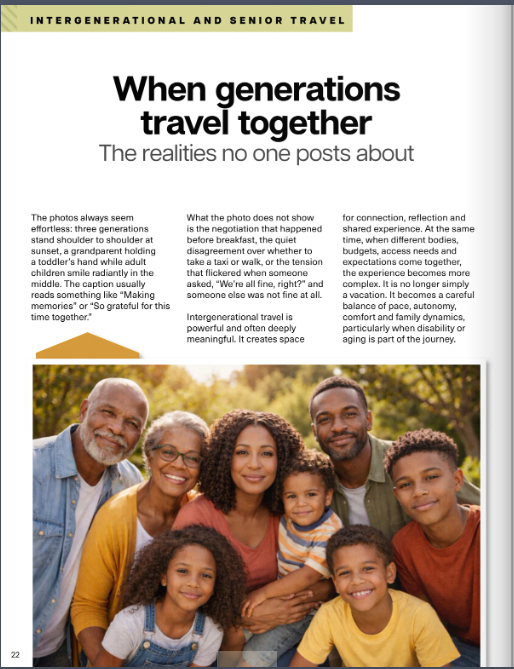
The photos always seem effortless: three generations stand shoulder to shoulder at sunset, a grandparent holding a toddler’s hand while adult children smile radiantly in the middle. The caption usually reads something like “Making memories” or “So grateful for this time together.”
What the photo does not show is the negotiation that happened before breakfast, the quiet disagreement over whether to take a taxi or walk, or the tension that flickered when someone asked, “We’re all fine, right?” and someone else was not fine at all.
Intergenerational travel is powerful and often deeply meaningful. It creates space for connection, reflection and shared experience. At the same time, when different bodies, budgets, access needs and expectations come together, the experience becomes more complex. It is no longer simply a vacation. It becomes a careful balance of pace, autonomy, comfort and family dynamics, particularly when disability or aging is part of the journey.
Different travel speeds
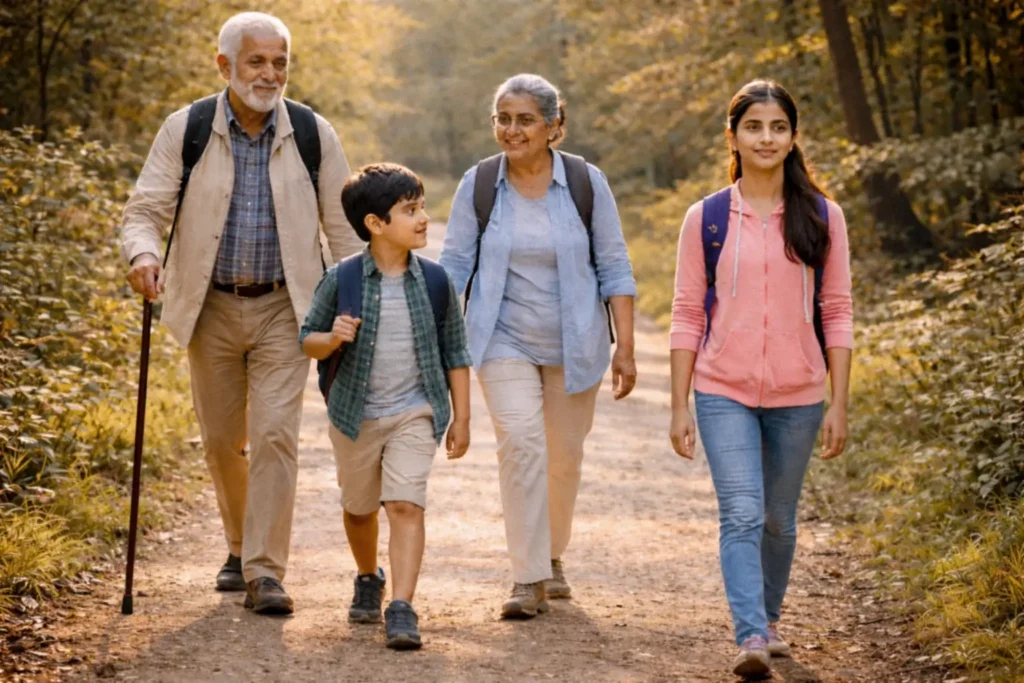
One of the first challenges is pace. A child has different energy than an adult, and an older person may move more slowly. Add a wheelchair user or someone with a chronic illness, and the differences become even more noticeable, not just in how people move but in how long they can keep going.
Travel makes these differences more obvious than everyday life. At home, everyone does their own thing, but on a trip, people usually expect to stay together. This is where frustration can start, as some move ahead while others slow down, and some push themselves to keep up instead of asking for a break.
Pace is not just about walking speed. It also includes energy levels, medication timing, how people handle noise and crowds and when they need to rest. When these needs are not talked about, tension can build quickly.
Solution:
Things work better when families plan for different paces instead of assuming everyone will move the same. Keeping activities shorter, building in rest breaks and choosing places that allow flexibility can take the pressure off everyone. It also helps to accept that not everyone has to do everything, and that splitting up sometimes can actually make the trip easier and more enjoyable for everyone.
Budget disagreements
Money can quietly shape how decisions get made on a trip. In many families, grandparents may pay more, while adult children contribute what they can alongside their own responsibilities. At the same time, each generation may care about different things, like comfort, convenience or new experiences.
When accessibility is involved, costs can go up. Accessible rooms, direct flights, suitable transportation and insurance can all add extra expenses.
If this is not talked about openly, it can lead to unspoken expectations. The person paying more may expect more control, while others may hold back their needs so they don’t seem difficult.
Solution:
Talking about money early can help avoid problems later. Be clear about who is paying for what, what is necessary for safety and accessibility and where there is room to adjust. When accessibility is seen as something everyone agrees on, not an extra cost, decisions feel more fair and less stressful.
Misunderstandings about access
Access is often where differences really show up. One person might think a hotel labeled accessible will work for everyone, while another knows that “accessible” can mean very different things. Things like terrain, noise or how fast an activity moves can also feel very different depending on a person’s needs.
These misunderstandings are usually not intentional. They come from different life experiences. Someone who has not faced barriers may not think about them, and someone without chronic pain or sensory sensitivities may not realize how quickly those can affect a day.
Problems start when access needs are brushed off or misunderstood, even in well-meaning ways. Over time, this can lead to frustration and a breakdown in trust.
Solution:
To change this, access needs to be something everyone takes responsibility for from the start. Look at accommodations together, talk openly about possible challenges and have backup plans in place so one person is not carrying all the pressure. Asking questions instead of making assumptions helps make access a shared priority, not just one person’s issue.

Privacy challenges
Staying together across generations can feel nice, but it can also be challenging. Sharing hotel rooms or rental homes often means less personal space, which can be difficult for people who need time alone to rest or manage their health.
For disabled travellers, privacy is especially important. Things like taking medication, moving around or taking a break from noise all need space, and without it, even simple routines can become harder.
At the same time, old family dynamics can come back in close quarters, with familiar roles and expectations showing up again.
Solution:
A more balanced trip starts with setting expectations before you arrive. Plan for quiet time, respect personal space and build in moments where people can do their own thing. When privacy is treated as something people need, not just want, it becomes easier to support.
Decision fatigue
Travel comes with a lot of decisions, from daily plans to last-minute changes. When different generations are involved, it gets more complicated because everyone has different needs and preferences.
If one person ends up doing most of the planning, they can quickly feel overwhelmed, while constant group discussions can wear everyone out. For disabled travellers, keeping track of energy levels and accessibility adds even more to think about.
This kind of fatigue doesn’t always show up clearly. It can come out as irritability, pulling away or struggling to make even simple decisions.
Solution:
To ease the pressure, share the load more evenly. Let people take on roles based on what they enjoy or are good at so one person isn’t doing everything. Planning some things ahead while keeping some flexibility also helps reduce last-minute decisions.
When accessibility becomes a point of tension
In many families, conversations about accessibility are tied to how people see independence and aging. An older person may be reluctant to use a mobility aid, while a younger person with an invisible disability may feel like their needs aren’t taken seriously.
These situations are often complicated, shaped by personal beliefs, generational differences and emotions around change. Things like mobility aids, taking breaks or asking for help can feel like a big deal, especially when they challenge long-held ideas about being independent.
Solution:
Handling these moments takes care and respect. Seeing mobility aids as tools that help people take part, not as limitations, can change how they’re viewed. Believing someone when they say they need support, even if you can’t see it, builds trust and respect. Most importantly, each person should be able to decide what they need for themselves.

Planning trips that work for everyone
Intergenerational travel works best when it is approached with intention rather than assumption. By planning collaboratively, communicating openly and allowing flexibility within the experience, families can navigate differences more effectively.
Not every activity needs to include everyone, and rest does not diminish the value of the trip. Instead, these adjustments create space for each person to engage in ways that feel sustainable.
When differences are acknowledged rather than overlooked, the experience becomes richer. It allows for a deeper understanding of one another and creates opportunities for connection that extend beyond the destination itself.
Solution:
The best trips are the ones where everyone knows what to expect from the start, responsibilities are shared and people respect each other’s independence. When families travel this way, the experience becomes easier and more meaningful for everyone.
The photos may still look effortless, they capture the moment, but the real story is everything it took to get there. The listening, adjusting and showing up for each other. That is what stays with you and that is what makes the journey meaningful.