
Listen to this Article
Amy is the travel writer behind Wandering Everywhere, where she shares adventurous, off-the-beaten-path travel stories alongside honest reflections on living with Crohn’s disease. Through her experiences, she offers readers a personal look at what it means to keep exploring while planning carefully, listening to your body and travelling differently.
Your blog is called Wandering Everywhere, but Crohn’s disease can make travel unpredictable. How has Crohn’s changed the way you plan a trip before you even leave home?
Crohn’s has definitely changed the way I travel, but it hasn’t stopped me from travelling. I’m less rigid about planning now and more focused on staying flexible and adaptable while I’m away.
Before a trip, I’ll make sure I have my essentials sorted, but I don’t tend to over-plan itineraries in detail. I prefer to figure things out as I go and adjust depending on how I’m feeling and what the situation is on the ground.
What Crohn’s has really taught me is to travel in a way that allows for flexibility rather than control.
When you are choosing a destination, what makes a place feel manageable or safer for you as a traveller with Crohn’s? Are there certain destination features you now look for?
For me, it’s less about specific destination “requirements” and more about general practicality while I’m there. For example, I tend to travel in countries where I can speak the language or where I have friends locally, which makes things easier if I ever need help or advice on the ground.
I also naturally gravitate towards places where day-to-day life feels straightforward, things like being able to easily find shops, cafés, or public spaces when needed. That said, I don’t actively map everything out in advance; I usually just work things out as I go.
Bathroom access can shape an entire travel day for someone with Crohn’s. How do you plan around that when mapping out sightseeing, restaurants, road trips or excursions?
I don’t really plan my days around bathroom locations in advance. Instead, I’ve learned to be practical and self-sufficient when I’m out.
For example, I always carry tissues with me, because depending on where I am, facilities might not always be stocked. In some places I’ve travelled, like rural areas in China, that’s just part of everyday reality, so I adapt accordingly.
I also naturally keep an eye out for places like shopping centres, train stations, or cafés while I’m out, since they’re usually easy options if needed.
Food is often one of the joys of travel, but it can also be complicated with Crohn’s. How do you experience local food while still protecting your health?
Food is probably the biggest area where my travel habits have changed, I don’t really enjoy trying unfamiliar food anymore, and I tend to avoid it because it feels too stressful for me. I prefer sticking to foods I already know and trust.
When I travel, I always bring familiar snacks with me, especially for the first part of a trip, so I don’t have to worry about finding suitable food straight away.
I’ve learned that it’s completely fine for me not to participate in local food culture in the same way other travellers might. For me, comfort and consistency matter more.
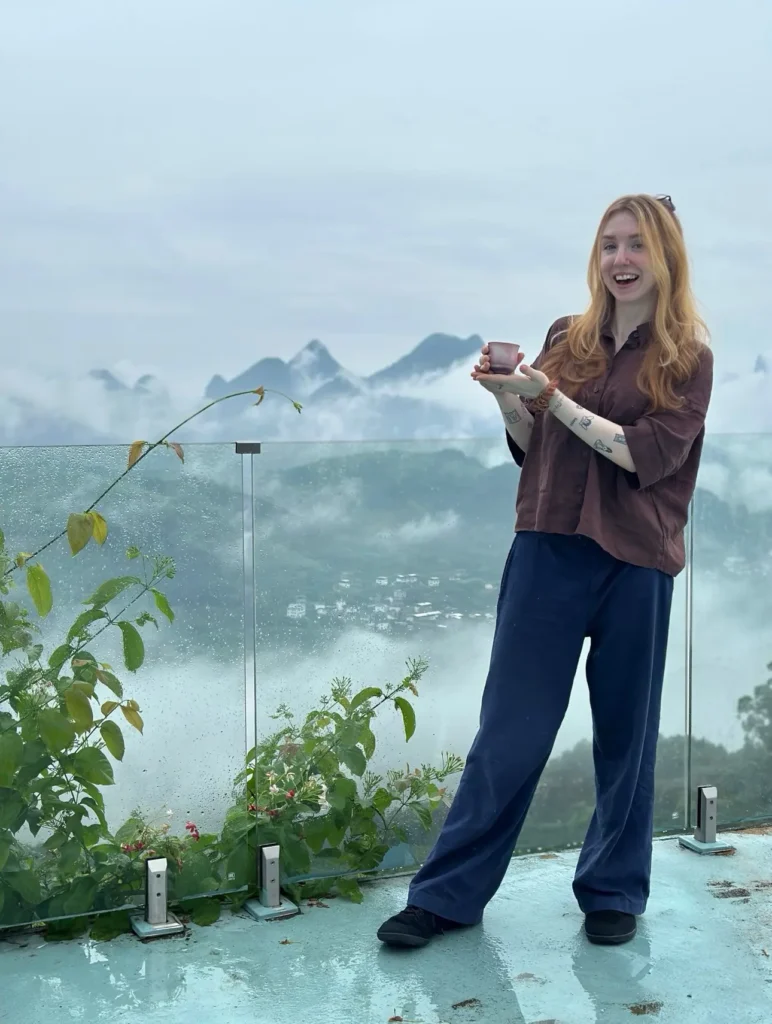
As I’m currently in China, if I have to eat food whilst I’m out, I will just order a bowl of rice until I can get back to my accommodation and cook something I know if safe. One thing I’m not is a foodie!
What is always in your Crohn’s travel kit, and what would you recommend other travellers with chronic illness consider packing?
I don’t actually travel with a structured “kit” in the way people sometimes assume. I used to carry medication, but I don’t anymore. For me, diet management is the main way I keep things under control, and if I’m eating in a way that works for my body, I don’t rely on medication while travelling.
What I do always carry are very simple essentials: wet wipes, hand sanitizer, tissues, and a few safe snacks. Food is a big part of how I manage travel, so I tend to make sure I always have something familiar with me.
I also have copies of medical information saved digitally, like prescriptions and a brief medical summary, but I rarely ever need to use them.
Can you share a travel moment when Crohn’s changed the plan completely? What did you do, and what could other travellers learn from that experience?
One of the first times I travelled alone to Canada really stands out. There were moments where I had no energy at all, and I remember feeling quite overwhelmed and guilty that I wasn’t “doing enough” with the trip. But I had to go through that experience to understand that you can’t really force travel days.
Sometimes you just need to stop and rest, and if you don’t listen to your body, you end up making things worse. That trip taught me that slowing down or doing nothing isn’t wasted time, it’s part of how I stay well enough to continue travelling at all.

Are there destinations, accommodations or types of trips that have worked especially well for you? What made them easier or more enjoyable?
Yes, but it’s less about specific “ideal” destinations and more about how easy it is to move around and manage daily life. Places where taxis are easy to use and reasonably affordable tend to work better for me, because I rely on them much more than public transport. I don’t really use buses or subways much when I travel.
Latin America, in general, has felt very easy and open for me. People are usually relaxed and helpful, and there’s less rigidity in everyday situations, which makes things more comfortable when you’re navigating a place alone.
East Asia has been more mixed. Japan, for example, felt very structured and sometimes a bit difficult in practical moments like needing quick access to facilities. China has also had its challenges, particularly with trains and squat toilets, which I personally find quite stressful. On the other hand, places like the Philippines and Cambodia have also felt very welcoming – no matter where I am, I know that if I find myself in trouble, someone will help me out.
Ultimately, I think I do better in places where people are open and willing to help in small everyday situations if needed.
What are your non-negotiables now when booking accommodation, transportation or tours?
Private bathroom is the main non-negotiable for me.
I also always prefer accommodation where I have access to a kitchen, because I don’t really eat out or rely on restaurant food while travelling. Being able to prepare my own meals gives me much more control and reduces stress.
Location matters as well: I usually check where places are on a map before booking so I know I’ll be near supermarkets or basic shops. That’s more important to me than being close to tourist attractions.
I don’t use tours, and I prefer to organise things myself rather than following structured group itineraries. I like to be the one in control of when I can take my own breaks!
Travel content often focuses on beautiful photos and perfect itineraries. What do you wish people understood about the hidden planning, pacing and decision-making behind travelling with Crohn’s?
I think people often assume there is a lot of structured planning behind the scenes, like researching bathrooms, transport routes, or medical facilities in detail, but that’s not really how I travel.
For me, it’s much more about constant adaptation. I try to keep things simple, reduce stress where I can, and build in flexibility so I can change plans if I need to.
A big part of my experience is also about finding small comforts in unfamiliar places. For example, chain cafés can be really grounding for me. If I’m overwhelmed or in an unfamiliar city, something as simple as a familiar drink like a matcha with oat milk can reset everything and make me feel okay again.

For someone newly diagnosed with Crohn’s, or living with another chronic illness, who feels nervous about travelling, what practical advice would you give them before they book their next trip?
Start small! You don’t need to begin with a three-week overseas adventure. Try a weekend away, learn what works for your body, and build your confidence from there.
Prepare well, but don’t let fear make every decision for you. Have travel insurance, pack your medication if needed, and always have a backup plan, but don’t wait for the “perfect” moment. Chronic illness may change how you travel, but it doesn’t mean your travelling days are over. Some of my most meaningful adventures have happened after my diagnosis because I’ve learned to travel in a way that works for me.