
By Amy Tarpein
Listen to this Article
If these stories resonate, you’ll find more reflections, guides, and accessibility‑centered travel insights at https://elijahsbabybucketlist.com/blog, where we keep telling the truth about what it means to travel with joy, flexibility, and lived experience.
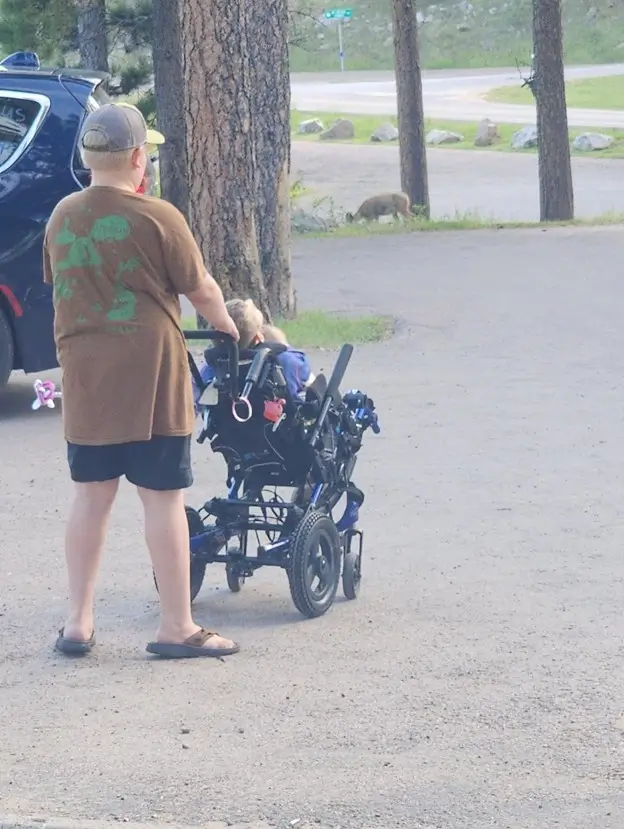
In many ways, families like ours who are raising children with disabilities are already ahead of the curve when it comes to adding parents and grandparents to the travel mix. We know how to choose accessible destinations. We move at a pace that works for everyone, from toddlers to grandparents. And we’re used to adapting when medical or mobility needs shift the plan.
Traveling with multiple generations, little kids, adult kids, caregivers, and medically complex family members means living in a constant dance between planning and pivoting. You can map the route, research accessibility, pack every piece of medical gear, and still find yourself rerouting because a van breaks down, a policy changes without warning, a sensory need spikes, or an entrance that should be accessible… isn’t.
But here’s the truth: families like ours learn early:
The pivots are often where the real story begins.
This article brings together three moments, one rooted in ease, one shaped by barriers, and one discovered by accident, to show what accessible, multigenerational travel really looks like. These aren’t glossy brochure moments. They’re lived‑in, real‑world snapshots of joy, frustration, resilience, and the unexpected beauty that emerges when we choose dignity and adaptability over perfection. Because let’s be honest, perfection is a myth!
Together, these stories reveal a simple but powerful truth: accessible travel isn’t about sticking to the plan, it’s about honoring the people who travel with us.
The Branson Experiment (Mary’s Story)
Before the internet, before group texts, before shared calendars tried to wrangle our lives, Mary’s family, the Aeilts Crew, descended on Branson for a full week to celebrate her parents’ 50th anniversary. Each family claimed a condo that met their individual needs, and every evening a different household fed the entire crew. Mornings began with the same gentle question: “So… what’s everyone doing today?” Some headed to shows, others wandered Bass Pro, a few chased thrills at amusement parks, and at least one person curled up with a book because every multigenerational trip needs a designated quiet soul.
What made it work wasn’t the schedule; it was the freedom. No one forced togetherness. It was a choose‑your‑own‑adventure wrapped in family, with a pontoon boat one day and a dozen different plans the next. Looking back, it feels like a blueprint for the kind of flexible, dignity‑honoring travel that lets every generation participate in their own way.
A Moment to Reflect
What I love about stories like Mary’s is how they remind us that multigenerational travel can work beautifully when freedom, flexibility, and dignity lead the way. Her Branson trip is a model for what’s possible when families are allowed to move at their own pace when no one is pressured into sameness, and everyone is invited to participate in the way that fits their body, their energy, and their season of life.
But for every story shaped by ease and choice, there are others shaped by barriers, the kind that appear without warning, the kind that force disabled travelers to advocate, educate, and push back against systems that still don’t fully see us. Mary’s story shows what happens when travel is designed with flexibility in mind.
LuAnn’s shows what happens when it isn’t. Together, they reveal the full spectrum of accessible travel: the joy, the frustration, the resilience, and the hope that things can, and must, get better.
The Belize Barrier (LuAnn’s Story)
Cruising and wheelchairs don’t always mix: something LuAnn learned firsthand on a recent Celebrity cruise to Belize. When she spotted an accessible excursion listed online, she felt that rare spark of excitement. Accessible tours have become scarce since COVID, and finding one in a tender port felt like a small miracle. She and two friends, all wheelchair users of varying ages, booked it immediately. But on the very first night of the cruise, a casual conversation with staff revealed the truth: the excursion only held two chairs, and the vendor was “no longer available.” Even after explaining that two of them could transfer and fold their chairs, the answer remained a resolute “no.” Still, they were reassured they could at least get off the ship.
Then came the night before departure. The ship’s newsletter quietly announced that anyone using a power wheelchair or scooter could not disembark. No warning. No explanation. No mention of steps anywhere in the booking materials. At guest relations, LuAnn was told, “It has always been this way,” as if she should have known. After pushing for clarity, a manager finally found the accurate information: multiple steps led down to the tender, a detail even the staff hadn’t been aware of.
And here’s the part that stings the most: This barrier didn’t just impact LuAnn. It fractured a multigenerational group: grandparents on one side, grandchildren on the other, siblings split apart, with some stuck on the ship while others explored Belize.
In this case, inaccessibility split a multigenerational trip apart.
The Rapid City Pivot (Our Story)
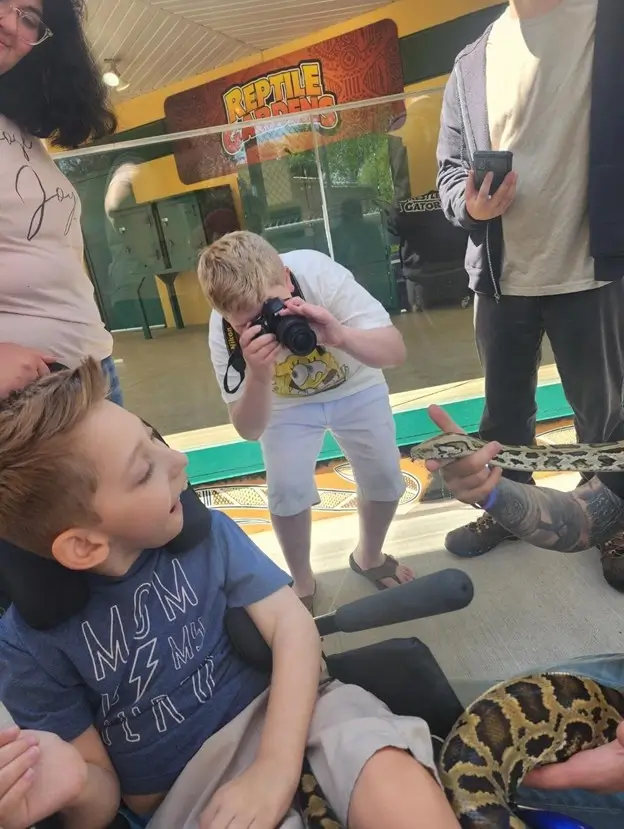
LuAnn’s experience reminds me of one of our own moments when accessibility shaped the entire day, not through policy or paperwork, but through pure circumstance. And here’s the connection I’ve learned over and over again: the art of finding joy in the pivot is the same whether you’re traveling with a disabled child, an aging parent, or a whole spread of generations in between. The needs may differ, but the emotional math, the recalculating, the slowing down, the choosing connection over control, is universal.
Our van broke down in Rapid City during Sturgis Bike Week on a day when everything was supposed to go according to plan, or at least as close to “plan” as you get when traveling with both little kids and adult kids, plus medical gear, meds, and everyone’s unique energy levels.
And here’s the multigenerational truth: When you’re traveling with children, teens, and young adults while managing disability needs, every pivot ripples across generations. The littles feel it in their restlessness. The big kids feel it in the responsibility they shoulder. I feel it in the mental math of what each body and age can handle.
One moment, we were cruising toward our next stop, and the next, we were parked at a parts store, recalculating what accessibility would look like without our fully set‑up vehicle. The mini-humans were restless, the big kids were troubleshooting, and I was quietly running through the mental checklist of what our bodies, needs, and energy could realistically handle while we waited. When I realized it would be hours, we did what families like ours learn early: we pivoted. I got a hotel room for the kids and, with the help of Isaiah and strangers, I got to work on the van. Once it was fixed, we ended up on a drive through Custer State Park.
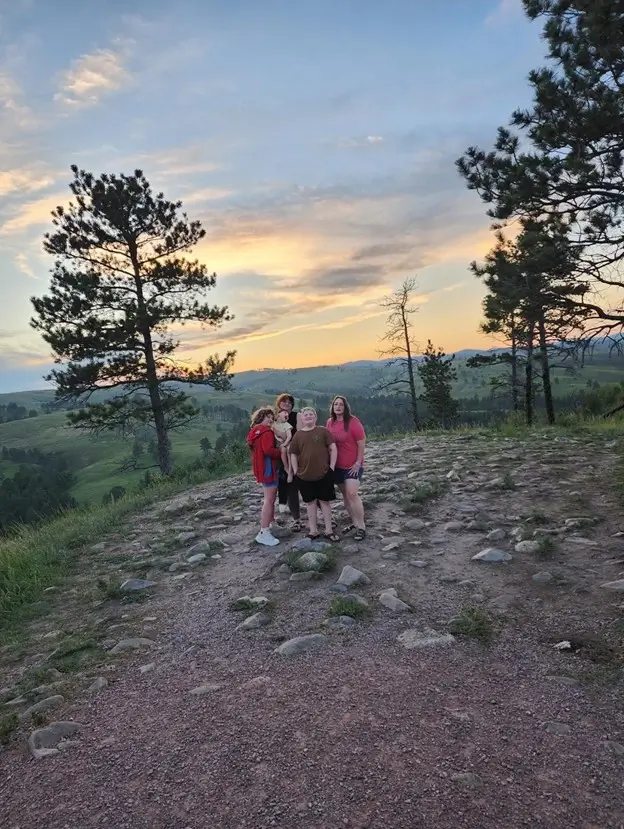
That unplanned drive became the most accessible moment of the entire trip. We stumbled into a valley filled with bison so close that the kids all fell silent in awe. We climbed a mountain we hadn’t researched, taking it at our own pace, stopping when someone needed a break, celebrating each small summit. We watched the sunset together, no technology, no distractions, just us.
It wasn’t the day we mapped out, but it was the day we needed. Somewhere between the breakdown and the ridge line, I realized the lesson I keep learning on the road: accessibility isn’t just ramps and routes. It’s adaptability across ages, across abilities, across generations. It’s adaptability. It’s the freedom to shift, slow down, or choose a different path when the original one falls apart, and sometimes, that unexpected path becomes the memory everyone carries home.
Closing Reflection: The Beauty in the Bend

These stories, Mary’s ease, LuAnn’s barrier, and our Rapid City detour sit together because they reveal the truth about accessible, multigenerational travel. Some days unfold effortlessly. Some days require advocacy, patience, and a deep breath. Some days fall apart and rebuild themselves into something better than we planned.
Accessible travel isn’t about perfection. It’s about presence. It’s about honoring the needs of every body and every age. It’s about choosing dignity over pressure, curiosity over frustration, and connection over the illusion of control. And it’s about remembering that the heart of travel isn’t the itinerary, it’s the people who share the road with us.
