

Listen to this Article
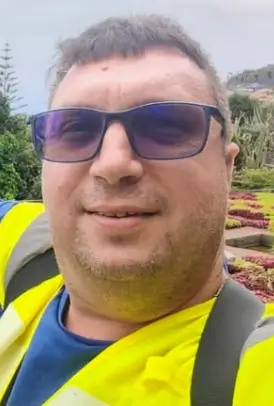
Perhaps being “without limits” does not mean that every barrier has disappeared. No destination can realistically promise that. In Madeira, the terrain and infrastructure create genuine accessibility challenges, but Tiago Camacho offers a different way of thinking about what a place without limits can mean. The real measure may be what happens when a traveller encounters a barrier. Does the experience end there, or does someone find another way forward?
Madeira does not make accessibility easy. The Portuguese island rises dramatically from the Atlantic, with steep streets, hills, gardens built across changing levels, cobblestones and attractions where a few steps can become an impassable barrier. Yet spend time with Tiago Camacho, owner of Madeira Acessivel By Wheelchair, and another version of the island begins to appear.
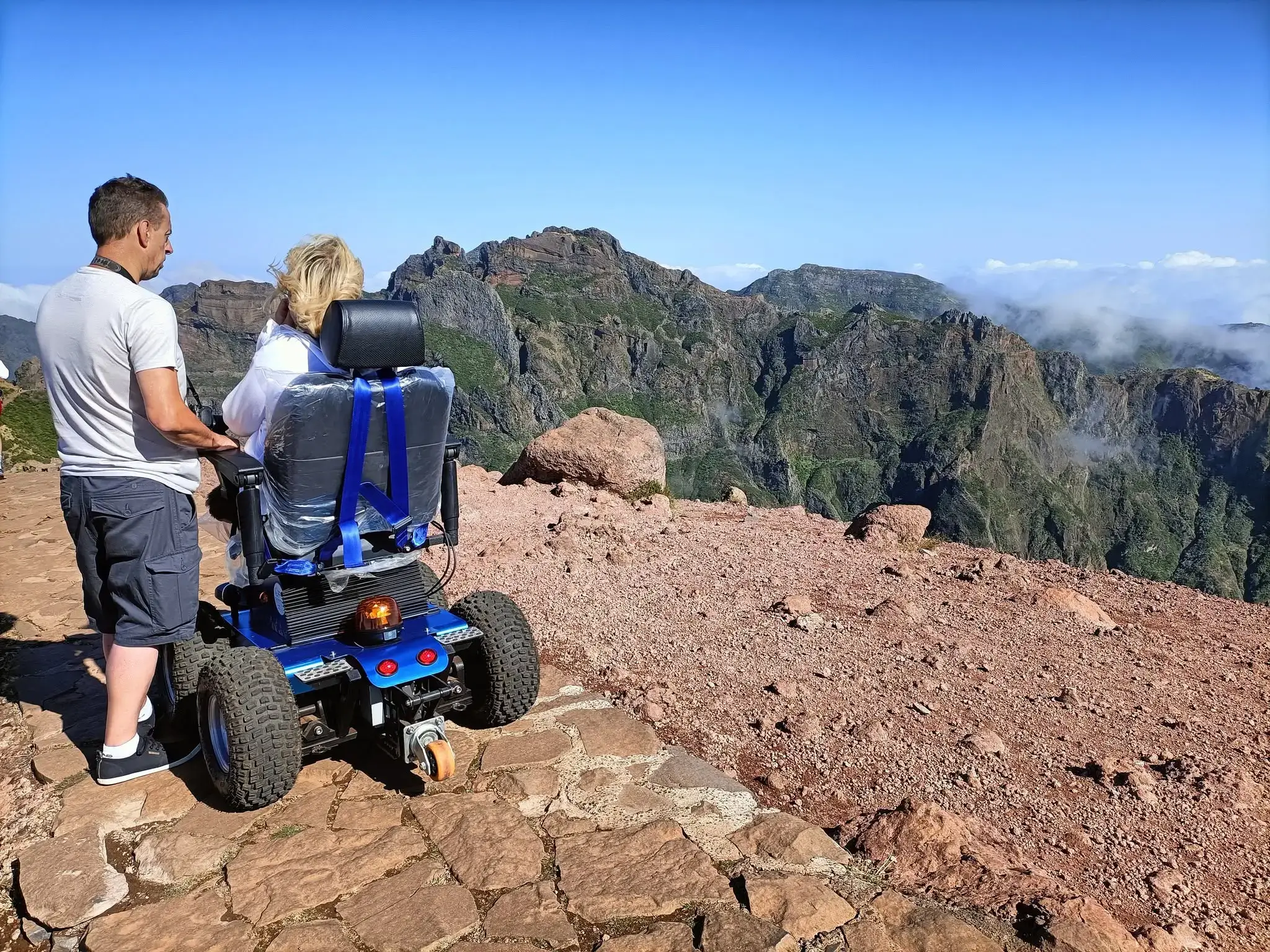
It is a Madeira in which a wheelchair user can follow a levada, reach a spectacular viewpoint, explore a garden or spend a day discovering the island with family. Sometimes that requires an off-road wheelchair. Sometimes it means an off-road scooter, a portable ramp or simply knowing exactly where to stop and which route to take. Tiago has spent years acquiring that knowledge.
His connection to accessible travel is deeply personal. His mother-in-law used a wheelchair, giving Tiago and his family firsthand insight into the barriers wheelchair users can encounter in everyday life and while travelling. Before starting the company, Tiago also noticed wheelchair users arriving on cruise ships and remaining in Funchal instead of joining excursions around the island. He began asking himself why they were not able to take part in those tours, and the answer was often accessibility. Those observations, combined with his family’s own experience of accessibility barriers, became the foundation for what came next.


He started his company, Madeira Acessivel By Wheelchair, in 2019. Today, Tiago approaches each itinerary by considering the disabled person first. He asks about the traveller, their wheelchair or mobility device, how they move, and the places they hope to experience. From there, he works out what is realistically possible and what additional equipment may be needed along the way. In many cases, visitors can use their own wheelchair or scooter for much of the day. For more demanding terrain, however, Tiago may suggest switching temporarily to one of his off-road wheelchairs or off-road scooters. He sometimes asks guests to send photographs of their own equipment in advance so he can judge how it will handle a particular route or surface.
That preparation is especially important in places such as Madeira’s levadas and gardens, where steep gradients, uneven ground, damp conditions and changing weather can make a standard wheelchair difficult or unsafe to use. Tiago also carries portable ramps for locations with steps and has invested in different types of mobility equipment so that a barrier does not automatically mean the end of an outing. Even travellers who do not normally use a wheelchair may sometimes use one of his chairs for part of the day if fatigue or reduced mobility makes walking difficult. His approach is flexible rather than prescriptive. Guests use additional equipment when they need it, not simply because it is available.
For Tiago, that preparation is what makes the difference between being taken somewhere and actually being able to experience it. He has built his service around finding practical ways to reach places that might otherwise be ruled out, adapting the day around the individual rather than expecting the individual to adapt to the itinerary.
That flexibility matters on an island where accessibility can change within a few metres. Cobblestones can be difficult for a manual wheelchair with small front casters. Madeira’s gardens often involve slopes and changes in level. Weather can also affect what equipment works safely on a levada. Tiago says travellers should prepare for conditions that can change quickly, with sunshine in one part of the island and rain in another.
For a first visit of five to seven days, he favours pacing the excursions rather than touring every day. Three touring days spread across a week can give travellers time to rest between outings while still experiencing viewpoints, local food and drink, gardens and the landscapes that make Madeira distinctive.
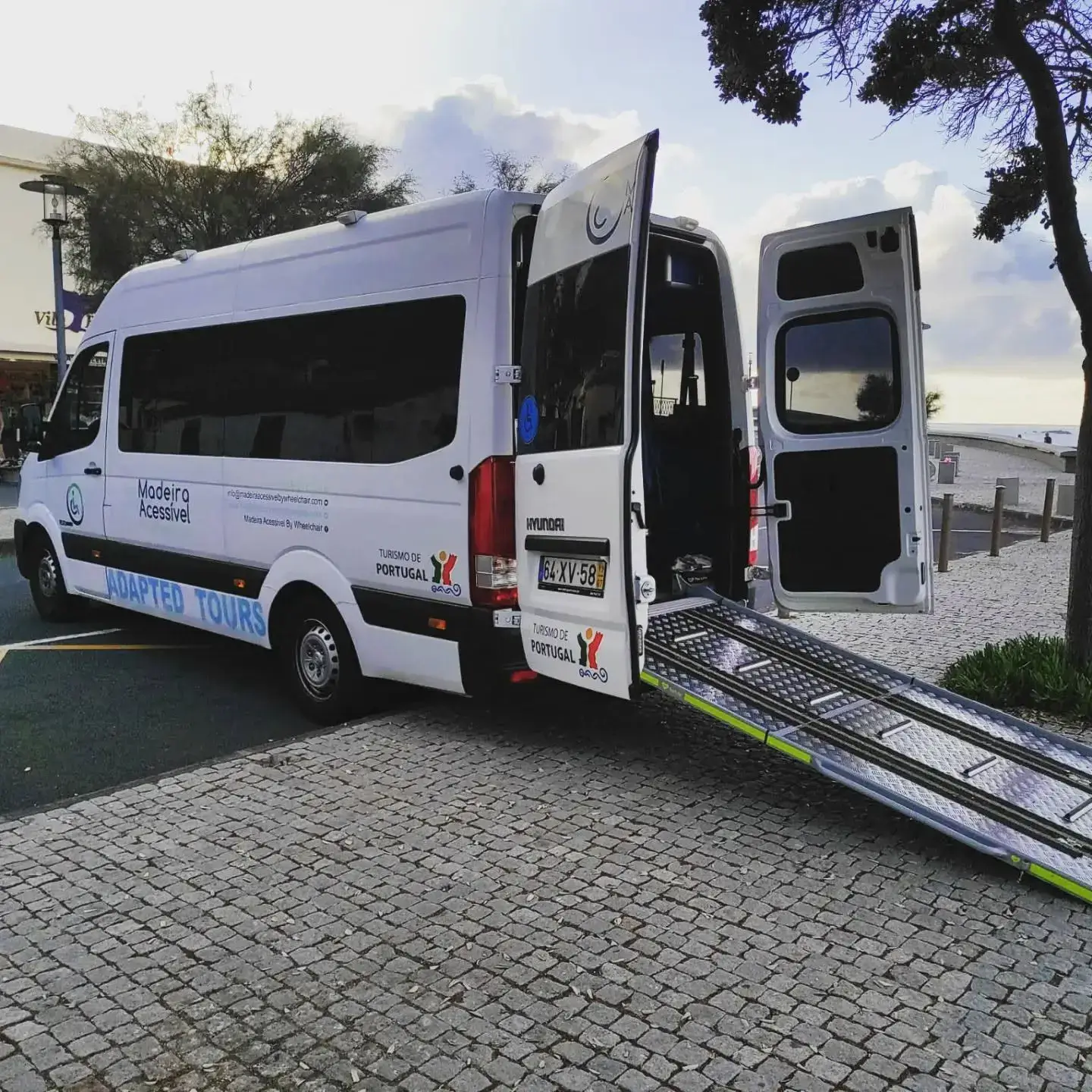


Funchal is a common base. Tiago cautions, however, that the word “accessible” does not always tell a traveller enough. A hotel may describe an accessible room while other parts of the property remain difficult to use. He specifically mentions Golden Residence Hotel, where he says accessible rooms and the swimming pool can accommodate wheelchair users and additional equipment can be arranged when required.
Yet the most memorable part of Tiago’s story has little to do with equipment.
Several years ago, he collected a Canadian wheelchair user and his wife from their cruise ship for a day exploring Madeira. As the group moved through the island, Tiago stayed with the man, helping with his wheelchair and making the adjustments needed along the way. His wife, meanwhile, was able to go shopping on her own. At the end of the day, the man thanked Tiago and explained why the experience had meant so much. On previous trips, his wife had always needed to remain by his side to assist him. She was his travel companion, but she was also, by necessity, his constant support person. This time was different. Because Tiago was there, the man could enjoy the excursion knowing he was supported, while his wife could step away for a few hours and simply enjoy part of the holiday for herself.
That moment stayed with Tiago. What he had unknowingly provided was more than just an accessible tour. He had given one traveller greater independence and, at the same time, given his wife a kind of freedom she had rarely experienced while travelling with him.
It captures what distinguishes Tiago’s approach. He does not see accessibility as simply accommodating a wheelchair. He looks at the whole experience of the person using it, and at the people travelling with them. As he puts it, the wheelchair user comes first, then the family. When the person with the disability is properly supported, everyone has more freedom to experience the journey in their own way.
That philosophy also shapes the smaller, more joyful moments of a trip. For Tiago, accessibility is not only about overcoming barriers. It is about making sure his guests can take part in the food, traditions and unexpected fun that make a destination memorable. He recalls taking six American visitors to try poncha, Madeira’s famously strong local drink traditionally made with sugar cane rum, honey and citrus. Rather than handing everyone a full drink, he arranged small tastings of several flavours and advised that they eat prego, a local meat sandwich, before the tasting. By the end of the tasting, those who had ignored Tiago’s advice to eat the prego first were hilariously tipsy and they considered the outing one of the best experiences of their trip. Tiago still recalls it with a chuckle.


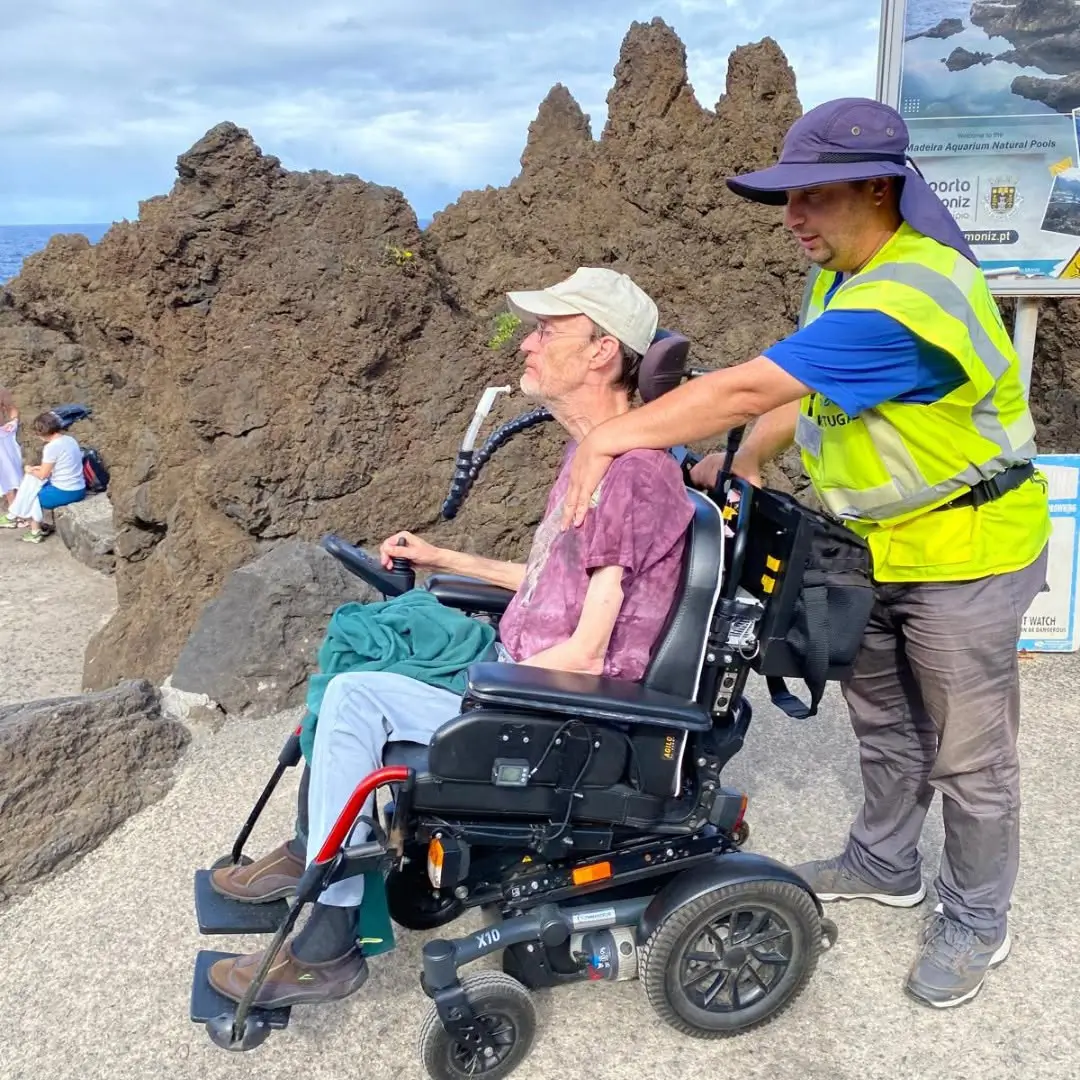
Of course, creating those experiences also means being realistic about where Madeira still falls short. Porto Moniz offers a good example of the difference between being able to reach an attraction and being able to experience it fully. Wheelchair users can get down near the famous natural lava pools, Tiago explains, although entering the water is another matter because appropriate swimming access is not available. His instinct, however, is still to find what is possible, perhaps bringing a guest close enough to the pools to dip their feet into the water so they can experience it for themselves rather than simply removing the destination from the itinerary.
That attitude and approach does not excuse Madeira’s barriers. Tiago is candid that the island still has significant work to do. Historic cobblestones, steps, inaccessible boats and infrastructure that has not been adequately adapted continue to restrict residents and visitors. He has raised accessibility concerns and would like to see more changes. Until then, he works within the Madeira that exists while constantly testing how much further a traveller can go.
For someone considering the island, this is Tiago Camacho’s most useful message: There are always places that are inaccessible for various reasons. Madeira is mountainous, imperfect and sometimes complicated. But ask the right questions, choose the right equipment and travel with someone who understands the terrain, and a place that initially appears full of limits can begin to open. That is where Tiago’s work matters most. He cannot remove every step, smooth every cobblestone or make every corner of Madeira accessible. What he can do is refuse to let those barriers define the entire journey. By preparing carefully, adapting as he goes and understanding what each traveller needs, he creates opportunities for people to experience more of the island on their own terms.
For travellers who are accustomed to being told that a place is inaccessible, Tiago’s work changes the experience completely. Instead of being left behind while others continue, they are given a way to take part. They can reach places they may have assumed were off limits, share those experiences with the people travelling with them and enjoy Madeira as participants rather than spectators.
That is ultimately what Tiago is trying to create: a holiday in which the wheelchair does not determine how much of the island a person gets to experience.
Connect and Follow
What and where you can experience when you book a trip to Maderia with Tiago’s Madeira Acessivel By Wheelchair
- Funchal– the island’s main visitor base, with hotels, shopping and accessible buses.
- Golden Residence Hotel– the Funchal-area hotel Tiago particularly mentions for its accessibility.
- Madeira’s levadas– outings that can be possible using Tiago’s off-road equipment, depending on conditions.
- Madeira’s gardens– beautiful but often steep and multi-level, sometimes requiring specialized equipment.
- Câmara de Lobos– the traditional fishing village where cobblestones can present difficulties for some wheelchair users.
- Porto Moniz– known for its natural lava pools, with wheelchair access possible to the pool area although not full accessible swimming access.
- Cabo Girão Skywalk– a dramatic viewpoint that Tiago takes wheelchair users to, sometimes using a ramp when the platform access presents problems.
- Fajã dos Padres– a scenic coastal location reached by cable car, possible for some wheelchair users depending on the chair and available space.
- Madeira viewpoints– Tiago says many can be visited by wheelchair users.
- Wine-tasting experiences– among the experiences that can be incorporated into accessible itineraries.
- Poncha tasting– a traditional Madeiran drink experience that Tiago enjoys introducing to visitors.