

Listen to this Article
I grew up in Amish country. Constantly driving behind Amish buggies inadvertently creates a slower pace of life, whether we realize it or not. We had one stop sign in my small town. By 14, I was allowed to ride my bike to the next town, where I could find the closest stores and even a traffic light. I never rode a bus. I’m not sure I’d even seen a subway before a group trip to NYC as a teenager. Needless to say, the city is outside of my comfort zone.
As an adult, add three kids with disabilities, including one wheelchair user, and the hurdles may seem unsurmountable. They’re not, in fact, but city travel does require a bit of a learning curve. Here are the things I’ve learned along the way that have made city destinations feel sparkly and fun instead of panic-inducing.
Navigating city transportation with a wheelchair
First, you should know that subways are still a bit overwhelming to me. Put the metro map into another language and I may stand and stare for quite a while. That said, I’ve navigated my kids through, NYC, Budapest, Paris, Tokyo, and plenty of smaller cities along the way.
What I’ve learned is:
Have a plan for how to plan. Google maps is pretty reliable for finding accessible routes in NYC, but there are more significant gaps as you wander from what’s been thoroughly canvassed. We used City Mapper in Paris, and it was great for finding accessible routes and incorporating the appropriate public transportation. Look up accessible bus and metro options before leaving home. Know where to find alerts when an elevator is down or an accessible route is closed. In some instances, you may even prefer to rent a vehicle.
Get to know the bus routes. We’ve gotten stuck on the metro often enough that we generally avoid it in cities we don’t know. Buses are often lightyears ahead of the metro in providing ramps, lifts, and wheelchair tie-downs.
Leave time for rambling. When you have time, the best way to discover a city is meandering. Our favorite sites and treats in Paris were all discovered when we were walking to avoid the hassle of public transportation. It takes longer, but it’s the best way to discover all of the hidden gems and really soak in the vibe of a new place.
Learn the accessibility language
Never ask if something is accessible. In the U.S., because of laws in place, the person on the phone will generally assume that everything is accessible, even if they have no idea what that means. Instead, be specific about your actual needs. “Can a wheelchair user navigate between tables at dinner time?” I’ve learned to ask “How many stairs are there to get in?” instead of “Are there stairs to get in?” because it forces the respondent to slow down and think about their answer. I’ve been told there are no steps, or that an entrance is accessible, when it wasn’t true.
When traveling internationally, the language need grows. It’s pretty standard to practice a few terms, like “please,” “thank you,” and “where is the bathroom” before heading to a foreign destination. Make sure you add “accessible restroom,” “wheelchair accessible,” and “step-free” to that list. While taboo in the U.S., “handicap restroom” is still the preferred terminology in most locations, so make a point to learn what’s appropriate and understood in your destination.
Think about other basic needs throughout your day and learn the words you’ll need to communicate them. For example, we learned the words for “no salt” in four languages before traveling to Europe during a nephrotic syndrome relapse. Google translate goes a long way, but it’s good to have the basics ready on the fly.
Know your disability discounts
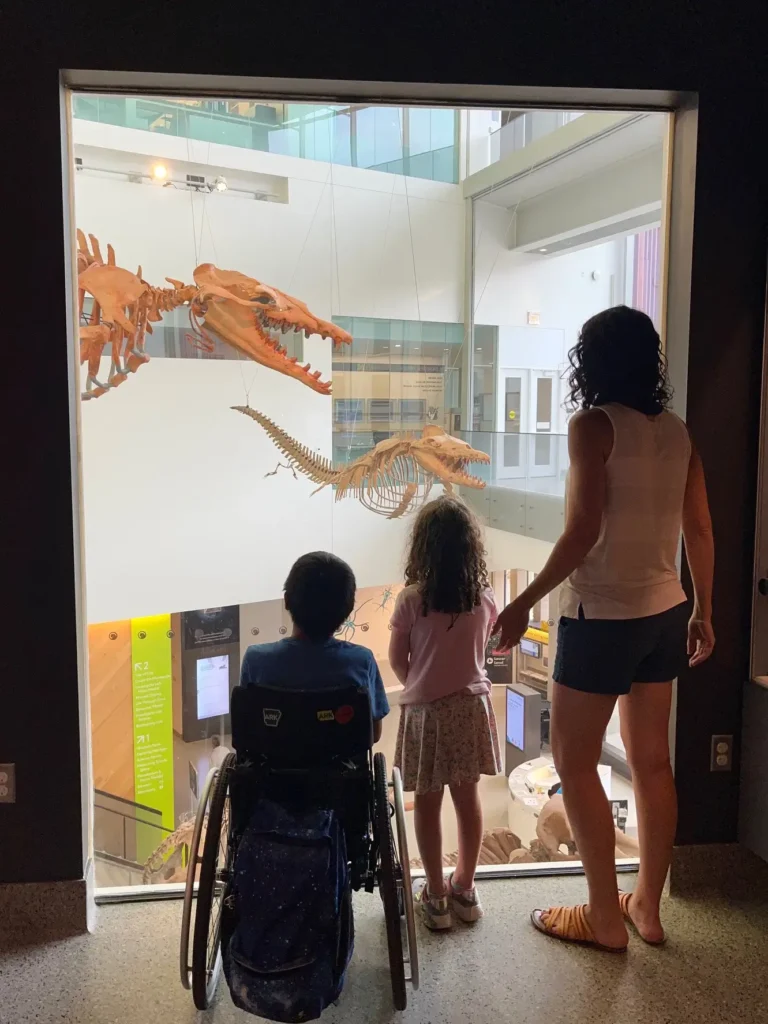
We’ve always been the type of family to look for free things to do on vacation, but disability discounts significantly extend that ability. Museums4All is our biggest deal finder, offering free or significantly discounted admission with an ACCESS card, which is provided in most states that offer Medicaid based on disability.
Buses and subway systems usually offer disability discounts, but they’re often limited to certain riders, require advance registration or documentation, or require too much paperwork to be worth it for a short trip. It’s worth checking, though, because some transit systems offer reduced fares to visitors without requiring local residency.
Theme parks will typically discount both the guest with a disability and a companion. The same is often true for zoos.
Parking rules
Where I live, accessible parking is often indicated by blue curbs. In Croatia, I learned the hard way that parking colors don’t necessarily mean the same thing from one country to another. Not only did I not score the free parking I thought I had, but I also got hit with a hefty fine.
Many places do offer free or extended parking with a placard. Search “accessible parking ______ (destination name)” and you can usually find the local rules, fees, time limits, and exceptions fairly easily.
Finding accessible restrooms
“No public restroom” seems to hang on every storefront in the city.
There are apps for finding accessible toilets, but they all seem to be short on locations. You can even map adult size changing tables, and the majority of them are in cities. Unfortunately, there may only be one or two across an entire city. Not very convenient for a family on the go.
Our best hacks for accessible toilets when we need them:
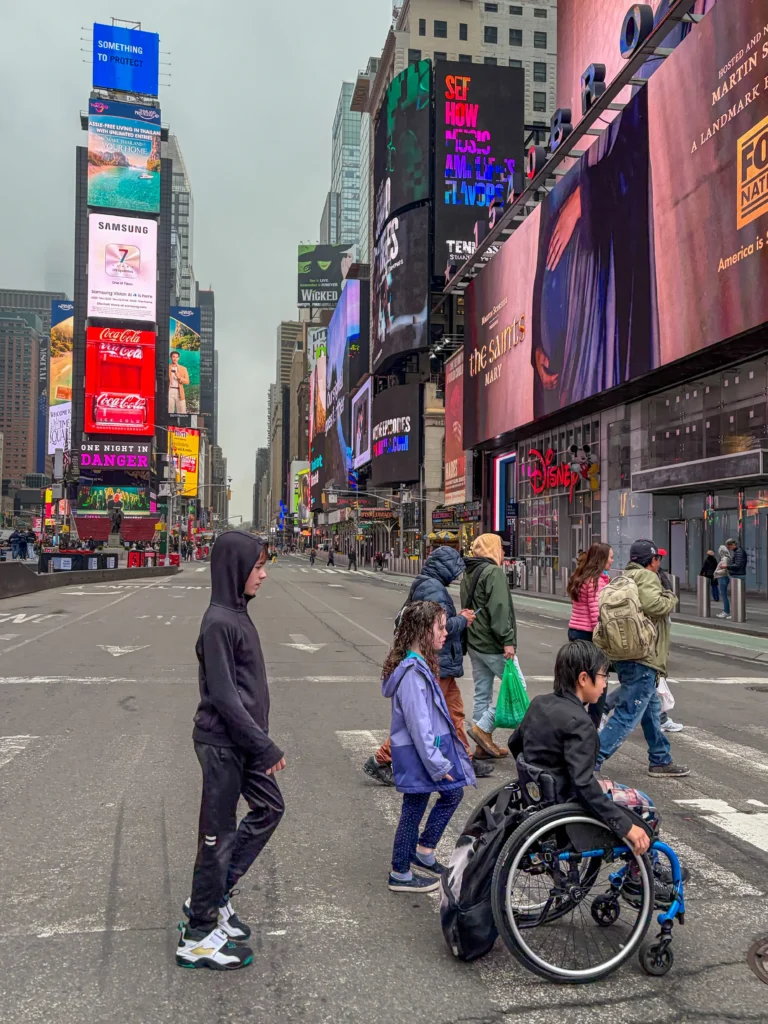
Always go before you go. If we paid to be in a museum and it happens to have accessible restrooms, we use them even if it’s another hour or two before we need one. My son has a man-made bladder and typically goes on a schedule, but I would rather be able to bump the schedule than find ourselves in a tizzy trying to hunt down a bathroom before it becomes a risk. When we were in NYC this spring, every museum and major attraction had accessible restrooms. We didn’t end up needing them while we were out exploring the city, because we took care of it at our main stops.
Count on hotel hospitality. This carries us through both cities and road trips. Hotels have cleaner and more spacious restrooms and they are almost always available to use. In the city, you often have to take an elevator to the lobby floor, but that’s more efficient than hopping from Starbucks to Starbucks and hoping for the best.
Stop while you shop. Bigger stores certainly don’t want you to have to rush out because you need a bathroom. Malls, department stores, and bigger shops typically have restrooms, and many have at least one larger accessible stall.
Learning to love city travel
I may always be a country mouse, but I’m no longer afraid of city travel. Like anything new, it takes some planning, learning, and adjusting to new ways of doing things. With a little research and the confidence to ask better questions, we’ve found some of our favorite family adventures in cities around the world.
