
By Massimo Lorusso
Listen to this Article
When most people plan a trip, the first question is usually where they want to go.
For me, the destination is only one part of the decision.
I have used a power wheelchair for almost four decades, since a dive into the sea at Rimini when I was seventeen radically changed my physical condition. Since then, travelling has remained an important part of my life. I have visited cities, crossed borders, taken trains, stayed in hotels and collected thousands of photographs along the way.
But every successful journey begins with a question that rarely appears in a tourism brochure: will every link in the chain actually work?
A city can describe itself as accessible because it has ramps, adapted rooms, low-floor transport or assistance services. All of those things matter. But accessibility is not a collection of isolated features. It is continuity.
A ramp is useful only if I can reach it. An accessible station is useful only if the lift is working. An adapted hotel room is useful only if I can actually enter it, move around it and use the bathroom. An accessible train is useful only if the assistance that gets me on and off the train arrives when it is needed.
If one essential link fails, the rest of the chain can suddenly become irrelevant.
That is why, from my perspective, the most useful question for a city is not simply, “How many accessible services do we have?” It is, “Can a person move through the whole journey without encountering a point that stops everything?”
THE JOURNEY BEGINS BEFORE ARRIVAL
The travel photograph usually shows the destination.
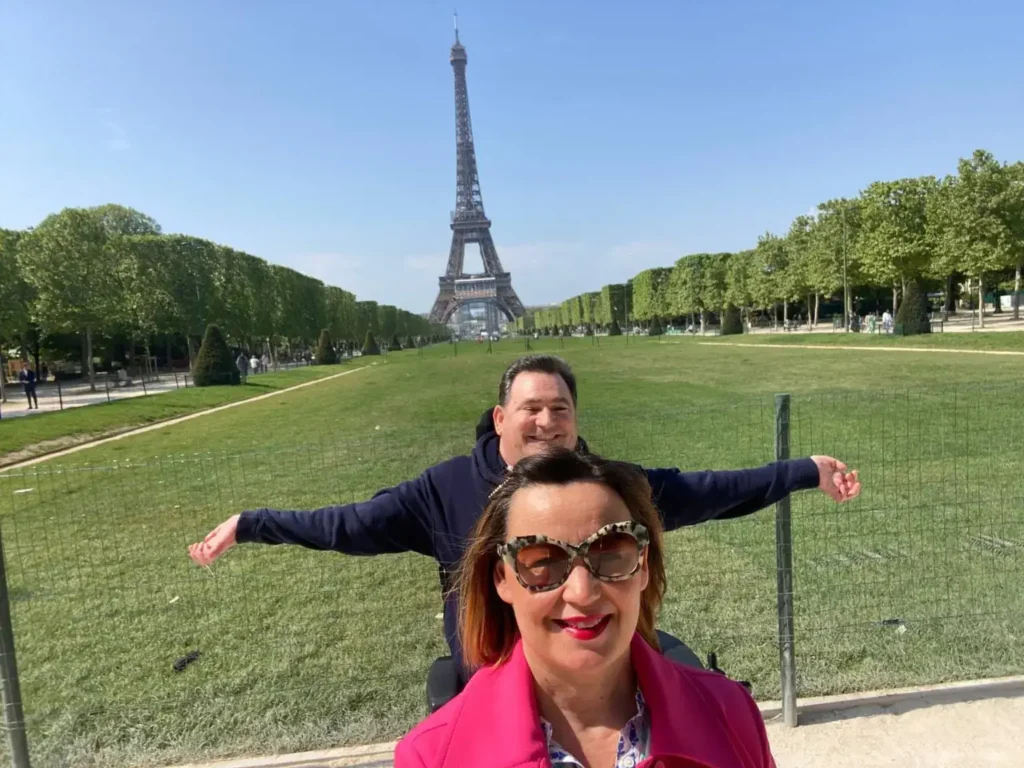
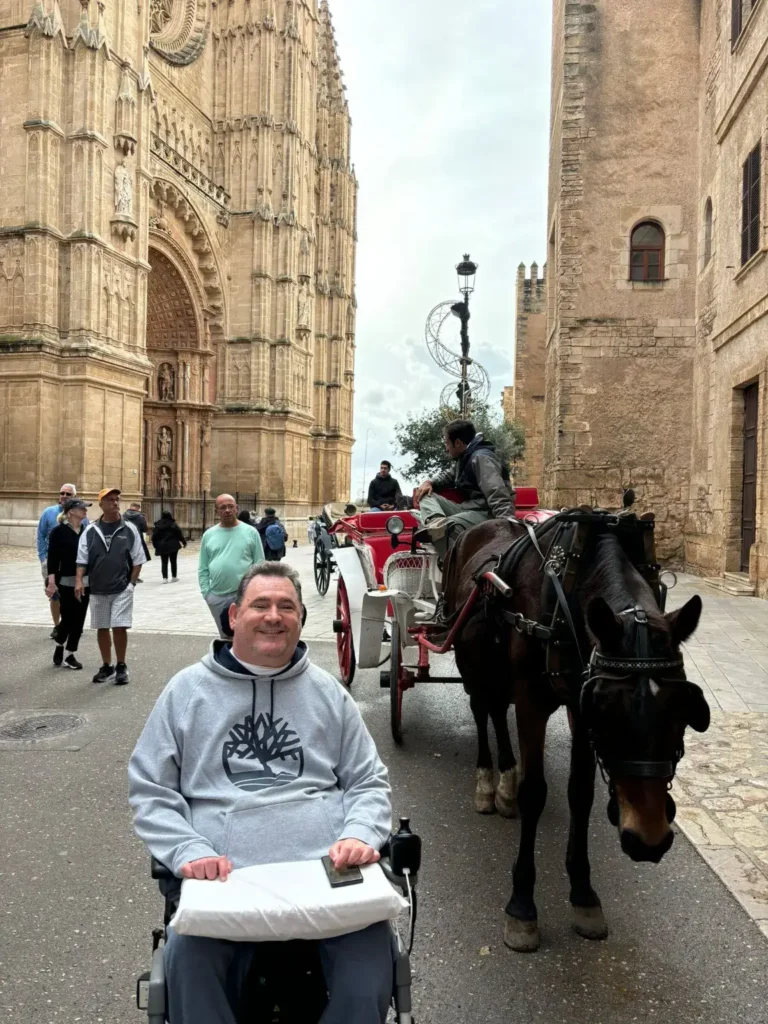
Mine might show me in Paris, Palma de Mallorca or on the Côte d’Azur. It may show a monument, a seafront, a street or a moment with my wife. What the photograph does not show is the structure that made that moment possible.
Before I arrive somewhere, there may be assistance to organise, transport to verify, an accessible room to confirm, routes to check and equipment to consider.
None of this means that travel is not worth doing. The opposite is true. I continue travelling because being able to discover another place remains one of the ways I participate fully in life.
But the planning reveals something important: accessibility is often invisible when it works and impossible to ignore when it does not.
INFORMATION IS PART OF ACCESSIBILITY
One of the most valuable things a destination can offer is accurate information.
The word “accessible” is often too broad.
For one traveller it may mean step-free access. For another it may mean an adapted bathroom, space beside the bed, an accessible shower, a lift of a certain size, assistance at a station or a route that can be travelled without encountering stairs.
What helps me most is not a promise that a place is accessible. It is precise information that allows me to decide for myself whether it will work for me.
Measurements matter. Photographs matter. Clear descriptions matter. Knowing in advance where assistance is available matters.
A city becomes easier to trust when it replaces vague reassurance with practical detail.
THE HUMAN PART OF ACCESS
Infrastructure is only one side of the experience. The other is people.
I have travelled enough to know how much difference a well-trained member of staff can make. When someone understands the procedure, communicates clearly and treats assistance as an ordinary part of their job, the entire experience becomes simpler.
The opposite is also true. A perfectly designed service can become difficult if nobody knows how it is supposed to work.
For travellers with high support needs, good accessibility is not charity and it is not a favour. It is competent organisation.
The best assistance is the kind that allows the traveller to remain the person making the decisions.
I do not need someone else to decide where I should go or what I should do. I may need help making the journey physically possible. Those are two very different things.
SPONTANEITY IS A USEFUL TEST
There is another way I have learned to judge accessibility: how much advance planning does an ordinary activity require?
If I can only visit a place after several phone calls, confirmations and special arrangements, the visit may be technically possible, but it is not yet effortless participation.
For many people, deciding to have coffee somewhere, visit a museum or change a plan can be spontaneous.
For a wheelchair user, the same decision may depend on whether the route, entrance, bathroom, transport and assistance can all be relied upon.
That does not mean every city can remove every difficulty. But cities can reduce the amount of exceptional planning a person needs simply to participate in ordinary life.
The closer a place gets to that, the more meaningful the word accessible becomes.

WHAT CITIES SHOULD MEASURE
If I could suggest four things for cities to examine, they would be continuity, information, reliability and recovery.
Continuity: can the person move through the entire route, not just isolated accessible spaces?
Information: are the details specific enough for someone to make an informed decision before leaving home?
Reliability: do lifts, transport systems and assistance procedures work consistently?
Recovery: when something fails, is there a realistic alternative, or does one failure end the journey?
That last point is especially important.
No system is perfect. Equipment breaks. Timetables change. Streets are under repair. What matters is whether accessibility disappears completely when something goes wrong.
A resilient city has alternatives.
ACCESSIBILITY SHOULD MAKE THE CITY ORDINARY
After almost four decades using a power wheelchair, I do not expect travel to be perfect. I do expect accessibility to be treated as part of how a city functions, not as an exception added afterwards.
The goal is not to create a special version of the city for people with disabilities. The goal is to make the same city usable by more people. When that happens, something important changes.
I stop thinking about the ramp, the lift, the assistance and the route.
I start thinking about the place I came to see.
And that, for me, is one of the clearest signs that accessibility is working.
Author bio
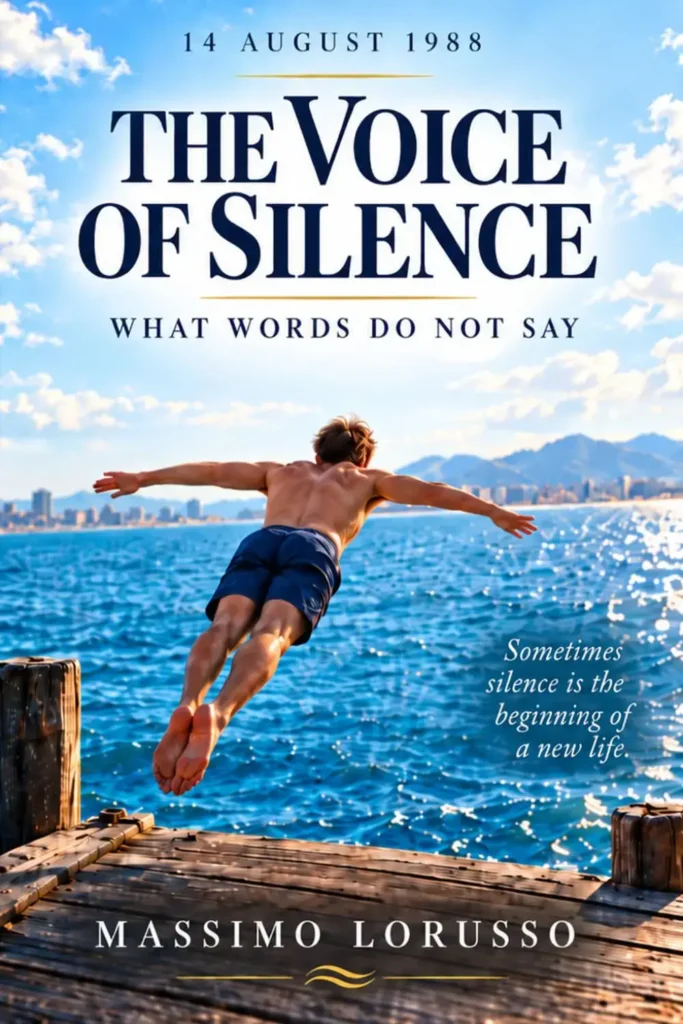
Massimo Lorusso is an Italian author based in Milan. He has been writing since 1993 and is the author of “The Voice of Silence – What Words Do Not Say”, a memoir about family, relationships and almost four decades of life after a dive into the sea at Rimini at age seventeen.
English edition: https://amzn.eu/d/09SwtBDV
Massimo’s Picks for Your Italy Visit
Piazza Duomo and the Duomo area. The Cathedral publishes detailed accessibility information, including ramp access and assistance for visitors with disabilities.
- The route from Piazza Duomo to Castello Sforzesco, through the historic centre. YesMilanolists this as an accessible itinerary and identifies any route issues that visitors should know about.
- Piazza Gae Aulenti and the modern Porta Nuova area, continuing toward Brera. Milan includes this among its accessible itineraries.
The newer public spaces are particularly useful for someone travelling with a power wheelchair because they generally offer more open, modern circulation than many older streets.
- The Porta Venezia–Piazza Duomo museums and gardens itinerary. This gives visitors a good combination of green space, museums and central Milan, with accessibility information available for individual venues.
- Triennale Milano, which publishes specific wheelchair-access information and has lifts serving the public areas.
One important caution for readers: I never like to call an entire city “accessible” without qualification. One broken lift, unexpected roadwork, a cobbled section or a transport problem can change the experience completely for a power-wheelchair user.
Before travelling, I would always re-check the accessibility page of the specific attraction and the transport service being used.
Milan has a dedicated Accessible Milano portal with routes and venue information.
For Italy more generally, the national tourism portal also has an accessible-tourism section and points travellers toward destinations and accommodation with verified accessibility information: