
By Jan Bonville
Listen to this Article
Inclusive travel is not the same as accessible travel—and that distinction matters.
In North America especially, accessible travel has a very specific meaning. It implies compliance with the Americans with Disabilities Act: adapted vans, roll-in showers, grab bars, smooth pathways, and tourism activities designed to be fully usable by people with disabilities. I have encountered many places—both in the U.S. and abroad—that meet these standards, and that remains the ultimate aspiration.
But much of the world does not have the ADA, or anything like it. And yet, I have found something else there—something I call inclusive.
These places may not have perfect infrastructure. They may lack ramps, adapted vehicles, or accessible bathrooms. But what they do have is a willingness to welcome me, to work with me, and to help me feel as safe and comfortable as possible. For me, inclusivity means being met with openness rather than hesitation, curiosity rather than fear, and collaboration rather than dismissal.
I want to be clear: my definition of inclusivity may not be the same as someone else’s. What feels safe or manageable to me may not feel that way to another disabled traveler. I share my perspective not as a universal truth, but as one woman’s lived experience—at this time, in this body, in these places. My goal is to show what is possible, not to prescribe what is right for everyone.
Travel as a Way of Being
For as long as I can remember, travel has been central to my life. I truly believe that if more people were able to travel—to experience distant cultures, landscapes, and ways of living—the world would be a gentler, more understanding place.
I’m also someone for whom planning a trip is almost as enjoyable as taking it. But when I developed multiple sclerosis, with symptoms that severely affected my mobility, something changed. Fewer and fewer traditional travel agents were willing—or able—to help me. Immersive, nature-based experiences in remote destinations were suddenly seen as unrealistic, or too risky, for someone like me.
I don’t blame the industry entirely. Tourism is fraught with liability, and expectations around disability can be complex. But the underlying assumption—that my dreams no longer matched my abilities—was deeply limiting.
Yes, I live with severe mobility challenges. Yes, I manage a chronic illness that requires medication, self-care, and sensitivity to temperature. There are many things I cannot do: hike long distances, climb stairs, or handle extreme weather. But there are also many things I can do.
Like many people who have lived with disability for years, I have become resourceful, creative, and adaptable. I can figure out how to get myself out of bed, retrieve something wedged in a tight space, or manage daily challenges most able-bodied people never have to consider. I have learned to navigate ableism, ignorance, and discrimination—and to persevere anyway.
So in my mind, traveling to wild and beautiful places is not out of reach. Not now. Not ever.
Traveling With Help—and Without Apology
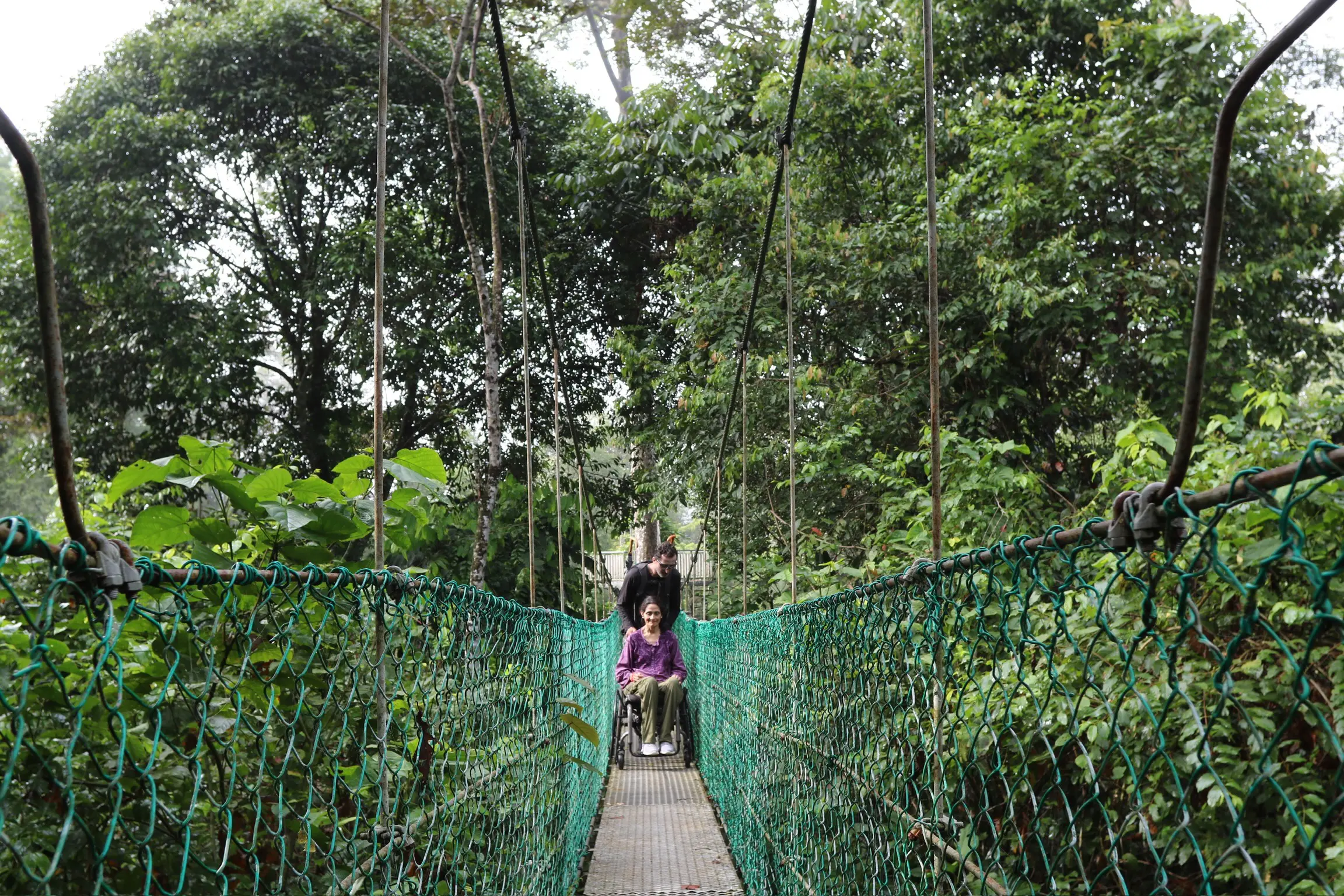
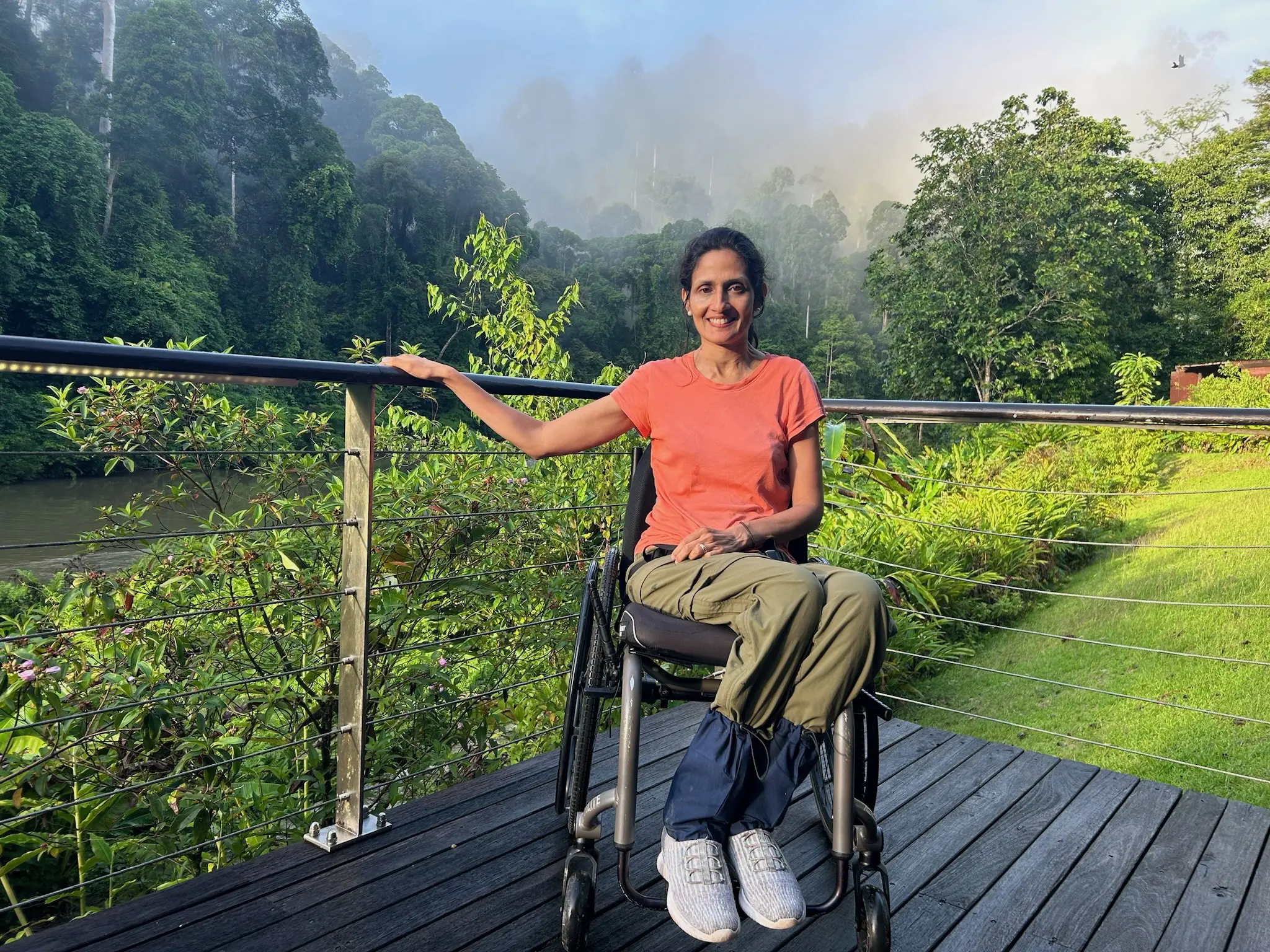
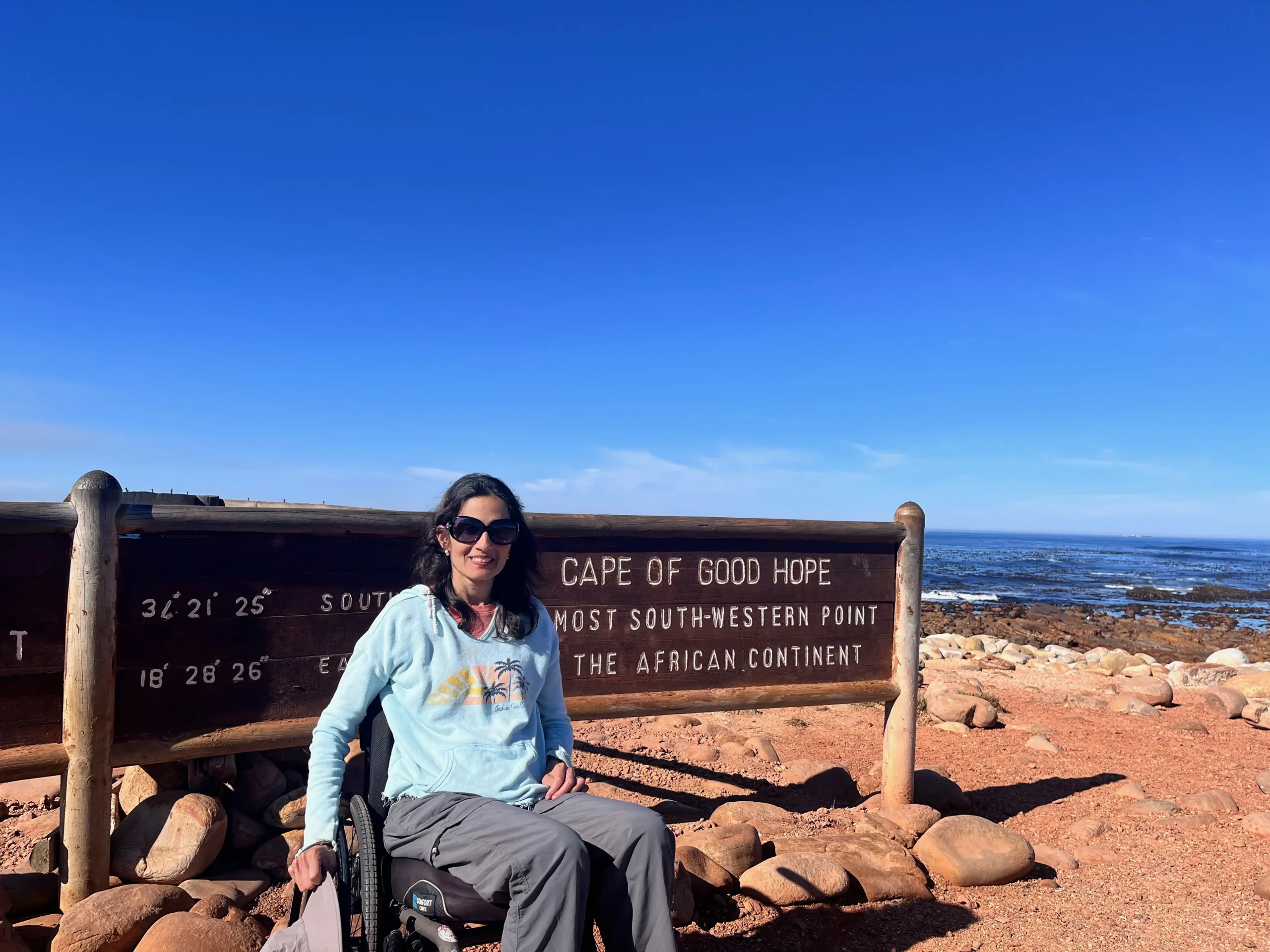
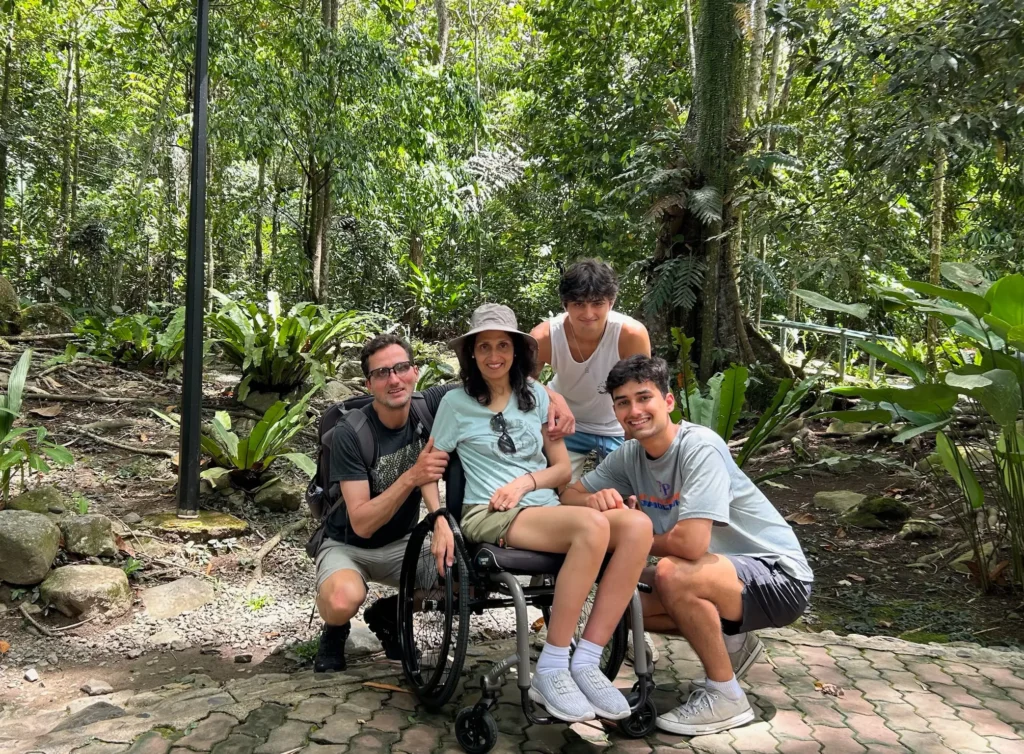
I travel with help. I travel with my husband, who is able-bodied and helps with my wheelchair, especially when things go wrong. I often travel with my children, now young adults, who pitch in without hesitation. I also benefit from having traveled extensively both before and after my diagnosis, and from being comfortable in cultures where physical assistance is natural and unremarkable.
I don’t mind being lifted, pushed, pulled, or helped. I love nature. I don’t mind getting dirty, dealing with bugs, or wearing clothes that will never be clean again. I don’t get easily offended. If someone asks me what happened, I usually welcome the question. I want disability to be visible, familiar, and discussable—not something whispered about or avoided.
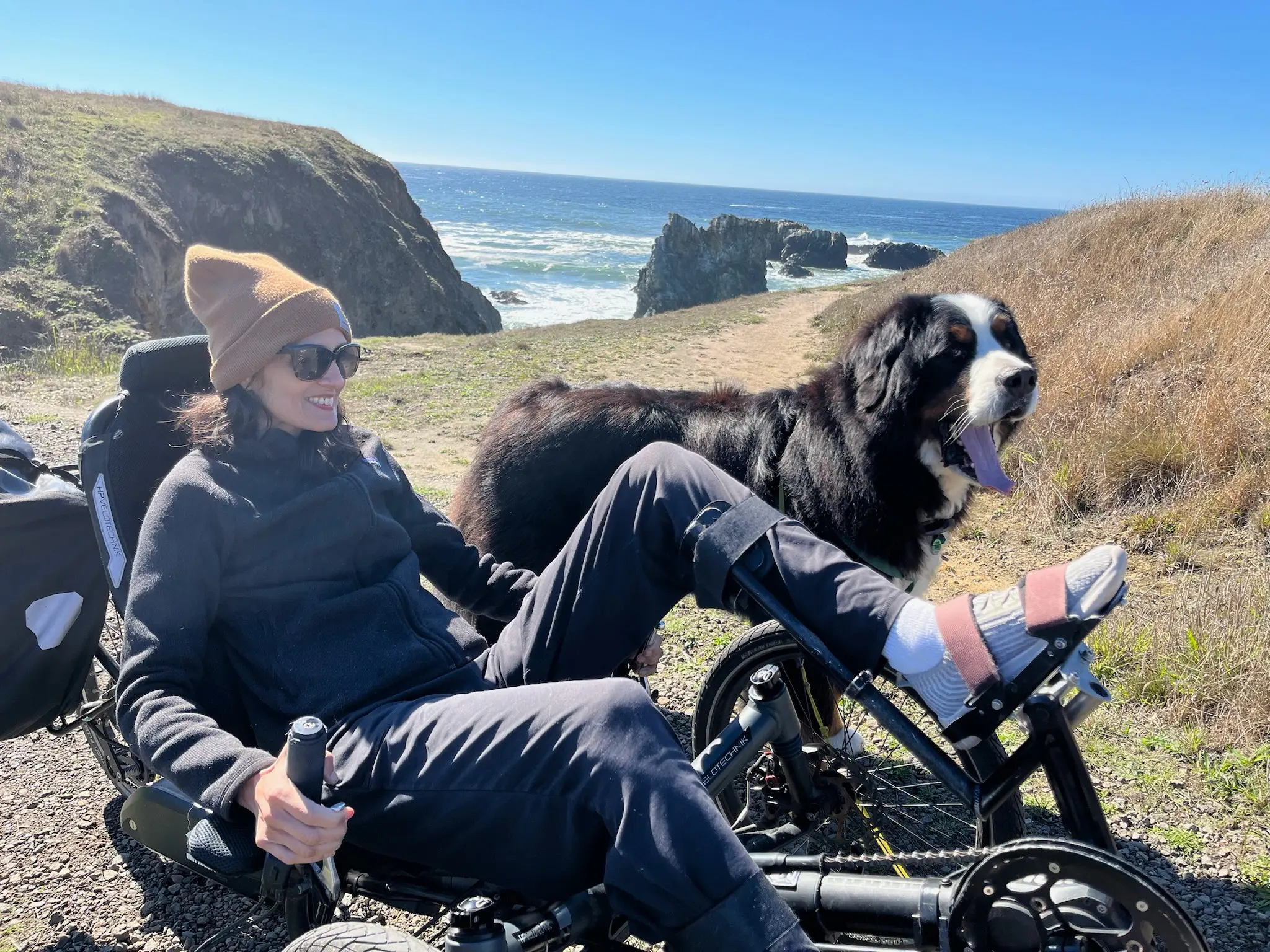
With this mindset—and a willingness to accept help—I have taken my wheelchair to places many able-bodied travelers only dream of: a tiny motu floating in a lagoon in remote French Polynesia; boat journeys deep in the rainforests of Borneo; safaris in isolated regions of East and Southern Africa; and island paths explored on an adaptive tricycle.
It isn’t easy. Every trip still comes with a knot in my stomach the night before departure. I still dislike airports and airplanes. I still feel grief for the things I’ve lost—the hikes I can no longer do, the swimming that now requires assistance. And like every wheelchair user, I live with the constant fear that my chair might be damaged, no matter how careful I am.
Why I Go Anyway
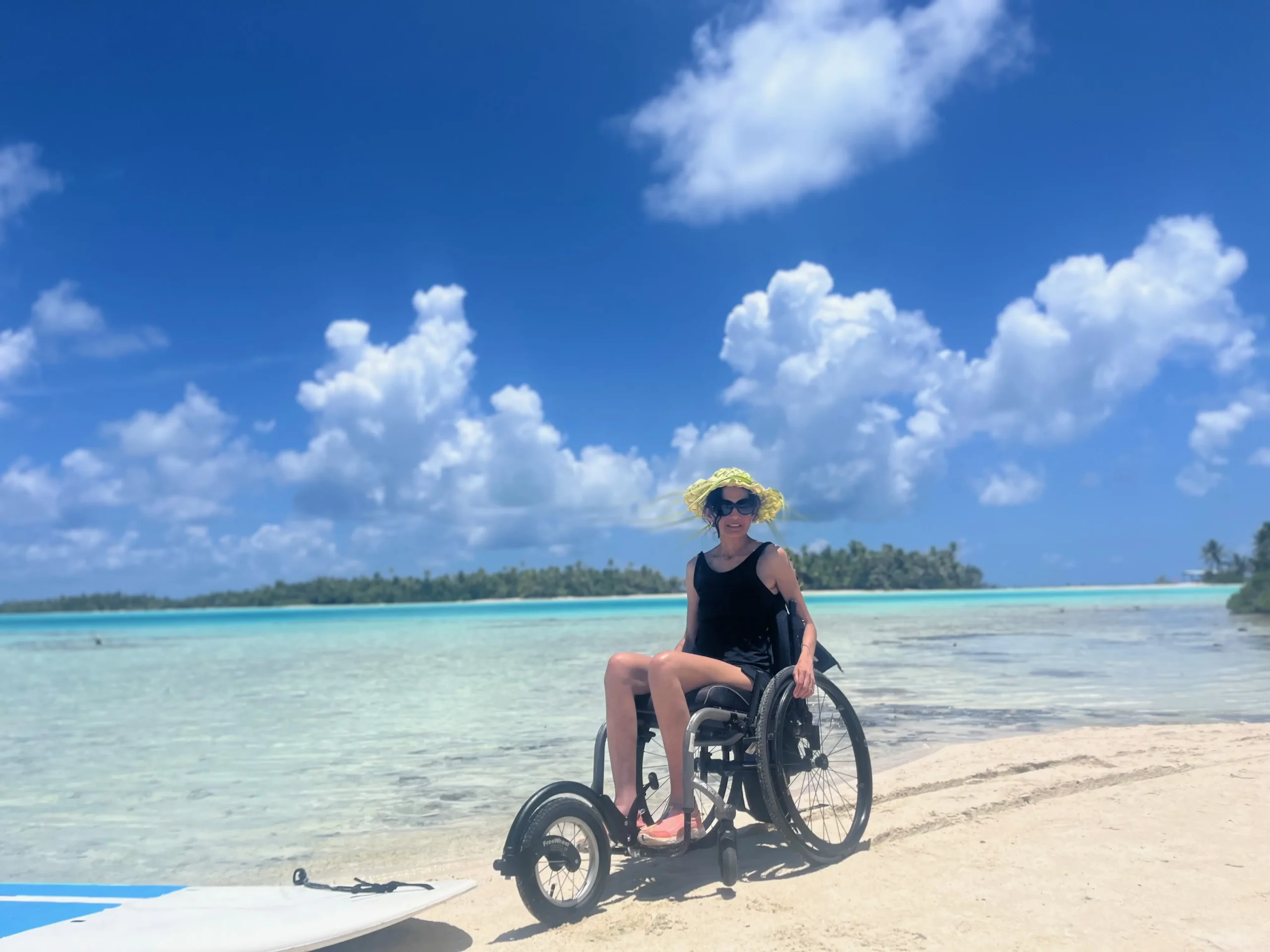
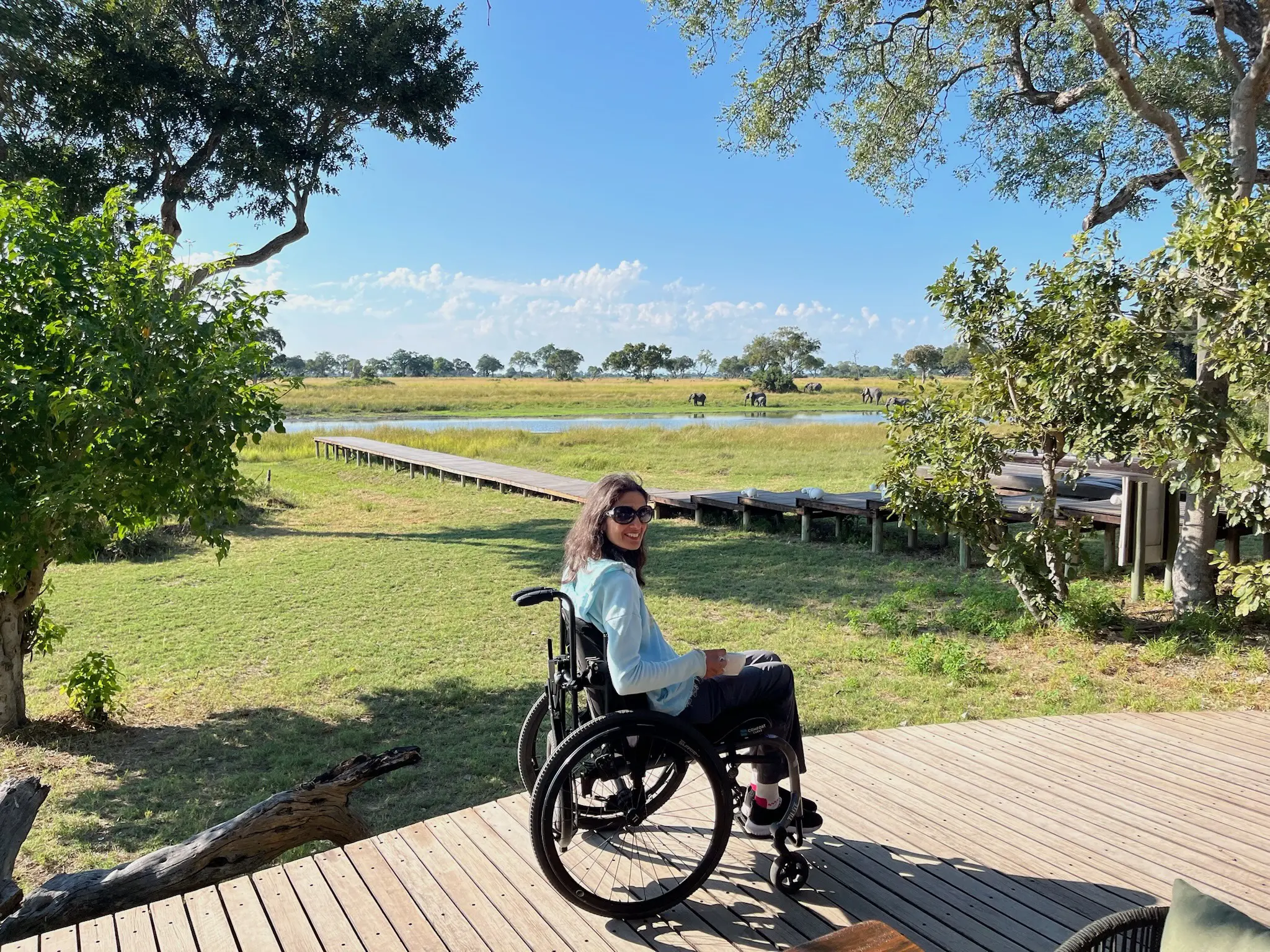
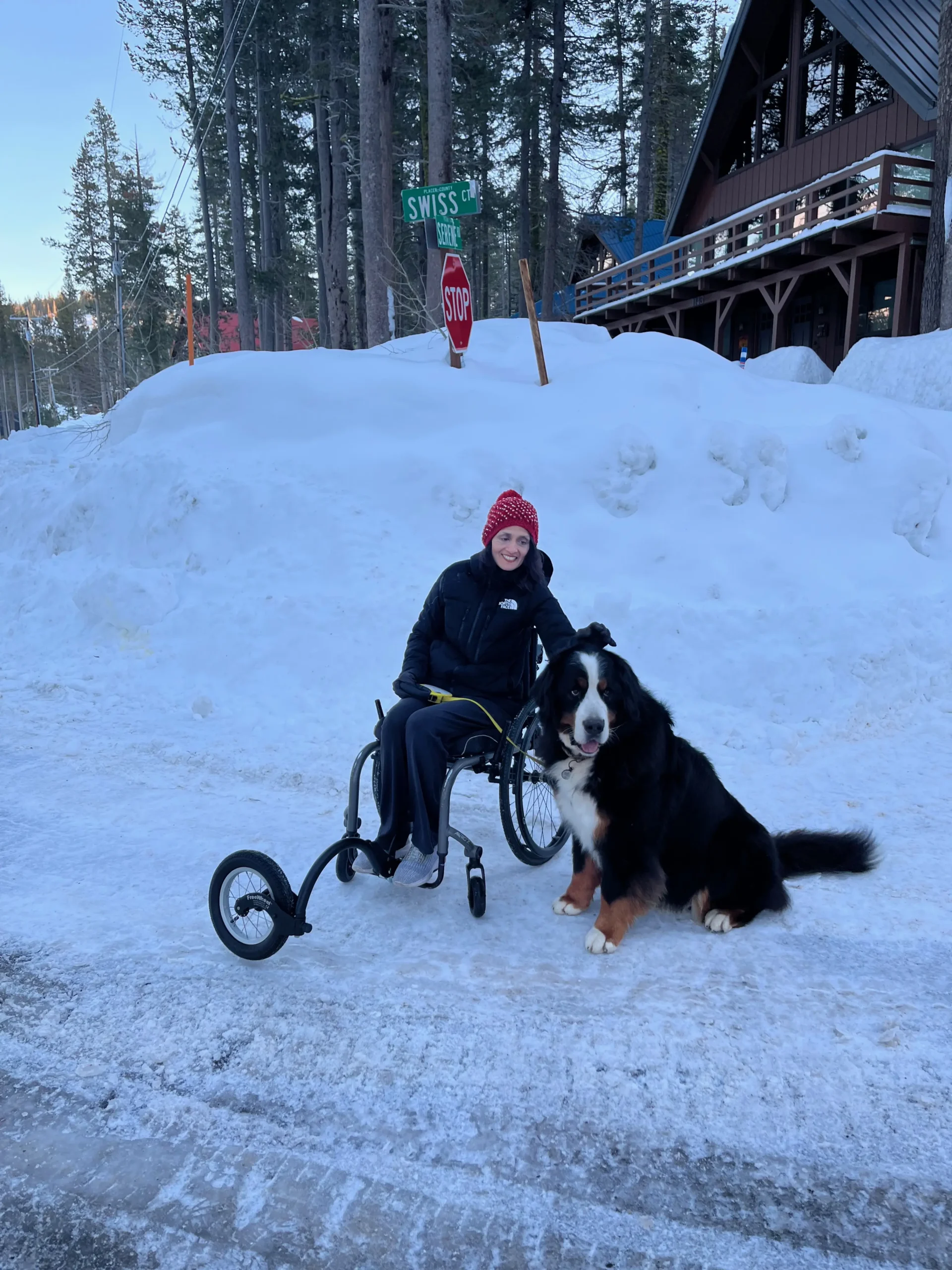
The alternative—staying home—is not an option I’m willing to accept.
If travelers like me don’t show up, how will the industry ever change? If we don’t move through the world visibly, how will attitudes toward disability evolve? I wasn’t always this confident. I grew up surrounded by ableism, and I carried internalized ableism for much of my life. Choosing to acknowledge, accept, and lean into my disability—rather than minimize or hide it—was a conscious decision. And it brought an unexpected sense of freedom.
I don’t travel despite my wheelchair. In many ways, I travel because of it.
I wouldn’t say I’m proud of having acquired a disability. But I am proud of how I live with it. And I want others to see that it is possible to travel—to travel well—to wild and remote places with a wheelchair.
It won’t always be smooth. I’ve been stranded by COVID regulations, dealt with broken equipment, and spent unplanned weeks in uncomfortable hotel rooms. But that’s part of travel. If everything were perfect, it wouldn’t be real.
Better to try and flop than to wonder what could have been!
To fellow wheelchair users who dream of nature travel: I can’t promise your experience will look like mine. But I want you to know that it can be done—even when others discourage you and even when the path isn’t fully accessible.
A ship in harbor is safe.
But that is not what ships were built for.