
Wellness does not look the same for everyone
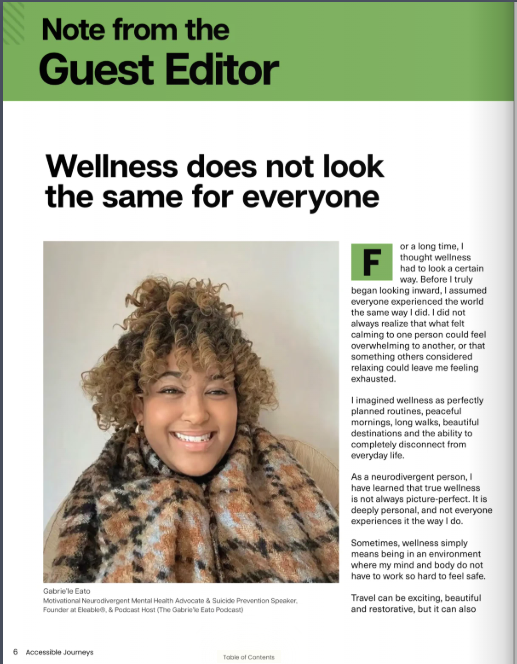
Gabrie’le Eato
Motivational Neurodivergent Mental Health Advocate & Suicide Prevention Speaker, Founder at Eleable®, & Podcast Host (The Gabrie’le Eato Podcast)
Listen to this Article
For a long time, I thought wellness had to look a certain way. Before I truly began looking inward, I assumed everyone experienced the world the same way I did. I did not always realize that what felt calming to one person could feel overwhelming to another, or that something others considered relaxing could leave me feeling exhausted.
I imagined wellness as perfectly planned routines, peaceful mornings, long walks, beautiful destinations and the ability to completely disconnect from everyday life.
As a neurodivergent person, I have learned that true wellness is not always picture-perfect. It is deeply personal, and not everyone experiences it the way I do.
Sometimes, wellness simply means being in an environment where my mind and body do not have to work so hard to feel safe.
Travel can be exciting, beautiful and restorative, but it can also be overwhelming. New sounds, unfamiliar spaces, crowded schedules, changes in routine and constant movement can quickly turn an experience that is supposed to be relaxing into something exhausting.
For many neurodivergent travellers, rest does not begin simply because we have arrived at a destination. Rest begins when we are given permission to experience that destination in a way that works for us.
For me, wellness may look like having quiet time before beginning the day. It may mean choosing a slower schedule instead of trying to see everything at once. It may mean spending time in nature, putting my bare feet in the grass or simply sitting near water and listening to it move. Those small moments help me feel grounded, present and connected to myself again. Wellness can also mean bringing something familiar with me into an unfamiliar environment. For me, that is often my laptop. It gives me a sense of consistency and allows me to return to something I know and love: creating as a visionary. It is not about remaining busy or refusing to disconnect. It is about having something recognizable nearby that helps my mind settle when everything around me feels new or when I want a sense of peace.
These things may seem small to some people, but accessibility is often found in the details.
A quiet room can give someone the space to regulate. Time in nature can calm an overstimulated nervous system. A familiar object can provide comfort. Clear communication can reduce anxiety. Flexible schedules can prevent overwhelm. Sensory-friendly environments can help people remain present instead of merely trying to endure the experience.
These supports are not only helpful for neurodivergent people. They can benefit travellers with disabilities, chronic illnesses, anxiety or sensory sensitivities, families with young children and anyone who needs more room to breathe.
Wellness should not require us to hide our needs, mask who we are or push ourselves beyond our limits. It should give us the freedom to reconnect with ourselves.
The most meaningful travel experiences are not always the busiest or most impressive. Sometimes, they are the experiences that allow us to slow down enough to notice how we truly feel. They are the moments when we are not rushing, performing or trying to meet someone else’s definition of enjoyment.
As you explore this issue, I invite you to consider what wellness means to you.
What environments help you feel grounded? What familiar things help you feel secure? What allows you to feel comfortable, connected and fully yourself?
Wellness is personal.
Accessibility helps make it possible.
And sometimes, the most restorative journey begins when we give ourselves permission to travel in a way that honours who we are.
Working with our minds – not against them.
Gabby