
Listen to this Article
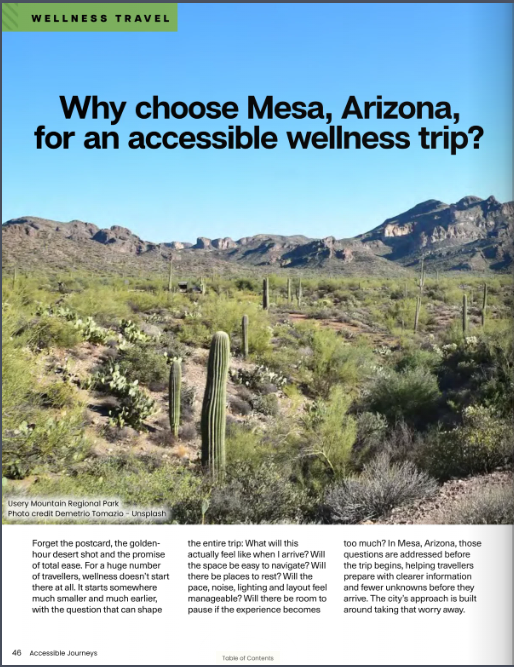
Forget the postcard, the golden-hour desert shot and the promise of total ease. For a huge number of travellers, wellness doesn’t start there at all. It starts somewhere much smaller and much earlier, with the question that can shape the entire trip: What will this actually feel like when I arrive? Will the space be easy to navigate? Will there be places to rest? Will the pace, noise, lighting and layout feel manageable? Will there be room to pause if the experience becomes too much? In Mesa, Arizona, those questions are addressed before the trip begins, helping travellers prepare with clearer information and fewer unknowns before they arrive. The city’s approach is built around taking that worry away.
Mesa’s approach reframes what “wellness” can mean for a destination. A spa treatment can relax a body that is already at ease, but for many travellers, the deeper work begins much earlier. An autistic traveller, someone managing chronic anxiety, or a wheelchair user who previously arrived at a destination only to find that “accessible” did not mean what the website promised, the nervous system is often working overtime before the trip even begins. Mesa’s approach treats that pre-trip stress as the thing to solve first, so that calm is built into the planning itself. It isn’t something you embrace once you arrive.
A city built around lowering uncertainty
In 2019, Mesa became the first city in the world to earn Autism Certified City status from the International Board of Credentialing and Continuing Education Standards (IBCCES). The designation followed a nearly year-long effort by Visit Mesa, the tourism organization, which trained executives and front-facing hospitality staff to better recognize autism spectrum disorder and support travellers from the planning stage through their entire stay. To qualify, at least 80 percent of guest-facing staff across participating businesses and organizations had to complete training built on documented sensory considerations and autism behaviors.
This is where wellness and accessibility actually meet. A nervous system under stress doesn’t know the difference between a genuine threat and an unfamiliar museum hallway. Calm isn’t just the absence of pain. It’s the presence of predictability. Mesa’s training push is, in effect, a city-scale attempt to make more environments predictable for more kinds of brains.
Sensory information as a wellness tool
The Arizona Museum of Natural History offers pre-visit planning tools, including a preview video and sensory charts for each gallery, so families know what’s coming before they arrive. Sensitivity glasses and headphones are available on request, and rest spots are placed throughout the museum for anyone who needs to step away. A re-entry policy lets families come back if a visit becomes overwhelming, instead of treating one bad visit as the end of the trip.
That last detail matters more than it might seem. A standard wellness retreat sells you an escape from stress for a set window of time. The sensory infrastructure here does something different: it removes the penalty for needing a break. You can leave, regulate, and come back. That’s a form of psychological safety that most travel experiences never offer.
The sensory charts go further than a simple warning label. An IBCCES sensory guide at the museum rates each gallery by sensory intensity, flagging a wing with strong fluorescent lighting, spotlights, and black lights as a high-stimulation space that can trigger stress or anxiety in some visitors. Knowing that ahead of time turns an unpredictable hallway into an informed choice. That is the heart of accessible wellness travel: not removing every stimulus but giving travellers the information to manage their own exposure to it.
The Mesa Arts Center extends the same philosophy into live events, where sensory overload risk is usually highest. Guests can access sensory rooms, sensory bags, and designated quiet areas during performances and festivals, along with social stories and virtual tours that help visitors plan ahead. Some accommodations include weighted blankets and noise-cancelling headphones during shows. A concert can be a wellness experience and an anxiety trigger at the same time. Mesa’s venues are trying to let people have the first without forcing the second.
Naming what isn’t visible
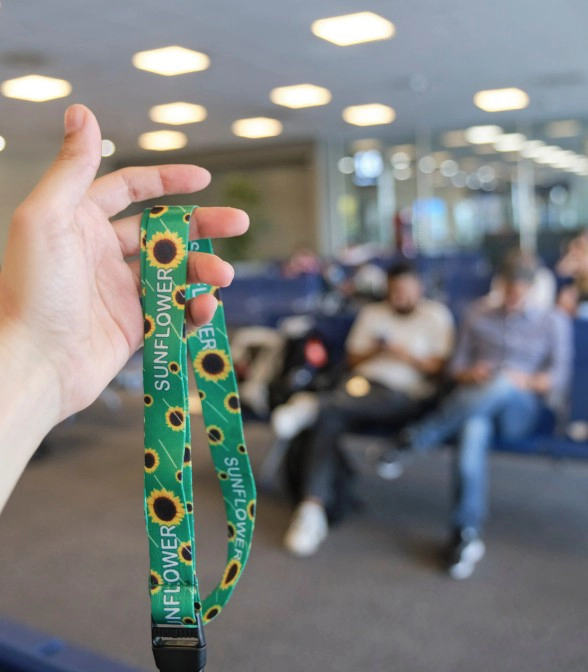
The wellness travel industry has often treated accessibility as something tied only to visible bodies and visible needs. Mesa’s Hidden Disabilities Sunflower Program pushes against that assumption directly. The city adopted it in 2021, becoming the first in the United States to do so. The lanyard is free and optional, intended for visitors with conditions that include autism, deafness, severe anxiety, or PTSD, and it’s distributed at no charge through hotels, museums, the airport, and the visitor center.
Mesa’s goal is simple: to welcome all visitors and reduce unnecessary anxiety for people with hidden disabilities and the people travelling with them. Wearing the lanyard doesn’t label anyone. It just lets trained staff know that some patience or extra help might be appreciated. That’s an anxiety-reduction tool disguised as a lanyard. Anyone who has ever had to explain an invisible condition to a stranger mid-meltdown knows how much energy that explanation costs. The sunflower removes the need to explain at all. The cost of disclosure drops to almost nothing, and that, functionally, is wellness support. It may not look like traditional wellness, but it can make a trip feel calmer, safer and more manageable.
Outdoor access without the guesswork
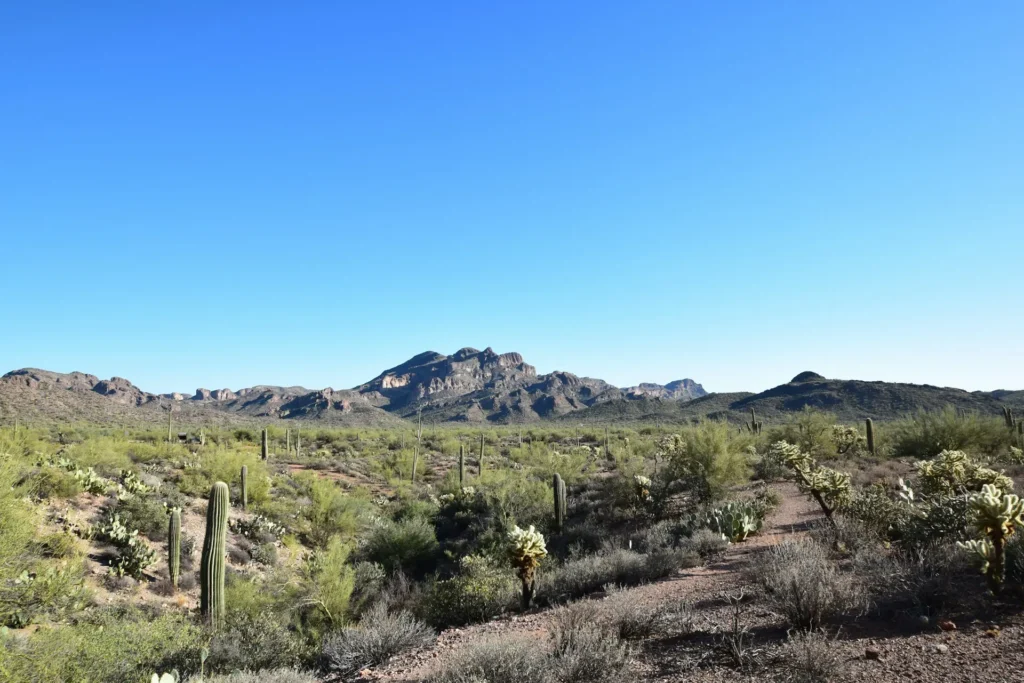
Wellness travel often points people toward nature, and for good reason. Time outdoors is consistently tied to lower stress and better mood. But “go outside” is only useful advice if a person can actually get there and knows what they’re walking, or rolling, into. That’s where Mesa’s outdoor accessibility work does some of its quietest, most important wellness work.
In October 2023, Mesa became the first city anywhere to receive the Destination Verified Seal from Wheel the World, an accessible travel platform. Trained mappers visited the destination and assessed accessibility using a system that records over 200 data points, then handed local businesses specific recommendations for improving their infrastructure. The result is detailed and checkable rather than vaguely reassuring. Listings include real photos and measurements for hotels and activities, not just a badge claiming accessibility. That precision is itself a form of stress relief.
The real takeaway
None of this looks like a typical wellness travel feature. There’s no mention of a signature massage or a juice bar. But strip wellness down to what it’s actually trying to do, lower a person’s stress, support their body, let them feel safe enough to be present, and Mesa’s accessibility infrastructure starts to look like wellness infrastructure wearing a different name.
A sensory chart before a museum visit lowers anxiety the same way a breathing exercise does, by giving the nervous system something predictable to hold onto. A lanyard that quietly says “be patient with me” removes a layer of social stress that no spa treatment touches. A verified trail description lets someone trust their own plan enough to actually go outside. None of these are extras added onto a trip. They’re the actual conditions that make rest, presence, and outdoor time possible in the first place for travellers who might otherwise stay home.
When a traveller knows what to expect before they arrive, their body does not have to stay as tense, guarded or stressed during a trip. That is the deeper promise of wellness travel: not simply to offer rest, but to create conditions where the body can stop preparing for difficulty. Mesa is a reminder that access is not separate from wellness. When a destination thinks broadly about who travel should serve, access becomes part of what makes wellness possible.