
Listen to this Article
Some of the most restorative experiences happen far away from treatment rooms. They happen beneath towering trees, beside a quiet lake, along an accessible boardwalk overlooking the ocean or while watching the sun set across a desert landscape.
For many travellers, nature can offer something a traditional spa cannot. It provides space to breathe, slow down and reconnect without appointments, expectations or complicated routines. The experience is deeply personal. One person may find peace listening to waves roll onto a beach. Another may feel restored by the scent of a pine forest or the colours of a botanical garden.
The growing interest in nature-based wellness reflects a broader understanding of what it means to care for our physical and mental wellbeing. Wellness does not always require a treatment menu. Sometimes it simply requires access.
Why nature restores us
Researchers have long studied the relationship between nature and health. Time spent outdoors has been linked to lower stress levels, improved mood, reduced anxiety and better sleep. Even relatively short visits to green spaces can help lower blood pressure and improve mental wellbeing.
The effect is not only psychological. Natural surroundings gently encourage movement without the pressure of structured exercise. A smooth lakeside trail, an accessible garden path or a level beach promenade allows visitors to move at their own pace while enjoying fresh air and changing scenery.
Nature also stimulates the senses in ways that many built environments cannot. Birdsong replaces traffic noise. Gentle breezes cool the skin. Water reflects sunlight across the landscape. Trees filter harsh sounds while flowers add colour and fragrance. For travellers who spend much of daily life navigating accessibility challenges, those moments of calm can feel genuinely restorative.
Accessibility changes everything
But the benefits of nature only exist when people can actually reach it. Fortunately, more destinations are recognising that accessible outdoor spaces benefit everyone. Boardwalks now lead to beaches that were once impossible to reach with mobility equipment. Viewing platforms provide scenic overlooks without steep climbs. Botanical gardens increasingly offer paved pathways, accessible washrooms, sensory gardens and mobility equipment rentals.
Accessible trails are becoming more common in national parks and nature reserves. Some parks now provide all-terrain track chairs that allow wheelchair users to explore rugged environments with assistance. Others have introduced tactile exhibits, accessible visitor centres, quiet spaces and guided experiences for visitors with sensory disabilities.
These improvements are transforming who gets to experience nature rather than limiting it to those without disabilities.

Forests that invite stillness
There is something uniquely calming about walking beneath a forest canopy. Countries such as Japan have helped popularise the concept of forest bathing, or shinrin-yoku, which encourages people to immerse themselves in woodland environments without any goal beyond simply being present. It is not hiking for fitness or racing toward a viewpoint. Instead, visitors slow their pace, notice textures, listen to birds and absorb the atmosphere around them.
Accessible forest trails are making these experiences available to a wider range of visitors. Smooth pathways, regular seating areas and accessible viewing platforms allow travellers to enjoy forests without needing to tackle difficult terrain.
Sometimes sitting quietly beneath tall trees provides every bit as much restoration as an afternoon in a spa.
Beaches beyond swimming
A beach does not have to mean surfing or long walks through soft sand. Many accessible beaches now feature beach wheelchairs, matting that extends across the sand, accessible parking, boardwalks and adapted changing facilities. This allows visitors to experience the sound of crashing waves, breathe salty sea air and spend time beside the ocean regardless of mobility level.
For some travellers, simply watching the tide come in is enough. Others enjoy accessible piers, waterfront parks or beachside cafés that make the coastline welcoming without requiring a physically demanding visit.
Water has long been associated with relaxation, and its benefits extend well beyond swimming.

Gardens designed for everyone
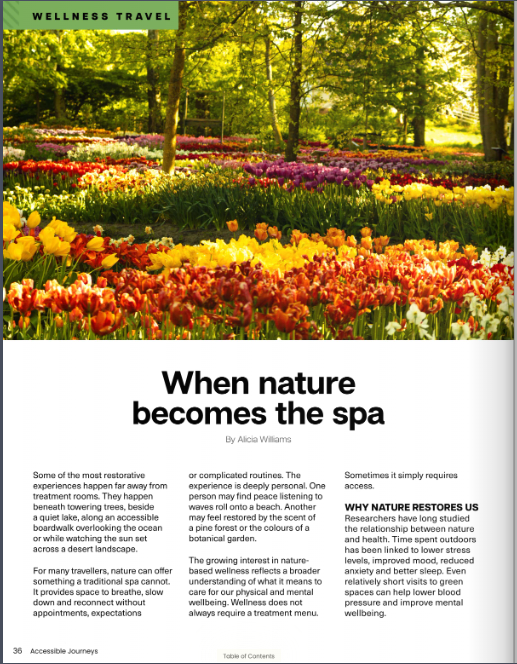
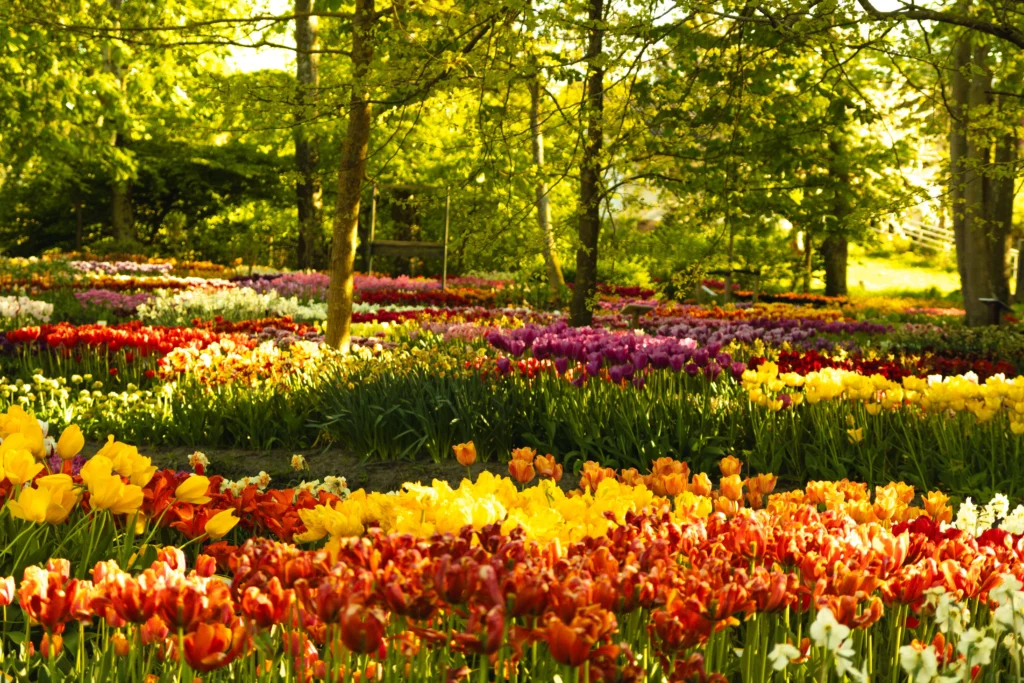
Botanical gardens have quietly become some of the world’s most accessible wellness spaces. Many feature wide paved paths, shaded rest areas, accessible washrooms and sensory plant collections designed to engage visitors through fragrance, texture and colour. Seasonal displays create ever-changing landscapes that encourage repeat visits throughout the year.
For autistic visitors, people living with dementia or travellers experiencing stress, gardens often provide predictable, peaceful environments with fewer sensory demands than busy urban attractions.
The simple act of sitting beside a pond or watching butterflies among flowering plants can become the highlight of an entire trip.
Desert landscapes and wide-open skies
Wellness is not limited to lush green destinations.
Deserts offer a different kind of calm. Vast open landscapes encourage stillness and perspective. Early mornings and evenings bring cooler temperatures, soft light and remarkable colours across rock formations and mountain ranges.
Destinations in places such as Arizona, Utah and parts of Australia increasingly provide accessible scenic drives, paved viewpoints and visitor centres that allow travellers with varying mobility levels to experience dramatic desert environments comfortably.
The silence found in many desert landscapes can feel surprisingly restorative after the constant noise of everyday life.
Lakes, rivers and peaceful waterfronts
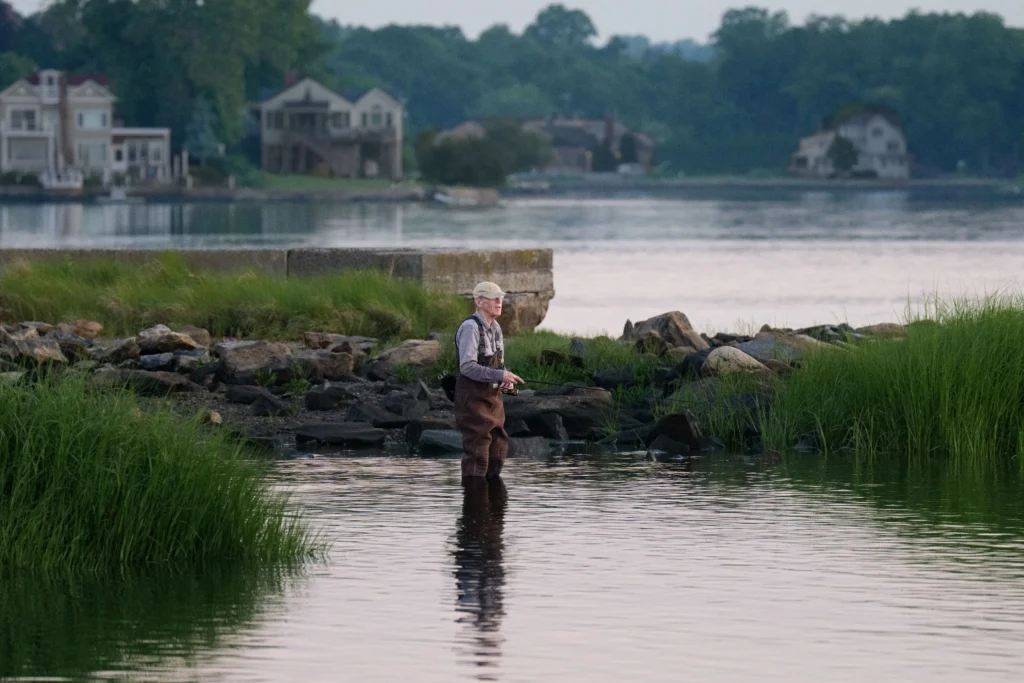
Not every wellness experience needs to involve dramatic scenery. Gentle lakeside paths, accessible fishing piers, riverfront parks and quiet waterfront benches often become favourite places simply because they encourage people to slow down.
Watching reflections ripple across still water naturally invites mindfulness. The pace becomes slower. Conversations become quieter. Time seems less important.
Many communities have invested in accessible waterfronts that include level walking paths, shaded seating, accessible picnic areas and universally designed public spaces, making them enjoyable for visitors of all ages and abilities.
Planning a restorative nature escape
A successful nature-based wellness trip often depends on preparation. Before travelling, check accessibility information for trails, gardens or beaches, including surface types, pathway gradients, accessible parking, washrooms and available equipment such as beach wheelchairs or track chairs.
Consider travelling outside peak holiday periods when popular parks are quieter. Allow extra time to rest and remember that wellness is not measured by how much you see in a single day. Spending two peaceful hours in one beautiful place can be more rewarding than rushing between multiple attractions.
Most importantly, choose destinations that match your own energy levels and interests rather than someone else’s idea of adventure.
The best spa may not have walls
Luxury spas will always have their place. Many travellers enjoy massages, hydrotherapy pools and wellness treatments. But nature reminds us that restoration does not always come with a booking confirmation.
It may come from watching waves break against the shore. From sitting beneath ancient trees. From following an accessible garden path filled with birdsong. From feeling the warmth of desert sunlight as the day begins.
When those places are designed with accessibility in mind, they become wellness experiences that belong to everyone.
The world’s greatest spa has no walls at all.
- CANADA
- USA
- UK